- 000 - 123 - 456789
- info@trustaclinic.ae
- VILA 17, Street 73B, AL SATWA, Dubai, UAE


CONTACT US
- (000) 123-456-789
- VILA 17, Street 73B, AL SATWA, Dubai, UAE.
- info@trustaclinic.ae
Reflexology By Trusta Clinic Dubai
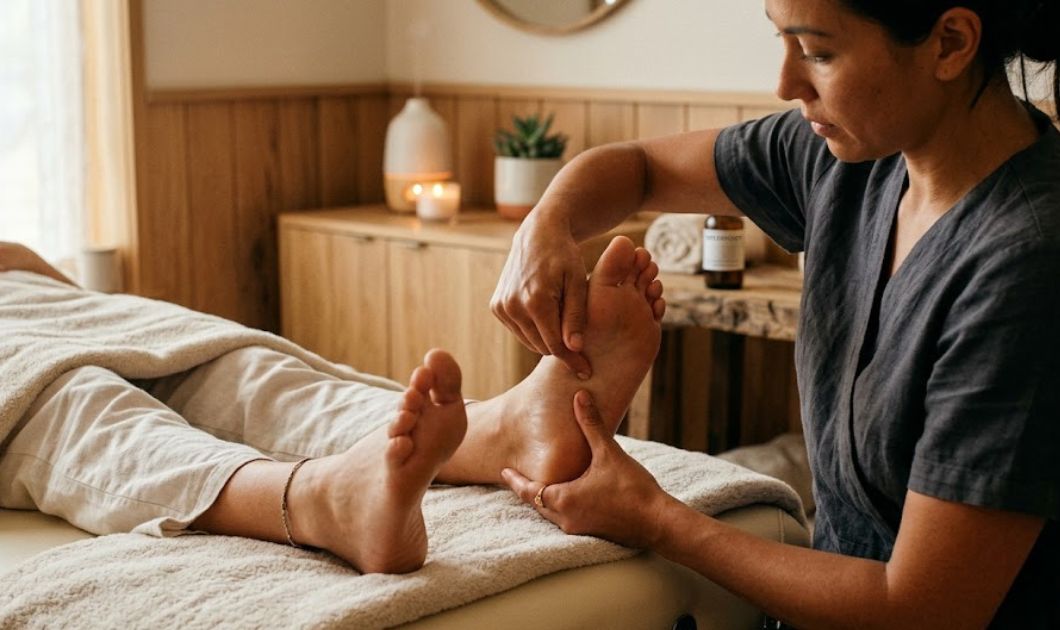
When Did You Last Actually Feel Well
Nobody talks about their feet until something goes wrong. But in reflexology, your feet are the starting point for something that affects your whole body, your sleep, your stress levels, your hormones, your energy, your ability to just feel okay on an ordinary Tuesday.
Reflexology massage has been practised across cultures for thousands of years because it works. Not in a complicated way. Not in a way that requires you to believe anything unusual. It works because the body is interconnected, because targeted pressure on the right points creates real physiological responses, and because an hour of skilled, focused care does things for a person that nothing else quite replicates.
Trusta Clinic is where you come when you are ready to stop putting yourself last.
What Is Reflexology and Where Did It Come From
Reflexology is a structured, hands-on therapy that works through the feet. Different points on the soles, heels, and toes are thought to correlate with different organs and parts of the body.
By applying deliberate pressure to these points, a trained reflexologist can:
- Improve circulation throughout the body
- Release tension stored deep in muscles and tissue
- Support the nervous system in settling and rebalancing
- Encourage the body’s own natural healing responses
It is not the same as a foot massage. Foot reflexology is purposeful, structured, and guided by a detailed map of how the body connects from the ground up.
Reflexology has been used in traditional Chinese medicine, where it is thought that this type of therapy can keep the body’s vital energy balanced. It also draws on healing traditions across Egypt and Native American cultures going back thousands of years.
How Does Reflexology Actually Work
This is the question most people have but do not always ask out loud.
Other theories focus on how the body’s nervous system is all connected. Applying pressure, or even simply touching, areas of your feet is believed to calm your central nervous system and promote relaxation.
Think about what it feels like to have your feet rubbed after a long day. That immediate unwinding you feel is not imagined, it is your nervous system responding in real time.
When you are stressed or anxious, your sympathetic nervous system, your fight or flight response, kicks into gear. A foot massage is believed to help increase your parasympathetic response and allow you to focus on routine and day-to-day operations.
In plain terms, reflexology helps pull your body out of survival mode and back into a state where it can actually rest, repair, and function properly.
What a Reflexology Map Tells Your Therapist
Every reflexologist works from a detailed foot map. This is not guesswork, it is a structured reference that has been developed and refined over many decades.
Many reflexologists use a foot chart to show them where they need to apply pressure to help with certain areas of the body. For example, pinching the tops of your toes is believed to help with sinuses, while pressure applied to your heel claims to help with lower back and sciatic nerve pain.
There are also pressure points on your hands and ears that some reflexologists may target during a session.
Your therapist at Trusta Clinic will use this map in combination with what you share during your consultation, so your session is always personalised to what your body actually needs that day.
What Conditions Can Reflexology Help With
People come to reflexology massage for all kinds of reasons. Some arrive with a specific concern. Others just know something is off and cannot quite name it.
Reflexologists believe reflexology can help improve the following:
- Immune system function
- Colds and bacterial infections
- Sinus pressure and congestion
- Back pain and sciatic discomfort
- Hormonal imbalances
- Digestive problems
- Arthritis pain and joint discomfort
Beyond that list our clients also regularly find reflexology helpful for:
- Stress and anxiety that will not shift
- Broken or shallow sleep
- Persistent fatigue and low energy
- Recurring headaches and migraines
- Emotional overwhelm during difficult life periods
- Recovery support after illness or surgery
What Happens During Your Session by Trusta Clinic
Step 1: Your Consultation
Your reflexologist will ask questions about your health, lifestyle, and habits to help determine where to work on your feet. This is a proper conversation, not a rushed intake form.
Step 2: Getting Comfortable
You can remain fully clothed but will need to pull your pants up to your knee so the reflexologist can work on your lower leg as well. You will either lie down on a massage table or sit in a reclining chair.
Step 3: The Treatment
Your therapist works through the reflex points on your feet with steady, careful pressure. Your reflexologist may choose to use a lotion or cream while working on your feet, but it is not necessary.
- Most people relax deeply within the first few minutes
- Some fall asleep entirely
- Tender points are normal and useful information, not a cause for concern
- Most people feel the effects throughout their whole body, not just their feet
Step 4: How You Leave
Most appointments with a reflexologist are around 50 minutes, about 25 minutes spent on each foot. Most people walk out feeling lighter, calmer, and clearer than they have in a long time.
The Benefits of Regular Foot Reflexology
One session makes a difference. Regular sessions change your baseline. Our clients consistently report:
- Deeper and more restorative sleep
- Noticeably lower stress and anxiety levels
- Better hormonal balance
- Reduced frequency of headaches and migraines
- Improved digestion and gut comfort
- More stable energy throughout the day
- Greater emotional resilience
- A general sense of feeling more like themselves
Can You Do Reflexology on Yourself at Home
Between professional sessions there are simple things you can do at home to maintain the benefits.
While watching TV, you can use your fingers and thumb to work your way up your feet pressing in. Then do the same with your knuckles.
It is not a replacement for a proper session with a trained therapist, but it is a useful way to keep the body moving in the right direction between visits.
Who Should Be Careful Before Booking
Reflexology suits most people — but there are some situations worth discussing first.
If you have circulatory problems, blood clots, gout, thyroid issues, athlete’s foot, or epilepsy, your provider may suggest modifications or adjustments to prevent any unfavourable effects.
If you are unsure about anything just mention it when you book. Your therapist will go through it with you honestly and make sure the session is right for where you are.
Before

After
Frequently Asked Questions
What is reflexology?
Reflexology is a complementary therapy using targeted pressure on specific points of the feet, and sometimes the hands or ears, to support balance and natural function throughout the body.
It is thought that different parts of the foot correlate with different organs and parts of the body. Working carefully through the foot is, in a real sense, working the whole body.
Is reflexology scientifically proven?
Honest answer , it is not classified as a licensed medical treatment. But dismissing the science entirely is not accurate either.
Research is currently of low quality and there are not any well-designed studies showing that reflexology is better than foot massage. But most studies compare reflexology to usual care and often show a benefit.
What research has shown in those studies:
- Reduced anxiety and measurable drops in stress markers
- Improved sleep quality
- Better pain management in chronic conditions
- Positive outcomes in hormonal and reproductive health
- Enhanced quality of life in people undergoing cancer treatment
The evidence is growing and the medical community is more open to it than ever before. Come with an open mind and let your own experience tell you something.
Can you have reflexology when pregnant?
Many pregnant women find reflexology one of the most helpful therapies available during pregnancy. It can genuinely support:
- Back pain and pelvic discomfort
- Swollen feet and ankles
- Pregnancy fatigue
- Anxiety and emotional overwhelm
- Hormonal balance throughout each trimester
If you are pregnant, make sure you let your reflexologist know, as some points on your foot are believed to help induce labor. Our therapists are experienced with pregnant clients and always adapt sessions carefully and appropriately.
Please speak with your midwife or GP before booking, especially in your first trimester.
Does reflexology help with plantar fasciitis?
Plantar fasciitis is exhausting to live with. That stabbing heel pain first thing in the morning. The way it affects your movement and your whole day.
Reflexology massage will not cure it outright, but here is what it can do:
- Improve local circulation to the heel and arch
- Release built-up muscular tension along the plantar fascia
- Reduce inflammation in surrounding soft tissue
- Support the body’s own recovery process
Several of our clients manage plantar fasciitis with regular foot reflexology alongside physiotherapy and stretching. It is not a replacement for medical care, it is a consistent, practical addition that makes a real difference.
Always tell your therapist about your condition before the session so they can adapt accordingly.
Is Reflexology Right for You
Reflexology suits most people and most life stages. You do not need a diagnosis or a specific complaint to benefit.
It may not be immediately suitable if you have:
- Active foot infections or open wounds
- Deep vein thrombosis
- Certain circulatory conditions
- Gout or thyroid issues
- Recent foot or ankle surgery
If you are unsure about anything just mention it when you book. Your therapist will go through it with you and make sure everything is right.
Book Your Session with Trusta Clinic
We are not a large impersonal wellness chain. We are a clinic where the people working with you genuinely care about the work they do, and about how you feel when you walk back out.
If you have been thinking about trying reflexology and keep putting it off, this is the moment.
Book a session. Give your body an hour of proper attention. See what shifts.
