
Dry Needling for Muscle Pain and Tension
Tried stretching, rolling and resting but the tightness keeps coming back? Trusta Clinic offers dry needling in Dubai, with our physiotherapists targeting the tight muscles and trigger points behind the pain.
We assess before we treat. Our physiotherapists find the problem, treat it from the first session and give you a clear treatment plan without endless appointments.
Tight lower backs. Necks that only turn one way. Shoulders sore by evening. Headaches that begin in the muscle, not the head. The pattern behind all four is usually the same, which is why the assessment looks past the sore spot. The same trigger point sits behind nearly all of it. You should feel the difference before you leave. We build the plan around your job and your training week, and the price is agreed before we begin.

What Dry Needling Fixes?
Lower Back Pain
Ongoing sittings, and your back pays for it. Everything tightens up. Dry needling works into those knots and helps them let go.
Neck Stiffness
Long days at a screen and the neck stops turning properly by evening. . Dry needling hits the tight muscles so you can turn your head without that catch.
Headaches
Some headaches start lower than you’d think, in the tight muscles at the base of your skull. Loosen those up with dry needling and the ache often fades.
Knee Pain
The knee isn’t always the real problem. Tight muscles in your thigh, hip, or calf can mess with how it moves. Dry needling loosens them so your knee gets a break.
Shoulder Pain
Shoulders knot up fast, especially after hours in the same slouched position. Some of those spots sit too deep for a normal massage. Dry needling reaches them.

Why Do Patients Rely on Our Pain Relief Experts?
Our dedicated physiotherapists use dry needling every day to help patients with different types of pain and muscle problems.Our daily experience shapes how accurately they find trigger points and how effectively they build the treatment into a lasting recovery plan.
- Experienced physiotherapists trained in dry needling and muscle and joint care
- Qualified physiotherapists with advanced training in dry needling and musculoskeletal care
- Expert physiotherapists trained in dry needling, muscle care and joint health
- Skilled physiotherapists with advanced training in dry needling and pain management
- Our trained physiotherapists use dry needling to support muscle, joint and pain care
How Dry Needling Works?
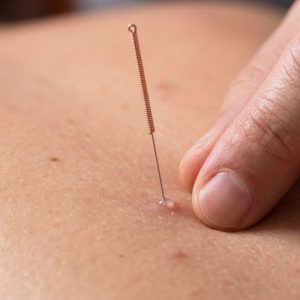
We use a fine needle, no medication in it, placed directly into the knot that has stopped releasing on its own.
Find the right spot and the muscle gives one quick twitch, then softens. Circulation returns to tissue that had been starved of it, and the nerve quietens down instead of sending pain out across the area.
The muscle moves freely again. Most patients feel the difference before they get off the table, with further improvement over the next two to three days.
Benefits of Dry Needling
Dry needling works deep and works quickly. The change is felt in the muscle being treated, and it holds far better when you follow the session with the right exercises.
- Release you can feel in the first session. The needle reaches the knot itself, and most people notice the muscle let go before they get off the table.
- Pain that keeps easing afterwards. Pain does not stop dead at the end of the session. It tapers over the next few days as the muscle stays released. .
- More movement in the joint. Tight trigger points shorten a muscle and limit how far the joint travels. Release them and the range often improves noticeably after one session.
- Faster progress in rehab. Guarding and trigger points slow recovery down. Clearing them means strengthening work and other treatments that can do their job properly.
- Less reliance on painkillers for some patients. When the underlying tension is dealt with, a number of people find they need less medication. Any change to prescribed medicine is a decision for your doctor.
- Better results from your physiotherapy plan. A muscle that is not fighting back responds to exercise more readily, so needling and physiotherapy work well as a pair.
How Dry Needling Differs From Acupuncture?
People mix these up all the time. Acupuncture works along energy lines described in Traditional Chinese Medicine, aiming to restore balance across the body. Physiotherapists work from anatomy. We examine you first, find the trigger point by hand, and put the needle into the muscle that is actually causing your pain.
Who We Treat with Advanced Dry Needling Care?
Dry needling delivers its strongest outcomes for patients with muscle-driven pain that other treatments have not fully resolved. You are likely a good candidate if you experience:
- Back, neck, shoulder or leg pain that keeps returning
- Tightness from long days at a desk or behind the wheel
- Headaches that start in the neck or shoulders
- A sports injury where the muscle has locked up and will not settle
- Aching in several places at once, with no clear source
- Stiffness first thing in the morning, or after a long sit
Dry needling is not right for everyone, and you will hear that at the assessment rather than after three sessions. Pain coming from a nerve, or a joint with real damage in it, usually calls for an orthopedic opinion or a different physiotherapy route. We point you there instead of pressing on.
How Does Our Dry Needling Session Work?
Assessment. Our physiotherapist maps out your pain history and finds exactly where the trigger points sit through a hands-on check.
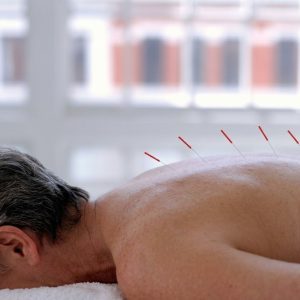
Treatment. Fine needles go into each trigger point. A brief twitch, a momentary deep ache, then the muscle lets go. Sessions run 30 to 60 minutes.
Aftercare. Light hands-on work follows the needling. You leave with clear guidance on activity and exercises for the days ahead.
What to Expect After Dry Needling at Trusta Clinic?
You’ll usually feel the muscle release before you’re off the table. Give it another couple of days and the ache keeps dropping as the tissue settles.
The first day or two
Expect some soreness where the needles went in. Think of the stiffness after a heavy gym session. Drink plenty of water, leave the hard training for tomorrow, and a warm compress helps if the spot feels tender.
The first week
This is when your exercises earn their keep. The muscle has just let go, so it takes to strengthen work far better now than it did a week ago.
Over a course of treatment
Two to four sessions clears a lot of recent injuries. Something you’ve lived with for years won’t move that fast. You’ll get an honest timeline at your first assessment.
How Safe Is Dry Needling at Trusta Clinic?
Yes, in trained hands. The needles are sterile, used once, then thrown away. Before anyone touches you, we run through your health history to check nothing rules the treatment out for you.
Soreness is the usual after-effect, lasting a day or two and clearing up by itself. Now and then a needle passes near a nerve and you get a quick shooting feeling down the arm or leg. It lasts a second, it does no harm, and your physiotherapist moves the needle straight away. Tell us what you feel while we work. That feedback is how we get the position right.
Free Your Muscles from Unnecessary Pain
That knot buried deep in your shoulder, hip or lower back will not stretch out, foam roll out, or massage out. Dry needling reaches it directly and makes it let go.
Walk into Trusta Medical Center in Downtown Dubai. Our physiotherapists find exactly where the trigger point sits, explain why it keeps firing, and build a treatment plan that stops the cycle for good. Book your consultation and stop carrying pain your body gave up on fixing by itself.
our expert answers
Frequently Asked Questions
Does dry needling hurt?
Honestly, less than people expect. The needle is thin enough that most patients hardly register it going in. What you do feel is a quick twitch when it finds the trigger point, more of a deep cramp than a sharp pain, over in a second
How many sessions will I need?
Recent injuries often settle within two to four. Something you have been putting up with for years will take more than that.
Is dry needling the same as acupuncture?
They look similar and that is where it ends. Acupuncturists work along energy lines mapped out in Traditional Chinese Medicine.
Does dry needling work for chronic pain?
This is where many patients find the greatest value. Trigger point dysfunction is a specific type of muscular problem that massage, stretching and medication often cannot resolve.
Does dry needling help with migraines?
Yes. Dry needling targets the trigger points in the neck and base of the skull that contribute to migraine episodes.
 Posted on Google
 amitisful
Trustindex verifies that the original source of the review is Google.
Amazing experience! The staff were wonderful and I’m very happy with the results. I’ll definitely come backThis is truly a state-of-the-art beauty clinic. The facilities, technology, and range of services available here are exceptional, and you won’t easily find the same level of comprehensive care in other clinics. As a physician, I highly recommend visiting this clinic. It is truly in a class of its own when it comes to aesthetic medicine, offering a complete range of beauty and aesthetic services, from surgical to non-surgical treatments, all under one roof..❤️❤️❤️Posted on Google Helmi Emadما شاء الله موقع ممتاز عيادة نظيفة تحسهم من المستقبل أما الاستقبال مررررة أدب تستأنث وياهم الصراحة ما تحس نفسك في عيادة من شدة إهتمام الدكاترة وباقي التيم كله متوفر عندهم مواقف سيارات مجانية ومصعد لذوي الاحتياجات الخاصة أشكر أصدقائي على التوصية بي عيادة ترستا واتمنى لكم التوفيق والنجاحPosted on Google
 Sahar GeramiPosted on Google
 Donna AskariAmazing clinicPosted on Google
 Farnaz Saeedi⭐⭐⭐⭐⭐ I had a great experience at Trusta Clinic. The staff were very professional, friendly, and welcoming. The clinic is clean, modern, and well-organized, and I really appreciated the attention to detail and the quality of service. Highly recommended! I’ll definitely be coming back. ❤️Posted on Google
 Layth SalhabAbsolutely amazing experience at Trusta Medical Center! ⭐️⭐️⭐️⭐️⭐️ The clinic is beautiful, modern, and very clean. The team is professional, welcoming, and genuinely attentive from the moment you arrive. You can really feel the high standard of care and attention to detail. Highly recommended for anyone looking for quality medical and aesthetic services in Dubai. 👌🏻✨Posted on Google
 sahra rezvanpanah⭐⭐⭐⭐⭐ I had a wonderful experience at Trusta Clinic, from the initial consultation all the way through my cosmetic procedure. Everyone, from the staff to the doctors, was incredibly supportive, caring, and attentive throughout the entire process. I truly felt that I was surrounded by people who genuinely cared about me, almost as if I were among friends. I’m very happy with my experience and would definitely recommend Trusta Clinic to anyone considering a cosmetic procedure.Posted on Google
 Mohammed AbdalraheemA lovely experience at Trusta Medical Center. The staff are kind, welcoming, and very professional, and the clinic has a clean and comfortable atmosphere. I truly appreciated the attention to detail, the respectful way everything was explained, and the high standard of care. The doctors are carefully selected and clearly experienced in their fields. A very pleasant and trustworthy medical center that I would happily recommend to others.Posted on Google
 Isis Aamn💖💖🌹 I had a very pleasant experience at Trusta Medical Center. The clinic is clean, elegant, and well organized, and the staff were welcoming and professional from the moment I arrived. I was especially impressed with the aesthetic medicine services. The doctors are highly professional, attentive, and take time to explain everything clearly. The prices are also reasonable and transparent. A very comfortable and trustworthy medical center. Highly recommended!🌹💖Posted on Google
 Ayden⭐⭐⭐⭐⭐ I had a wonderful experience at Trusta Medical Center. From the moment I arrived, the reception team was welcoming, professional, and very well organized. The entire clinic has a clean, elegant, and comfortable atmosphere, which immediately gives you a sense of confidence and trust. I was particularly impressed by their Aesthetic Medicine Department. The team takes the time to understand each patient’s concerns and expectations, and everything is explained clearly before making any decision. Their approach feels professional and patient-centered rather than commercial. The clinic also seems very selective in choosing its doctors. The medical team is experienced, knowledgeable, and genuinely focused on achieving natural and appropriate results while maintaining high standards of safety. Another positive point was the transparency regarding prices and treatment options. Everything was explained clearly, with no unnecessary pressure to undergo additional procedures. Overall, Trusta Medical Center is an excellent polyclinic that combines professional medical care, hospitality, cleanliness, fair pricing, and highly qualified doctors under one roof. I would confidently recommend it to anyone looking for a reliable medical center in Dubai, especially for aesthetic medicine. A truly five-star experience. Highly recommended. ❤️Verified by TrustindexTrustindex verified badge is the Universal Symbol of Trust. Only the greatest companies can get the verified badge who has a review score above 4.5, based on customer reviews over the past 12 months. Read more