- 000 - 123 - 456789
- info@trustaclinic.ae
- VILA 17, Street 73B, AL SATWA, Dubai, UAE

- Double Chin Surgery
- Rhinoplasty
- Facelift
- Blepharoplasty
- Liposuction
- Brazilian Butt Lift
- J-Plasma Renuvion Skin Tightening in Dubai
- Breast Augmentation
- Upper Eyelid Blepharoplasty
- Gynecomastia Surgery
- Breast Reduction
- Eyebrows Transplant
- Lower Eyelid Blepharoplasty
- Tummy Tuck (Abdominoplasty)
- Chin & Jawline Augmentation
- Hair Transplant
- Mini Face Lift
- Neck Lift (Platysmaplasty)

CONTACT US
- (000) 123-456-789
- VILA 17, Street 73B, AL SATWA, Dubai, UAE.
- info@trustaclinic.ae
Lower Eyelid Blepharoplasty in Dubai
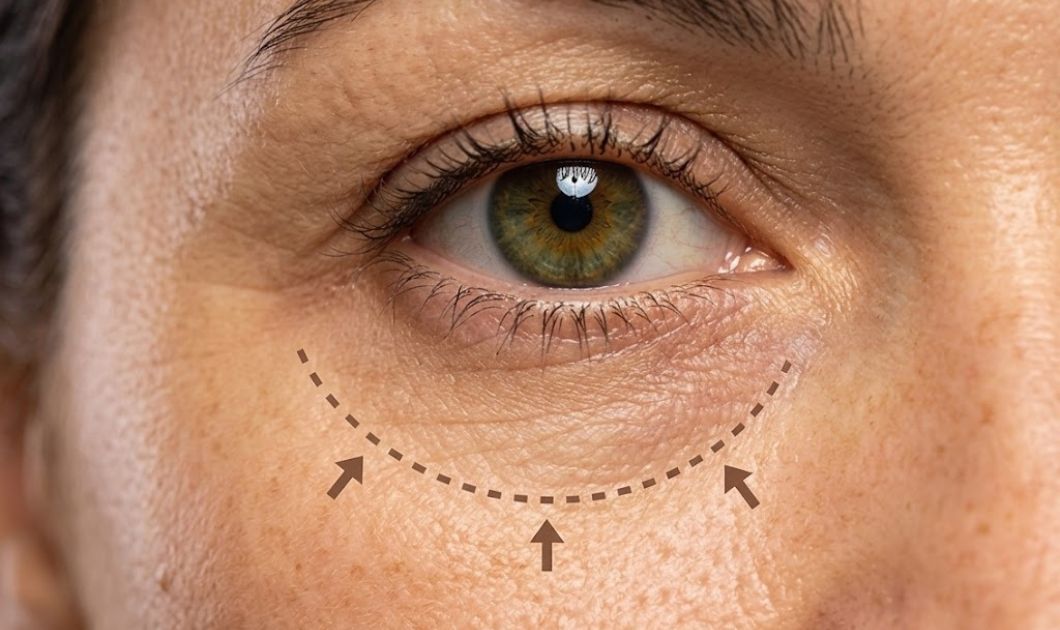
There is something quietly frustrating about looking in the mirror and seeing exhaustion staring back at you when you actually feel fine. No amount of sleep fixes it. No eye cream comes close. For a lot of people, that permanent tired look comes down to one thing: the lower eyelids. Bags, puffiness, loose skin, that dark hollowed groove just beneath the eye. These are structural issues, not skincare problems, and surgery is genuinely the only thing that resolves them properly.
In Trusta Clinic Dubai, we perform lower eyelid blepharoplasty for patients who are done waiting for a non-surgical solution that never quite delivers. The results are real, they last, and when done well, nobody can tell you had anything done. You just look like yourself again, but rested.
What Is Lower Eyelid Blepharoplasty?
In simple terms, it is a surgical procedure that targets the area beneath the eyes. The three fat pads that sit under each lower eyelid, which are supposed to cushion the eye socket, can shift forward over time or simply be naturally prominent from birth. When that happens, you get the classic under-eye bag appearance. The skin above them loosens. Shadows form beneath them. The whole area looks heavy and aged.
Lower eyelid blepharoplasty corrects this by removing or repositioning those fat pads, trimming any surplus skin if needed, and smoothing out the transition between the eyelid and the cheek. The result is a cleaner, lighter under-eye area that looks natural rather than pulled or artificial.
It is worth saying plainly: this is not a dramatic transformation procedure. It is a restoration. The goal is to bring back what the years have changed, not to redesign your face.
Why Do Under-Eye Bags Happen in the First Place?
This is one of the questions we hear most often in consultations, and the honest answer is that it depends on the person.
For younger patients, it is almost always genetic. Some people are simply born with more prominent lower eyelid fat pads. They have looked tired since their twenties, sometimes earlier, and no lifestyle change has ever made a difference. If your parents had under-eye bags, there is a good chance you do too.
For older patients, it is a combination of things. The fibrous tissue that holds those fat pads in place gradually weakens. The skin loses collagen. The cheek area starts to deflate slightly, which creates a hollow groove beneath the puffiness and makes the whole thing look more pronounced. This is the tear trough, and it is the reason many patients feel their under-eye area looks worse in their forties than it did in their thirties, even though they have been taking care of their skin.
Living in Dubai adds to this. The sun here is relentless, UV levels are consistently high, and the dry air pulls moisture from the skin. The periocular area, the skin around the eyes, is the thinnest on the entire face. It ages faster here than in most climates. We see this regularly in our patients and it genuinely factors into how we plan treatment.
Who Is This Procedure Right For?
Not everyone who wants this surgery actually needs it, and we are open about that during consultations. Lower eyelid blepharoplasty is genuinely appropriate for people who have:
- Fat pads that have been visible since youth and worsen every year
- Loose or crepey skin beneath the lower lid that creases when they smile
- A general sense that their eyes make them look older or more tired than they are
- Persistent under-eye bags or puffiness that no cream, filler, or treatment has resolved
- A hollowed tear trough combined with puffiness above it, creating that dark circle effect
Good candidates are also in reasonable overall health, do not have serious eye conditions like severe dry eye or glaucoma, and understand that surgery improves the area significantly but does not freeze it in time forever.
We ask patients to stop smoking before the procedure. We also ask about medications, previous surgeries, and any thyroid or blood-related conditions during the assessment because all of these affect both surgical planning and recovery.
The Two Ways We Perform Lower Eyelid Blepharoplasty
The Internal Approach:
Transconjunctival Blepharoplasty
This is the technique we use when fat pad puffiness is the main concern and the skin beneath the eye is still reasonably firm. The entire procedure is performed through an incision on the inner surface of the lower eyelid. Nothing is cut on the outside. No stitches are visible. There is no scar.
Why does that matter?
Because the recovery is smoother, the risk of visible scarring is eliminated entirely, and the result looks completely natural. Patients who have this done are often surprised by how straightforward the recovery feels.
What this technique addresses:
- Early tear trough shadowing
- Prominent fat pads causing under-eye puffiness
- Patients who do not yet have significant skin laxity
The External Approach:
Subciliary Blepharoplasty
When there is both fat pad prominence and noticeable loose skin beneath the lower lid, we use the external technique. The incision sits just below the lower lash line, following the natural contour of the eye. It is a very discreet placement and with careful closure it heals into a line that most people cannot find even when they know it is there.
This approach lets us do more. We can remove or reposition fat, trim excess skin, and where necessary, resuspend the structures that support the lower lid. It is a more comprehensive correction for patients whose concerns go beyond the fat pads alone.
What this technique addresses:
- Excess skin combined with fat puffiness
- More pronounced skin laxity beneath the lower lid
- Patients who need both fat management and skin tightening
A Note on Fat Repositioning
We want to mention this because it is often overlooked. Removing all the fat from under the eye can sometimes lead to a hollowed, over-operated result. In many cases we redistribute the fat instead, moving it from where it bulges into the tear trough hollow below. This fills the groove, softens the transition between eyelid and cheek, and creates a result that looks genuinely refreshed rather than surgically reduced.
Can It Be Combined with Other Procedures?
Yes, and quite often it makes sense to do so. Patients who come in for lower eyelid blepharoplasty frequently have related concerns that a single combined session can address. Common combinations we perform include:
- Fat transfer to the midface to restore volume lost through ageing
- Brow lift when brow descent is contributing to the tired appearance
- Facelift or midface lift for patients seeking broader facial rejuvenation
- Skin resurfacing to improve the texture and tone of the lower eyelid skin
- Upper eyelid blepharoplasty and lower eyelid blepharoplasty together for complete four-eyelid rejuvenation
Combining procedures means one recovery period instead of multiple, and the overall result tends to look more balanced and cohesive. We walk through all of this during consultation so you can make an informed decision about what is right for you.
Preparing for Surgery
This is the part patients sometimes underestimate. What you do in the weeks before surgery genuinely affects how smoothly everything goes.
- Stop aspirin, anti-inflammatory medications, and any blood-thinning supplements at least two weeks before your procedure
- Stop smoking. This is not optional. Smoking compromises healing and increases complication risk meaningfully
- Arrange someone to drive you home and stay with you on surgery day
- Bring spectacles to the clinic. Contact lenses cannot be worn immediately after surgery
- Come to your pre-operative appointment with questions. This is the time to raise anything you are unsure about
On the Day and the Procedure Itself
Lower eyelid blepharoplasty is performed as a day case. You come in, have the procedure, and go home the same day. There is no overnight stay required.
The surgery itself takes between 45 and 90 minutes depending on which technique is used and whether additional procedures are being performed. Anaesthesia is either local with sedation or general, decided together with you based on your preference and clinical needs. You will not feel anything during the procedure and you will be well looked after throughout.
Before

After
Recovery: A Realistic Week by Week
Days 1 to 3: Expect swelling and bruising around the eyes. This is normal, expected, and temporary. Keep your head elevated, apply cool compresses gently, and use your prescribed eye drops and ointment as directed. Your vision may feel slightly blurry from the ointment but this clears on its own.
Days 4 to 10: The bruising starts to fade and the swelling noticeably reduces. Most patients feel comfortable heading back to desk work within seven to ten days. If you had external sutures, these come out within four to six days.
Weeks 2 to 4: You are largely back to normal life. Avoid heavy exercise and prolonged sun exposure. Wear sunglasses outdoors. The under-eye area continues to refine during this period.
Month 1 and Beyond: By the end of the first month most patients look very close to their final result. Full settlement takes three to six months. We see you for follow-up appointments throughout this period and we want to know how you are getting on.
What Are the Risks?
Surgery always carries some degree of risk and we think it is important to be direct about this rather than minimise it.
Common effects that are expected and resolve on their own:
- Temporary blurring from eye ointment
- Bruising and swelling in the first one to two weeks
- Mild eye dryness or sensitivity to light during early healing
Less common risks include:
- Minor asymmetry between the two sides
- Infection, which is rare and treatable with antibiotics
- Temporary difficulty fully closing the eyes in the first days of recovery
These risks reduce significantly when surgery is performed by experienced surgeons in a properly equipped, accredited setting. We do not take shortcuts on safety in Trusta Clinic, and we make sure every patient understands both what the procedure can achieve and what the recovery genuinely involves.
How Long Do the Results Last?
A long time. Fat that is removed does not come back. The structural correction we make holds for a decade or more in most cases. Patients consistently tell us they look more alert and more like themselves, and that people around them notice without being able to pinpoint why.
The ageing process does continue after surgery, of course. But the improvement we create forms a lasting foundation. Most patients go ten to fifteen years before they feel the area needs any further attention, and some never revisit it.
Why Patients Choose Trusta Clinic for Lower Eyelid Blepharoplasty in Dubai
We are not going to fill this section with generic claims. What we will say is this:
- Our consultations are honest. If surgery is not the right option for you, we say so
- We take time to explain both techniques properly and recommend based on your anatomy, not convenience
- Our surgeons have specific experience in periocular surgery and understand that the eye area demands a high level of precision
- We operate in a fully accredited facility in Dubai and hold ourselves to international clinical standards
- Our aftercare is attentive. We follow up, we are reachable, and we take your recovery seriously
Ready to Have a Conversation?
If under-eye bags or lower eyelid concerns have been bothering you for a while, the best thing you can do is come in for a consultation. No pressure, no hard sell. Just a proper clinical assessment and an honest conversation about what lower eyelid blepharoplasty could do for you specifically.
Contact Trusta Clinic Dubai today and book your consultation. We will take it from there.
