- 000 - 123 - 456789
- info@trustaclinic.ae
- VILA 17, Street 73B, AL SATWA, Dubai, UAE

Knee Arthroscopy in Dubai
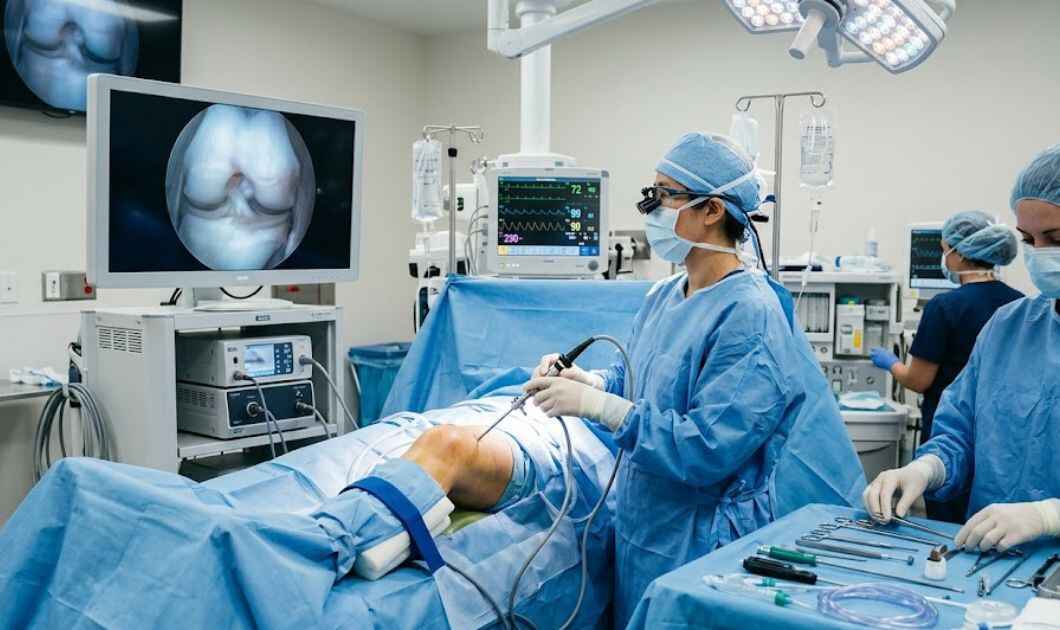
Here is the honest truth about knee pain in Dubai. Most people who end up sitting across from one of our orthopedic surgeons have already spent months trying to fix the problem a different way. Physiotherapy that helped a little and then plateaued. Painkillers that took the edge off but wore off by evening. An MRI report that confirmed something was wrong without really telling them what to do about it. By the time they find us, they are not looking for more management strategies. They want the thing sorted.
Knee arthroscopy is very often how we sort it.
It is minimally invasive knee surgery, which in practical terms means we are not opening the knee the way traditional surgery does. We make small incisions, usually two or three of them, each around 4 to 5 millimetres wide. An arthroscope camera goes in through one of those openings and sends live, magnified images directly to a monitor in the operating room. We see everything clearly. We repair what needs repairing. Most patients go home the same day.
About Knee Arthroscopy By Trusta Clinic
What separates us from a lot of the orthopedic options in Dubai is not the equipment, although that matters too. It is the fact that nothing happens until you have had a proper conversation with one of our specialists.
We look at your scans together. We ask about your history, what makes it worse, what you have already tried, what your day to day actually looks like. That conversation shapes everything about how we approach your care. Some patients come to us expecting surgery and we tell them it is not the right first step. Some come expecting more conservative treatment and we explain why surgery will serve them better. We tell people what we genuinely think, not what moves the process along fastest.
When knee arthroscopy surgery is the right answer, our team handles the whole pathway. The preparation, the procedure, the recovery plan, the physiotherapy that comes after. We have seen what happens when patients get the surgery without the follow-through. Recovery stalls. The results are not what they could have been. We do not let that happen.
What Is Knee Arthroscopy?
Knee arthroscopy is a surgical technique that lets our surgeons work inside the knee joint through openings no bigger than a small button. The arthroscope camera that goes in through one of those portals streams high definition video of the joint interior directly to a screen in the operating room. That view is often more revealing than any scan.
Through one or two additional small openings, we guide fine surgical instruments and carry out the repairs. Torn tissue gets trimmed or stitched. Damaged cartilage gets smoothed. Loose fragments get removed. Inflamed tissue comes out. We do the whole thing without cutting through the muscles or major structures around the joint.
One thing patients often do not realise until we explain it is that this knee diagnostic procedure and the treatment itself can happen in the same session. When imaging has been unclear or inconclusive, the arthroscope frequently tells us more. And instead of a separate exploratory operation followed by a waiting period and then another surgery, we can move straight from seeing the problem to fixing it. That means less time in hospital, less recovery, less uncertainty.
What We Treat
Knee joint arthroscopy at Trusta Clinic covers a broad range of conditions. The ones we see most often:
- Meniscus tears from sudden twisting injuries or years of gradual wear
- ACL and PCL ligament damage from sport, falls, or accidents
- Articular cartilage injury causing grinding, stiffness, or pain with every step
- Inflamed synovial tissue producing recurring swelling and limited range of motion
- Loose bone or cartilage fragments inside the joint, often causing sharp intermittent pain
- Patella tracking problems where the kneecap repeatedly moves out of place
- Early arthritis requiring debridement or joint repair surgery to slow progression
- Plica syndrome from irritated connective tissue bands
- Knee joint infections that need washout and drainage
- Baker’s cysts that keep returning because the underlying joint problem has not been addressed
If your knee locks, clicks persistently, gives way without warning, swells up regularly without an obvious cause, or simply hurts in a way that stops you doing things you need or want to do, this orthopedic knee procedure is worth a proper conversation.
Who Should Consider This Procedure
Not everyone with knee pain needs surgery. We are clear about that. But there are situations where arthroscopic knee surgery is genuinely the most sensible path forward, and waiting on it costs the patient more in the long run than going ahead.
Good candidates tend to be people who:
Have a confirmed or suspected meniscus tear that is causing real functional problems
Are dealing with ligament injuries and need a reliable path back to sport or normal activity
Have had six or more weeks of physiotherapy and medication without meaningful improvement
Experience mechanical symptoms, locking, catching, or sudden giving way, that are not resolving
Have cartilage damage affecting daily life in a significant way
Need a clearer picture than imaging alone has provided, through a direct knee diagnostic procedure
Have inflammatory joint conditions that require intra articular knee treatment to remove diseased tissue
Are living with a loose body in the joint that causes unpredictable sharp pain
We will tell you honestly if you are not in this group. And if you are, we will also tell you what the realistic timeline looks like before you commit to anything.
How the Procedure Actually Works
Pre-operative consultation
We do not skip this step and we do not rush it. You sit with your orthopedic surgeon, we go through your imaging and clinical findings together, and we talk through exactly what we are planning to do and why. You leave that appointment knowing what to expect.
Anaesthesia
On the day of surgery, our anaesthesia team will discuss the right approach for you, whether that is general, spinal, or a regional nerve block, based on your health profile and the complexity of what we are doing.
Inside the procedure
The two or three small incisions go in around the knee. The arthroscope camera enters first. Saline solution expands the joint slightly to give us a clean view. We look at every compartment of the knee methodically before touching anything. Once we know exactly what we are dealing with, the instruments go in and the repair work begins. Shavers, radiofrequency probes, suture passers, scissors, all guided by the live feed from the arthroscope. The knee tissue repair happens under direct vision the whole time.
When everything is done, the fluid comes out, the instruments come out, the incisions close with sutures or tape, and the knee gets dressed and supported.
The total time is usually 30 to 90 minutes. Simple cases sit at the lower end. Ligament reconstruction or more involved cartilage work takes longer.
Going home
After a period in our recovery suite, most patients are ready to go home the same day. You leave with written aftercare instructions, prescribed medication, and a follow-up appointment already booked.

Before

After
What Makes This Better Than Open Surgery
The honest answer is not that minimally invasive knee surgery is better in every conceivable situation. For certain severe conditions, open surgery is still the right tool. But for the vast majority of the problems we treat with knee arthroscopy, the minimally invasive approach is better in ways that genuinely matter to patients living real lives.
There is less to recover from because we disturbed less to begin with. The muscles, tendons, and ligaments around the knee stay largely intact. Post-operative pain is lower and the need for heavy medication is usually much less than people expect. The infection risk drops significantly with smaller wounds that close and heal faster. And the scarring is minimal, two or three small marks that fade considerably over the weeks after surgery, not a long surgical scar running down the knee.
The practical advantages are real too. Going home the same day instead of spending nights in hospital. Returning to desk work and light domestic activity within a week or two for most patients. For athletes, having a clear structured timeline back to training rather than the longer, less predictable recovery that follows open knee surgery.
Recovery: The Honest Version
Days one and two
Expect swelling, some bruising, and discomfort around the knee. That is normal and manageable. Ice wrapped in a cloth applied for 20 minutes several times a day, keeping the leg elevated when you are resting, and taking the prescribed pain relief as directed will get you through this part without too much trouble. Most patients are surprised by how tolerable it is.
The first two weeks
This is when most people go from needing support to walking independently. The incisions heal over. The initial swelling starts to settle. We see you for a wound check and progress assessment, and gentle range of motion work begins. Starting movement early is deliberate on our part. Waiting too long invites stiffness that then becomes its own problem.
Weeks two to six
Physiotherapy gets more structured here. Our in-house physio team and your surgeon stay in close communication throughout this phase. The programme focuses on rebuilding quad and hamstring strength, restoring full movement in the joint, and retraining the proprioception and balance that get disrupted by a knee injury. This phase is where long-term outcomes are really determined. Patients who commit to it do noticeably better.
Beyond six weeks
Return to sport timelines depend entirely on what was repaired. Minor meniscal work can see patients back to light training in four to six weeks. Ligament reconstruction follows a longer programme, typically several months, graduated carefully and adjusted as you go. We map that out with you at the start and revisit it as your recovery develops. No vague answers and no moving goalposts.
Why Trusta Clinic
We are not the only place in Dubai that offers arthroscopic knee surgery. We know that. What we can tell you is what we hear repeatedly from patients who have come to us after going somewhere else first, or who have been referred to us by other physicians.
They wanted a surgeon who would explain things properly. A team that stayed involved after the procedure rather than handing them a leaflet and wishing them well. A recovery process that felt coordinated instead of something they were navigating alone.
Our orthopedic surgeons have focused, specialist experience in joint repair surgery and sports related knee conditions. The arthroscope camera systems we use are current generation. Our physiotherapy team works out of the same clinic and communicates directly with the surgical team throughout your recovery.
And from the very first consultation, we are straight with you about what is realistic, what the timeline looks like, and what the surgery can and cannot achieve.
We have also learned that the patients who do best are the ones who feel genuinely informed and involved throughout the process. So that is how we run it.
Common Question
Does it hurt?
The procedure is done under anaesthesia so there is nothing to feel during surgery. Afterwards there is soreness and swelling, both normal and both manageable with medication, ice, and elevation. The consistent thing we hear is that patients expected it to be worse.
When will I walk again?
Many patients walk with light assistance on the day of surgery. Crutches may be needed for a short time depending on what was repaired. Most people are walking independently within a week to ten days.
What about scarring?
The incisions are tiny and they heal quickly. Within a few months most patients can barely point to where they were. This is genuinely one of the meaningful advantages of the procedure over open surgery.
How long do the results last?
A well done repair supported by proper rehabilitation and sensible ongoing care can hold for many years. Staying active, maintaining a reasonable weight, and building the muscles around the knee all contribute to protecting the results long term. We monitor that with you at follow-up appointments.
What if I have had knee surgery before?
Previous surgery complicates some things but does not automatically rule out arthroscopic knee surgery. It affects our pre-operative planning and may change our approach, which is exactly why the consultation is thorough. We will tell you clearly what is possible and what is not.
Book a Consultation
Knee pain is one of those things that rarely gets better on its own once it has become a persistent problem. If yours has been limiting what you can do, interrupting your sleep, stopping you from training, or simply grinding you down day after day, it is worth getting a proper assessment.
Come in, sit with one of our orthopedic specialists, and get a clear picture of what is actually happening and what your options are. No obligation to proceed with anything. Just an honest conversation with someone who knows knees.
Trusta Clinic. Dubai. We will tell you what we think, not what you want to hear.
