
Shoulder Arthroscopy - Minimally Invasive & Lasting Relief
Most patients arrive here having already done everything right. Rest, physiotherapy, maybe an injection that worked brilliantly for six weeks. Then the pain returns, and nobody has explained why. Usually the answer is structural. A tear, worn cartilage, a joint that keeps slipping. Shoulder arthroscopy lets our surgeon see it properly and fix it in the same session, through openings roughly a centimetre wide.
Trusta Medical Center provides shoulder arthroscopy with care that runs from diagnosis through to your final rehabilitation session. Our DHA-licensed orthopedic surgeons repair the joint through small openings rather than one long cut. You go home the same day. Physiotherapy starts within two weeks, and most desk-based patients are back at work within a month.
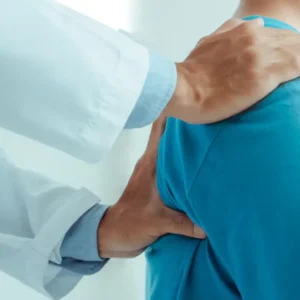
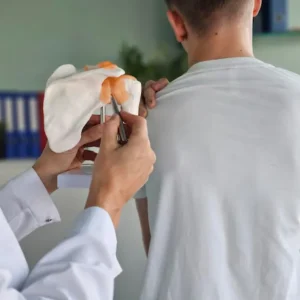
We treat rotator cuff tears, labral tears, impingement, frozen shoulders and shoulders that keep dislocating. Bring your scans to our Downtown Dubai clinic. Our surgeon will examine the shoulder, go through the imaging with you, and tell you plainly whether surgery is worth having.

Signs You May Need Shoulder Surgery
Not every sore shoulder needs an operation. Still, these patterns usually do:
- Pain that wakes you when you roll onto that side
- Weakness that gives way mid-movement, particularly overhead
- A shoulder that has dislocated more than once
- Stiffness that stops you reaching behind your back or above your head
- A scan showing a tear that physiotherapy cannot repair
Two of those together is usually enough to warrant a proper assessment.
What Is Shoulder Arthroscopy?
Your surgeon makes two to four small openings around the joint, each roughly a centimetre wide. A thin camera called an arthroscope goes through one opening and sends live images to a screen. Tiny instruments pass through the others to carry out the repair.
Firstly comes a full inspection. Every tendon, the cartilage, the joint lining and the ligaments. Then our surgeon repairs whatever the screen reveals, working from a magnified live view rather than by feel alone.
Once finished, the openings get closed and dressed. Your arm goes into a sling, and most patients head home the same day.

Shoulder Arthroscopy vs Open Shoulder Surgery
By contrast, open surgery cuts through the muscle covering the joint. That muscle then has to heal on top of the original problem, which adds pain and stretches out the recovery considerably.
Arthroscopy avoids most of that damage. The difference shows up in four ways.
- Less pain from day one. Your body repairs far less tissue, so swelling stays manageable.
- Home the same day. Most patients recover better in their own bed than on a ward.
- Lighter medication. Less pain means fewer strong painkillers. You sleep better and think more clearly.
- One procedure, not two. Your surgeon diagnoses and repairs in the same session. One anaesthetic, one recovery.
So choosing arthroscopy is not simply about a smaller scar. It changes how much your body has to repair, how soon you are back on your feet, and how much of the recovery you actually feel. Our orthopedic specialists will tell you plainly whether you are a candidate for the keyhole approach, or whether your shoulder genuinely needs open surgery.
Conditions We Treat With Shoulder Arthroscopy
Frequently our surgical team finds and fixes more than one problem in the same session.
Rotator Cuff Tears
Essentially four tendons hold your shoulder steady and power most arm movement. A tear leaves the joint weak in a way you cannot work around, no matter how you adjust. Our surgeon reattaches the torn tendon to bone using small anchors.
Shoulder Impingement
Meanwhile the cuff tendons run through a narrow gap beneath a bony arch. When bone spurs or thickened tissue tighten that gap, the tendons catch with every movement. Subacromial decompression clears the obstruction.
Labral and SLAP Tears
Similarly, the labrum is a rim of cartilage lining the shoulder socket. It gives the joint depth and keeps the ball seated properly. Arthroscopic repair restores that stability with a precision open surgery cannot match.
SLAP tears affect the top of the labrum. They turn up often in throwers, swimmers and racket players.
Recurrent Shoulder Dislocation
Unfortunately, once a shoulder pops out, the surrounding structures stretch. Each dislocation then comes easier than the last, until it happens reaching for a seatbelt. Stabilisation surgery tightens and reattaches whatever holds the joint in place.
Frozen Shoulder
Here the joint capsule swells and thickens until the shoulder locks up. Getting dressed hurts. Reaching a shelf hurts. Rolling over in bed wakes you. When physiotherapy and injections have failed, a capsule release restores movement quickly.
Bursitis, Bone Spurs, and AC Joint Problems
Our specialist team also treats stubborn bursitis and bone spurs that rest never clears. Meanwhile AC joint damage from contact sport, falls or years of overhead work responds well to arthroscopic repair.
Types of Arthroscopic Shoulder Surgery
- Arthroscopic rotator cuff repair
- Subacromial decompression for impingement
- Arthroscopic labral repair
- Stabilisation surgery for recurrent dislocation
- Capsule release for frozen shoulder
Where a joint is too damaged for keyhole repair, our surgeon will talk you through shoulder replacement surgery instead.
When Surgery Makes Sense, and When It Does Not
Arthroscopy is not the automatic answer to shoulder pain. If more physiotherapy, a different injection or a change in activity would fix things, our specialist will try that first.
Surgery asks for a genuine recovery commitment. Therefore the benefit has to be worth it.
Four situations typically point toward going ahead. You completed conservative treatment properly and it fell short. Or a scan confirms damage that will not heal on its own. If the shoulder is costing you sleep, work or the activities you enjoy, waiting rarely helps. The same applies when the problem was never going to respond to physiotherapy, such as a full-thickness tear or an unstable joint.
What Happens on the Surgery Day for Shoulder Arthroscopic?
Before Surgery
Beforehand our medical team runs blood tests, reviews your scans and plans the anaesthetic. You also get written instructions on eating, drinking and arranging your lift home.
During the Procedure
Once the anaesthetic takes effect, your surgeon inspects the whole joint before repairing anything. Scans help, although they rarely show everything. Sometimes the live view changes the plan entirely.
The repair may involve reattaching tendons, trimming cartilage, releasing a capsule or tightening ligaments. Most procedures take one to two hours.
After Surgery
Afterwards you wake with your arm in a sling and a dressing on. Most patients go home within hours. You leave with a pain plan and a physiotherapy start date already booked.
Shoulder Arthroscopy Recovery Time
Naturally, recovery depends entirely on what gets repaired. A decompression heals faster than a full cuff reattachment. Here is the general picture.
- First fortnight. The sling stays on. Expect swelling and tenderness, although ice and medication handle it well.
- From week two to six. Gentle physiotherapy begins. It protects the repair while keeping the joint moving, progressing at your pace.
- Six to twelve weeks. Strengthening builds. Most desk-based patients feel close to normal by the end of this stretch.
- Months 3 to 6. Athletes and physical workers reach full function. Our team clears you on strength testing rather than the calendar.
Returning to Work After Shoulder Surgery
Generally, desk jobs mean two to four weeks off. Physical jobs involving lifting or overhead work usually mean three to six months. Our surgeon gives you a timeline based on your repair and your actual job, not a generic estimate. One thing holds true every time though. Patients who commit to their physiotherapy recover faster and finish with better function.
Cost of Shoulder Arthroscopy in Dubai
Your final figure depends on which structures need repair, how long the procedure takes and your aftercare plan. A decompression costs less than a full cuff reattachment with anchors.
So you receive an itemised quote after your consultation and scan review. Nothing about the price catches you off guard later.
Shoulder Arthroscopy Risks and Complications
Overall, risks stay low with experienced surgeons. They are not zero though, and pretending otherwise helps nobody.
For instance, infections related to the wounds are uncommon and can be easily treated by taking antibiotics at the onset of the symptoms. In addition, nerve irritation may lead to temporary tingling which subsides after a few weeks. The main cause of stiffness occurs when the patient fails to take part in rehabilitation procedures; hence, our emphasis on physiotherapy. Smoking and diabetes increase the chances of poor healing, and this is something our surgeon will make you aware of directly.
Why Patients Choose Trusta Medical Center
- DHA-licensed orthopedic surgeons focused on joint conditions and keyhole surgery. That focus shows in the results.
- Care under one roof, from your first appointment to the last physiotherapy session. The surgeon who repairs your shoulder stays connected to the team rehabilitating it.
- Honest advice, always. We tell you what we actually think, including when surgery is not the right answer yet.
- No procedure without purpose. We would rather turn down a case than recommend one that does not serve you.
Book a Shoulder Arthroscopy Consultation
So if you have been managing the shoulder rather than fixing it, come and talk to us. Bring your scans, bring your questions, and tell us what the shoulder has been doing to your days. Our experienced orthopedic team will examine it properly and give you a straight answer.
our expert answers
Frequently Asked Questions
How painful is shoulder arthroscopy recovery?
Milder than most patients expect. The first week brings real aching, but the medication plan handles it well.
When can I drive again?
Around four to six weeks, once you are out of the sling and your arm has reliable control.
Is physiotherapy compulsory after shoulder arthroscopy?
About as compulsory as anything in medicine gets. Surgery repairs the structure. Physiotherapy teaches it to work under load again. Skipping it is the most common reason patients fall short of a full result.
Will the repair hold long term?
Yes, for patients who finish rehabilitation and treat the shoulder sensibly afterwards.
 Posted on Google
 amitisful
Trustindex verifies that the original source of the review is Google.
Amazing experience! The staff were wonderful and I’m very happy with the results. I’ll definitely come backThis is truly a state-of-the-art beauty clinic. The facilities, technology, and range of services available here are exceptional, and you won’t easily find the same level of comprehensive care in other clinics. As a physician, I highly recommend visiting this clinic. It is truly in a class of its own when it comes to aesthetic medicine, offering a complete range of beauty and aesthetic services, from surgical to non-surgical treatments, all under one roof..❤️❤️❤️Posted on Google Helmi Emadما شاء الله موقع ممتاز عيادة نظيفة تحسهم من المستقبل أما الاستقبال مررررة أدب تستأنث وياهم الصراحة ما تحس نفسك في عيادة من شدة إهتمام الدكاترة وباقي التيم كله متوفر عندهم مواقف سيارات مجانية ومصعد لذوي الاحتياجات الخاصة أشكر أصدقائي على التوصية بي عيادة ترستا واتمنى لكم التوفيق والنجاحPosted on Google
 Sahar GeramiPosted on Google
 Donna AskariAmazing clinicPosted on Google
 Farnaz Saeedi⭐⭐⭐⭐⭐ I had a great experience at Trusta Clinic. The staff were very professional, friendly, and welcoming. The clinic is clean, modern, and well-organized, and I really appreciated the attention to detail and the quality of service. Highly recommended! I’ll definitely be coming back. ❤️Posted on Google
 Layth SalhabAbsolutely amazing experience at Trusta Medical Center! ⭐️⭐️⭐️⭐️⭐️ The clinic is beautiful, modern, and very clean. The team is professional, welcoming, and genuinely attentive from the moment you arrive. You can really feel the high standard of care and attention to detail. Highly recommended for anyone looking for quality medical and aesthetic services in Dubai. 👌🏻✨Posted on Google
 sahra rezvanpanah⭐⭐⭐⭐⭐ I had a wonderful experience at Trusta Clinic, from the initial consultation all the way through my cosmetic procedure. Everyone, from the staff to the doctors, was incredibly supportive, caring, and attentive throughout the entire process. I truly felt that I was surrounded by people who genuinely cared about me, almost as if I were among friends. I’m very happy with my experience and would definitely recommend Trusta Clinic to anyone considering a cosmetic procedure.Posted on Google
 Mohammed AbdalraheemA lovely experience at Trusta Medical Center. The staff are kind, welcoming, and very professional, and the clinic has a clean and comfortable atmosphere. I truly appreciated the attention to detail, the respectful way everything was explained, and the high standard of care. The doctors are carefully selected and clearly experienced in their fields. A very pleasant and trustworthy medical center that I would happily recommend to others.Posted on Google
 Isis Aamn💖💖🌹 I had a very pleasant experience at Trusta Medical Center. The clinic is clean, elegant, and well organized, and the staff were welcoming and professional from the moment I arrived. I was especially impressed with the aesthetic medicine services. The doctors are highly professional, attentive, and take time to explain everything clearly. The prices are also reasonable and transparent. A very comfortable and trustworthy medical center. Highly recommended!🌹💖Posted on Google
 Ayden⭐⭐⭐⭐⭐ I had a wonderful experience at Trusta Medical Center. From the moment I arrived, the reception team was welcoming, professional, and very well organized. The entire clinic has a clean, elegant, and comfortable atmosphere, which immediately gives you a sense of confidence and trust. I was particularly impressed by their Aesthetic Medicine Department. The team takes the time to understand each patient’s concerns and expectations, and everything is explained clearly before making any decision. Their approach feels professional and patient-centered rather than commercial. The clinic also seems very selective in choosing its doctors. The medical team is experienced, knowledgeable, and genuinely focused on achieving natural and appropriate results while maintaining high standards of safety. Another positive point was the transparency regarding prices and treatment options. Everything was explained clearly, with no unnecessary pressure to undergo additional procedures. Overall, Trusta Medical Center is an excellent polyclinic that combines professional medical care, hospitality, cleanliness, fair pricing, and highly qualified doctors under one roof. I would confidently recommend it to anyone looking for a reliable medical center in Dubai, especially for aesthetic medicine. A truly five-star experience. Highly recommended. ❤️Verified by TrustindexTrustindex verified badge is the Universal Symbol of Trust. Only the greatest companies can get the verified badge who has a review score above 4.5, based on customer reviews over the past 12 months. Read more