- 000 - 123 - 456789
- info@trustaclinic.ae
- VILA 17, Street 73B, AL SATWA, Dubai, UAE


CONTACT US
- (000) 123-456-789
- VILA 17, Street 73B, AL SATWA, Dubai, UAE.
- info@trustaclinic.ae
Sports Injury Treatment in Dubai
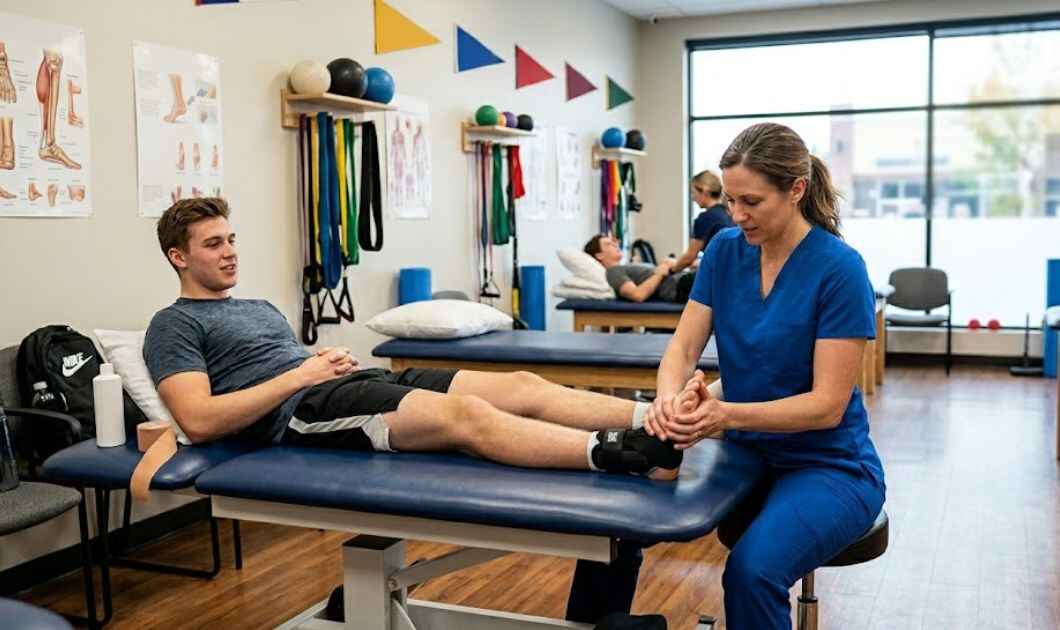
Three weeks. That is how long most people wait before they finally do something about a sports injury. They ice it, they rest it, they tell themselves it will sort itself out. Sometimes it does. More often it does not, and by the time they walk into our clinic they are frustrated, a little anxious, and wishing they had come in sooner.
We hear this constantly in Trusta Clinic. And we never judge it, because we understand why people wait. Nobody wants to be told their injury is serious.
Nobody wants to hear the word surgery. So they hope, and they wait, and sometimes that works out fine.
But if you are reading this right now, something is probably still hurting. So let us talk about what is actually going on and what we can do about it together.
This Is Not Just for Professional Athletes
Before anything else, we want to address something. A lot of people feel awkward searching for sports injury treatment near me because they do not consider themselves sporty enough to justify it. They play a bit of football on weekends. They go to the gym three times a week. They started running six months ago and now their knee is not cooperating.
That absolutely counts. You do not need a contract or a coach or a medal to deserve proper medical care for a physical injury. Our sports physiotherapy clinic in Dubai treats everyone from professional footballers with club-mandated recovery windows to retired teachers who just want to be able to walk the golf course without pain. The injury matters. The person behind it matters. The label does not.
What Brought You Here?
Every patient who comes through our door has a story. The stories sound different on the surface but they share something underneath. Something happened, the body responded, and now life is harder than it was before.
Sometimes the cause of sports injuries is obvious and immediate. A tackle gone wrong. A stumble on a trail run. A weight that moved in a direction it was not supposed to. The injury announces itself clearly and loudly.
Other times it is more like a slow conversation the body has been trying to have for months. A tightness in the Achilles that became pain that became the thing that finally forced a day off. A shoulder that started clicking during bench press and now aches every morning before you even get out of bed. Repetitive strain injuries work like water on stone. Nothing dramatic. Just constant pressure until something gives.
Both of these are real injuries. Both deserve the same standard of care. And understanding which one you are dealing with changes how we approach treatment for muscle and ligament injuries, bone stress, tendon problems, and everything else we see at our sports rehab center in Dubai.
The Things We See Every Week
People often ask us what are the most common sports injuries we treat. Honestly the list is long and the variety keeps things interesting. But week after week, the conditions that fill our appointment book most reliably include ankle sprains, knee ligament injuries including ACL and PCL damage, hamstring and groin strains, rotator cuff problems, tennis elbow, golfer’s elbow, runner’s knee, jumper’s knee, Achilles tendon issues in every stage from mild inflammation to complete rupture, shin splints, stress fractures, shoulder and finger dislocations, meniscus tears, cartilage damage, bursitis across the hip, knee and shoulder, and concussions from contact sport.
We also see a significant number of patients whose original injury was somewhere else on that list but was managed poorly the first time around. An ankle sprain that was rested but never rehabilitated. A hamstring tear that was declared healed based on pain levels alone. Incomplete recovery is one of the most common causes of sports injuries repeating themselves, and it is something our orthopedic and sports injury treatment team takes very seriously.
What the Symptoms of Sports Injuries Actually Feel Like
Here is something worth knowing. Pain after exercise is not always injury. Muscle soreness, stiffness the morning after a hard session, general fatigue in the legs after a long run, these are normal physiological responses to training load. They are uncomfortable but they are not damage.
The symptoms of sports injuries tend to feel different. They are more specific. More persistent. They behave in ways that normal soreness does not.
Pain that sits in a very precise location rather than spreading across a muscle group. Swelling that appeared within hours of an incident. A pop or snap at the exact moment something went wrong. Weakness that is still there days later. Stiffness that does not respond to movement or warmth the way ordinary soreness would. Pain that shows up in your sleep, or follows you into activities that have nothing to do with exercise. Tingling or numbness moving down a limb. A joint that looks or feels different from the one on the other side of your body.
Any of those things in isolation might be worth monitoring. Several of them together mean it is time to stop monitoring and start getting answers. Our orthopedic care for athletes and active people begins with exactly that.
What Happens When You Come to See Us
We want to be honest about what a first appointment actually looks like, because mystery around the process stops people from booking and we would rather you just came in.
You sit down with one of our doctors. You talk. We want to hear everything, not just where it hurts but how it happened, what you felt in that moment, how it has changed since, what your training looks like normally, what you have tried already, and what you are hoping to get back to. Context is everything in sports medicine and we never rush that part of the conversation.
Then comes the physical examination. We check how the injured area moves, where the pain is most acute, which specific structures are likely involved, and how the injury is affecting the way your whole body compensates around it. Depending on what that tells us, we arrange the right imaging. X-ray when we need to look at bone. MRI when soft tissue detail matters, which for ligament, tendon, and cartilage injuries it almost always does. Ultrasound for real-time assessment of muscles and tendons in motion. CT scan when bone or joint anatomy needs a more detailed picture than X-ray can provide.
Then we sit back down and tell you what we found. In plain language. With a clear explanation of what it means, why it happened, and what your options realistically are. A sports injury consultation with us is supposed to leave you feeling clearer, not more confused.
How We Actually Treat It
Here is where we probably differ most from a lot of what people have experienced before. Treatment options for sports injuries are not a menu you pick from based on what sounds appealing. They are clinical decisions based on what the injury actually needs at each stage of healing.
In the first couple of days after an acute injury, managing swelling and protecting the damaged tissue is the only priority. Rest, ice through a cloth to protect the skin, compression from a bandage or brace, and keeping the limb elevated above heart level when possible. This is not glamorous but it genuinely matters for how the early healing phase goes.
After that, the work really begins. For most injuries, sports injury physiotherapy is the backbone of recovery. Our sports injury physiotherapy team in Dubai does not hand you a printed sheet and send you home. They work with you, hands on, adjusting week by week based on how you are actually responding. Joint mobilisation to restore movement that has stiffened. Targeted strength work to rebuild the muscles that were weakened by the injury or the rest that followed it. Stability and coordination training because injury disrupts neuromuscular control in ways that pure strength work does not fix. Soft tissue release and dry needling for the muscular guarding that almost always develops around an injured area. And when you are getting close to returning to your sport, movement patterns and loads that actually reflect what your body will face when you get back out there.
For tendon conditions, chronic overuse injuries, and significant joint inflammation, non-surgical sports injury treatment options broaden further. Platelet-rich plasma injections use concentrated healing factors from your own blood to support repair of tissue that is struggling to recover on its own. Corticosteroid injections settle inflammation in joints and tendons when it has become a barrier to rehabilitation progress. Shockwave therapy has genuinely strong evidence behind it for chronic tendon problems and we use it regularly. Ultrasound-guided injections allow us to place treatment with precision in structures that cannot be reached accurately by feel alone. Custom orthotics address the biomechanical factors that contributed to the injury in the first place.
Surgery is sometimes the right answer and we will not pretend otherwise. A completely ruptured ACL. A full-thickness rotator cuff tear in someone who wants to return to an overhead sport. A fracture that will not heal properly without fixation. Our best orthopedic doctor for sports injuries will tell you clearly when an operation gives you the best realistic outcome, explain what it involves, and walk you through what the recovery looks like on the other side. We do not default to surgical recommendations and we do not avoid them when they are genuinely warranted.

Before

After
Recovery Time for Sports Injuries: The Honest Version
Recovery time for sports injuries is genuinely one of the most searched phrases we see people arrive from, and we understand why. You want to know when you can run again. When you can train. When this will stop being the thing that defines your week.
The honest answer is that it depends, and anyone who gives you a precise number without examining you is guessing. Minor sprains and muscle strains often settle in two to four weeks with proper management. Moderate ligament injuries typically need two to three months. More significant soft tissue injuries that do not require surgery can take four to six months. Post-surgical recovery for something like an ACL reconstruction is a serious commitment, often nine to twelve months before return to competitive sport, sometimes longer.
What we can tell you is that our sports injury recovery program is built to move you through those stages as efficiently as your body allows. We do not push you faster than the biology supports. We do not hold you back once you are ready to progress. The recovery time for sports injuries also shortens considerably when people come in early, which is the single most important variable that is actually within your control.
Keeping This From Happening Again
After a significant injury and a proper recovery, how to prevent sports injuries stops being something you read about and starts being something you genuinely think about. The evidence points to a few things that consistently make a difference.
Warming up properly. Not a perfunctory stretch but an actual preparation of the tissues, joints, and movement patterns you are about to demand things from. Building training load gradually, because the body adapts to stress but it needs time to do so. Strengthening the muscles around the joints that took the damage, because strong supporting structures absorb force that would otherwise travel directly to bone, cartilage, and ligament. Varying training to avoid hammering the same tissues in the same way repeatedly. Wearing footwear that suits your specific mechanics and your sport. And taking early warning signs seriously rather than training through them until something breaks.
We offer movement screening and injury risk assessments for anyone who wants to identify vulnerabilities before they become an actual problem. It is one of the most practical things our joint and bone specialist team offers, and genuinely underused.
Why People Keep Coming Back to Trusta Clinic
Patients searching for a sports medicine hospital near me, a sports injury specialist near me, or the best clinic for sports injuries in Dubai have options in this city. Here is what people tell us sets us apart, and we are sharing it not to boast but because these things genuinely matter when you are choosing where to take your body.
Our doctors and physiotherapists work together on your case rather than operating in separate silos. Your physiotherapist knows what the imaging showed. Your doctor knows how the rehabilitation is progressing. Nobody is working from incomplete information. We go after the reason behind the injury, not just the painful part. We talk to you like an adult and give you honest information even when it is not what you were hoping to hear. We do not push surgery when it is not necessary and we do not avoid recommending it when it is. We make appointment scheduling as flexible as possible because active people have full lives and we understand that.
Come and Talk to Us
If you want to book a sports injury doctor, arrange a physiotherapy appointment for injury, or just have a sports injury consultation with someone who will actually listen and give you clear answers, reach out to us in Trusta Clinic today.
You have probably already spent enough time hoping it will sort itself out. Let us take a proper look, tell you exactly what is going on, and build a plan around your life and your goals. Our sports injury specialists in Dubai are here for that conversation whenever you are ready to have it.
Trusta Clinic, Dubai. Sports injury treatment, physiotherapy, and orthopedic care. For people who want straight answers and proper recovery.
