
Elective C-Section in Dubai Expert Maternity Care
An elective cesarean section is a planned surgical birth scheduled before labor begins. It may be recommended for certain medical conditions or chosen after discussing your options with your obstetrician. Understanding why a planned C-section is performed, what happens during the procedure, and what recovery involves can help you feel more prepared and confident. In this guide, we’ll explain who may be a candidate, the benefits and risks, how to prepare, what to expect on the day of surgery, and what recovery looks like. For a broader overview of cesarean births, visit our Cesarean Section Delivery page.
Common reasons for an elective C-section include previous cesarean delivery, certain pregnancy complications, placenta problems, abnormal baby positioning, or multiple pregnancies. Understanding why the procedure is performed, what happens during surgery, and what recovery involves can help you feel more prepared and confident.
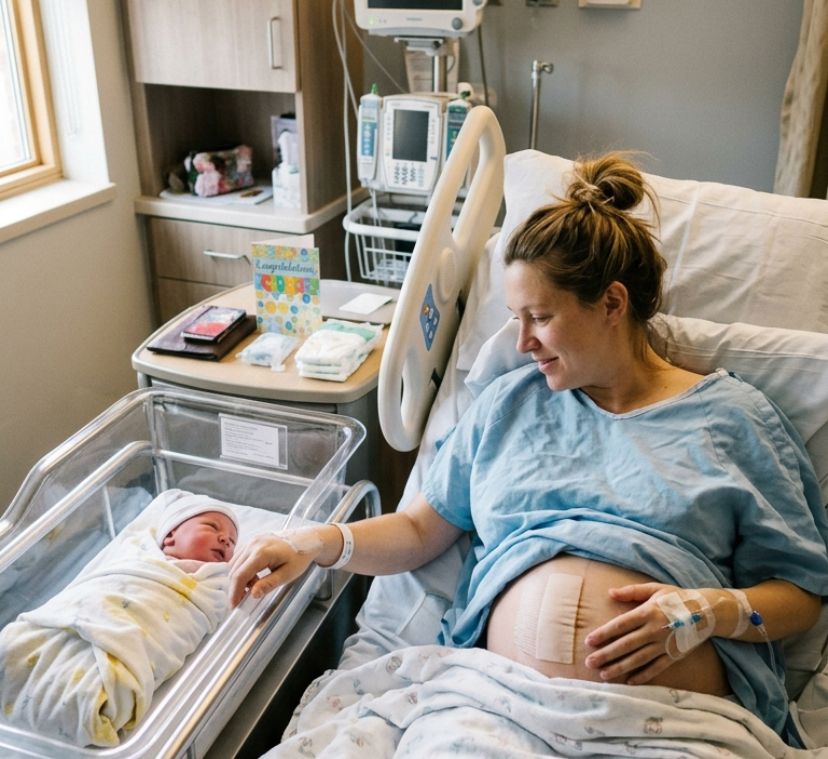
What Is an Elective Cesarean Section?
An elective cesarean section also called a planned C-section or scheduled C-section is a cesarean delivery that is arranged in advance, usually during the third trimester, rather than performed in response to a sudden complication during labor.
This is the key difference from an emergency C-section: an emergency procedure happens unexpectedly, often because labor isn’t progressing safely or the baby shows signs of distress. An elective cesarean delivery, on the other hand, is scheduled ahead of time, giving you and your medical team time to prepare, discuss anesthesia options, and set a clear date usually around the 39th week of pregnancy, once your baby is considered full term.
Because everything is planned, elective C-sections tend to feel calmer and more predictable, both for you and your care team.

Benefits of an Elective Cesarean Section
Benefits of a planned cesarean delivery include:
- Predictability: You and your family can plan around a known delivery date.
- Reduced labor-related risks: Avoids complications that can arise from prolonged or difficult labor.
- Lower risk of certain emergencies: Especially relevant for breech presentation or placenta previa.
- Time to prepare mentally and physically: No last-minute rush to the hospital.
- Coordinated care team: Your OB, anesthesiologist, and nursing staff are ready and familiar with your case.
These benefits can help make the delivery experience more organized, controlled, and comfortable while ensuring you receive appropriate medical support throughout the process.
Who Is a Candidate for an Elective C-Section?
There are two broad paths that lead to a planned C-section:
Medical Reasons
- Breech or transverse baby position
- Placenta previa (placenta covering the cervix)
- Multiple pregnancy (twins or more) in certain positions
- Previous C-section, especially with a classical (vertical) incision
- Certain maternal health conditions, such as heart disease or active infections
- Large baby size (macrosomia) or a narrow pelvis
Maternal Request / Personal Choice Some mothers choose requesting a C-section without a strict medical indication perhaps due to anxiety about vaginal birth, a previous difficult delivery, or a personal preference for a planned birth date. This is a valid and increasingly common decision. Your OB will talk through your reasons, medical history, and expectations to make sure this is the safest path for you and your baby.
Risks and Considerations
Like any surgery, an elective cesarean delivery carries some risks worth understanding:
- Longer hospital stay and recovery time compared to vaginal birth
- Higher risk of infection or bleeding
- Possible impact on future pregnancies (such as placenta complications)
- Temporary breathing difficulties for baby if scheduled too early (this is why 39 weeks is the recommended minimum)
- Standard surgical risks, including reaction to anesthesia
Our team will review your full health history so you understand exactly how these risks apply to your specific situation.
How to Prepare
- Pre-op appointments: Around 1–2 weeks before surgery, you’ll have a check-up including bloodwork and an anesthesia consultation.
- Set your date: Typically scheduled at 39 weeks unless medical reasons require earlier delivery.
- Fasting instructions: You’ll be asked to stop eating and drinking a set number of hours before surgery.
- Pack your hospital bag: Include comfortable clothing, toiletries, going-home outfits for you and baby, and important documents.
- Arrange support: Plan for a family member or partner to be with you and help at home afterward.
What to Expect on the Day of Surgery
Knowing the steps ahead of time can make the day feel much less overwhelming:
- Check-in and prep: You’ll change into a gown, and a nurse will confirm your details and start an IV line.
- Anesthesia: Your anesthesiologist will administer your chosen anesthesia (see below).
- Partner joins you: In most cases, your partner or support person can be present in the operating room.
- Delivery: The surgery itself usually takes about 10–15 minutes to deliver your baby.
- Skin-to-skin and closing: Many hospitals, including Trusta Clinic, support early skin-to-skin contact while the surgical team completes closing, which takes another 30–45 minutes.
- Recovery room: You’ll be monitored closely as the anesthesia wears off.
Anesthesia Options
Most elective C-sections use regional anesthesia, which numbs you from the waist down while you stay awake and alert for your baby’s birth:
- Spinal anesthesia: A single injection, fast-acting, most common for planned C-sections.
- Epidural anesthesia: Delivered through a small catheter, sometimes used if you already have one from labor.
- General anesthesia: Rarely used for elective cases, reserved for specific medical situations.
Your anesthesiologist will discuss the best option for you during your pre-op visit.
Recovery Timeline
In the Hospital (2–4 days) You’ll be encouraged to get up and move within 24 hours to support circulation and healing. Pain is managed with medication, and nurses will guide you through early breastfeeding and newborn care.
At Home (Weeks 1–6) Expect to rest, avoid heavy lifting, and gradually increase activity. Most mothers feel noticeably better by week 2, though full internal healing takes about 6 weeks.
Return to Normal Activity Light walking can usually start right away. Driving, exercise, and heavier activity are typically cleared around the 6-week postpartum check-up. Every elective C-section recovery timeline is a little different, so always follow your doctor’s personalized guidance.
Elective C-Section vs. Vaginal Birth
| Factor | Elective C-Section | Vaginal Birth |
|---|---|---|
| Delivery timing | Scheduled in advance | Begins naturally or is induced |
| Hospital stay | 2–4 days | 1–2 days |
| Recovery time | 4–6 weeks | 1–2 weeks (typically shorter) |
| Pain management | Post-surgical, incision-based | Perineal, may include stitches |
| Predictability | High | Lower — timing can vary |
| Skin-to-skin timing | Shortly after delivery | Immediate |
our expert answers
Frequently Asked Questions
Is an elective C-section safe?
Yes. When performed by an experienced team at the right gestational age, it's a safe and routine surgical procedure.
Can I request a C-section without a medical reason?
Yes, maternal request is a recognized reason for a planned C-section. Your doctor will discuss your individual circumstances first.
How early can I schedule my C-section?
Elective C-sections are generally scheduled no earlier than 39 weeks, unless there's a specific medical reason to deliver sooner.
Will I be awake during the surgery?
In most cases, yes. Regional anesthesia keeps you awake and pain-free so you can experience your baby's birth.
How painful is recovery?
Some soreness around the incision is normal for the first couple of weeks, but it's manageable with medication and improves steadily.
Why Choose Trusta Clinic for Your Elective C-Section
In Trusta Clinic, your comfort and safety come first. Our experienced OB-GYN team has delivered thousands of babies through both planned and emergency cesarean deliveries, backed by:
- A dedicated, on-site NICU for added peace of mind
- Personalized birth plans built around your medical history and preferences
- Modern operating theaters and skilled anesthesiology support
- Compassionate nursing staff focused on your recovery and your baby’s wellbeing
We believe every mother deserves a birth experience that feels informed, respected, and calm.
Ready to Plan Your Birth?
Every pregnancy journey is unique, and so is every birth plan. Schedule a consultation with our obstetric team today to discuss whether an elective cesarean section is right for you.
 Posted on Google
 amitisful
Trustindex verifies that the original source of the review is Google.
Amazing experience! The staff were wonderful and I’m very happy with the results. I’ll definitely come backThis is truly a state-of-the-art beauty clinic. The facilities, technology, and range of services available here are exceptional, and you won’t easily find the same level of comprehensive care in other clinics. As a physician, I highly recommend visiting this clinic. It is truly in a class of its own when it comes to aesthetic medicine, offering a complete range of beauty and aesthetic services, from surgical to non-surgical treatments, all under one roof..❤️❤️❤️Posted on Google Helmi Emadما شاء الله موقع ممتاز عيادة نظيفة تحسهم من المستقبل أما الاستقبال مررررة أدب تستأنث وياهم الصراحة ما تحس نفسك في عيادة من شدة إهتمام الدكاترة وباقي التيم كله متوفر عندهم مواقف سيارات مجانية ومصعد لذوي الاحتياجات الخاصة أشكر أصدقائي على التوصية بي عيادة ترستا واتمنى لكم التوفيق والنجاحPosted on Google
 Sahar GeramiPosted on Google
 Donna AskariAmazing clinicPosted on Google
 Farnaz Saeedi⭐⭐⭐⭐⭐ I had a great experience at Trusta Clinic. The staff were very professional, friendly, and welcoming. The clinic is clean, modern, and well-organized, and I really appreciated the attention to detail and the quality of service. Highly recommended! I’ll definitely be coming back. ❤️Posted on Google
 Layth SalhabAbsolutely amazing experience at Trusta Medical Center! ⭐️⭐️⭐️⭐️⭐️ The clinic is beautiful, modern, and very clean. The team is professional, welcoming, and genuinely attentive from the moment you arrive. You can really feel the high standard of care and attention to detail. Highly recommended for anyone looking for quality medical and aesthetic services in Dubai. 👌🏻✨Posted on Google
 sahra rezvanpanah⭐⭐⭐⭐⭐ I had a wonderful experience at Trusta Clinic, from the initial consultation all the way through my cosmetic procedure. Everyone, from the staff to the doctors, was incredibly supportive, caring, and attentive throughout the entire process. I truly felt that I was surrounded by people who genuinely cared about me, almost as if I were among friends. I’m very happy with my experience and would definitely recommend Trusta Clinic to anyone considering a cosmetic procedure.Posted on Google
 Mohammed AbdalraheemA lovely experience at Trusta Medical Center. The staff are kind, welcoming, and very professional, and the clinic has a clean and comfortable atmosphere. I truly appreciated the attention to detail, the respectful way everything was explained, and the high standard of care. The doctors are carefully selected and clearly experienced in their fields. A very pleasant and trustworthy medical center that I would happily recommend to others.Posted on Google
 Isis Aamn💖💖🌹 I had a very pleasant experience at Trusta Medical Center. The clinic is clean, elegant, and well organized, and the staff were welcoming and professional from the moment I arrived. I was especially impressed with the aesthetic medicine services. The doctors are highly professional, attentive, and take time to explain everything clearly. The prices are also reasonable and transparent. A very comfortable and trustworthy medical center. Highly recommended!🌹💖Posted on Google
 Ayden⭐⭐⭐⭐⭐ I had a wonderful experience at Trusta Medical Center. From the moment I arrived, the reception team was welcoming, professional, and very well organized. The entire clinic has a clean, elegant, and comfortable atmosphere, which immediately gives you a sense of confidence and trust. I was particularly impressed by their Aesthetic Medicine Department. The team takes the time to understand each patient’s concerns and expectations, and everything is explained clearly before making any decision. Their approach feels professional and patient-centered rather than commercial. The clinic also seems very selective in choosing its doctors. The medical team is experienced, knowledgeable, and genuinely focused on achieving natural and appropriate results while maintaining high standards of safety. Another positive point was the transparency regarding prices and treatment options. Everything was explained clearly, with no unnecessary pressure to undergo additional procedures. Overall, Trusta Medical Center is an excellent polyclinic that combines professional medical care, hospitality, cleanliness, fair pricing, and highly qualified doctors under one roof. I would confidently recommend it to anyone looking for a reliable medical center in Dubai, especially for aesthetic medicine. A truly five-star experience. Highly recommended. ❤️Verified by TrustindexTrustindex verified badge is the Universal Symbol of Trust. Only the greatest companies can get the verified badge who has a review score above 4.5, based on customer reviews over the past 12 months. Read more