
PRP Injections for Hip Pain: How They Work and What to Expect
Trusta Medical Center offers PRP injection for hips for selected causes of hip pain. The treatment uses a concentrated part of your own blood. Our orthopedic surgeon injects the prepared PRP into the affected area to support the body’s natural repair process. Hip pain can affect simple activities. Arthritis can also lead to hip pain. An injury or tendon problem around the hip can also lead to pain.
How Does PRP Injection for Hips Work?
First our orthopedic surgeon identifies the possible cause of your hip pain. Your symptoms and hip movement are reviewed during the examination. Previous imaging may also help assess the joint. This evaluation helps determine whether PRP is suitable for your condition. A small blood sample is then taken from your arm. The sample is placed in a centrifuge to separate the blood components and concentrate the platelets. The prepared PRP contains platelets and growth factors.

Who May Benefit From PRP for Hip Pain?
PRP may be considered when hip pain continues despite conservative treatment. It may be an option for selected joint or soft tissue conditions.
You may need an assessment if you have:
- Ongoing hip pain
- Hip stiffness
- Pain during walking
- Pain during exercise
- Reduced hip movement
- Tendon pain
- Pain after a previous injury
- Symptoms that return after rest
PRP is not for everyone. Diagnosis must be given first.

How Is PRP Injection for Hips Performed?
Hip Assessment
Your symptoms and hip movement are reviewed during the consultation. Previous scans may also be checked, or imaging can be requested when needed.
Blood Collection
A small amount of blood is taken from your arm for PRP preparation.
PRP Preparation
The blood sample goes through a centrifuge. This separates the blood components and concentrates the platelets.
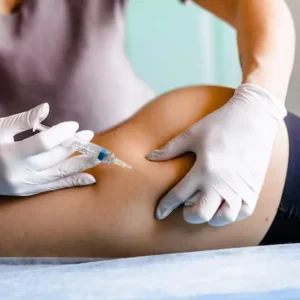
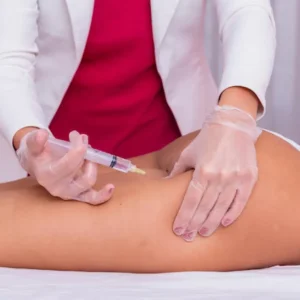
PRP Injection
The treatment area is cleaned before the injection. Ultrasound guidance may be used to help position the PRP accurately.
Aftercare
Post-treatment instructions explain how to care for the treated area. Temporary limits on exercise or other activities may be recommended.
Why Does My Hip Hurt So Much?
The pain may begin in the joint. It can be a result of the tissues surrounding it as well.
- Hip Joint Arthritis
- Joint wear
- Degenerative changes
- Tendon problems
- Bursitis
- Previous injuries
- Repeated strain
Our orthopedic surgeon checks your symptoms and examines your hip to find the actual cause of the pain.
How Can PRP Help Hip Pain?
PRP places concentrated platelets into the affected area. The growth factors in PRP may support the body’s repair response. Some patients may experience less pain and better movement after treatment. PRP can also be used for selected shoulder conditions. You can learn more about our PRP for shoulder pain treatment.
Platelet-rich plasma injections for hip osteoarthritis
Individuals with hip OA might experience pain and stiffness. There may also be a reduction in mobility. PRP may be considered for some patients with hip joint arthritis . The goal is to help manage symptoms and support joint function. Our orthopedic surgeon will assess the condition of your hip before suggesting PRP. The severity of the joint changes also matters when choosing treatment.
PRP for Hip Tendon and Soft Tissue Problems
Pain does not always come from the hip joint itself. Tendons and other soft tissues around the hip can also become irritated or injured. Repeated activity can place stress on these tissues. Sports can also contribute to some injuries. PRP may be an option for selected tendon or soft tissue problems. Our specialist will first identify the affected area and check whether PRP is appropriate.
PRP Hip Injection Recovery Time
Your hip may feel sore after the injection. Mild swelling or tenderness can also occur. Recovery depends on the condition being treated. Our orthopedic surgeon will explain when you can return to your usual activities. PRP does not usually provide immediate results. Some patients notice changes within a few weeks. Others may need more time.
PRP Injection Hip Success Rate
PRP has shown promising results in some studies involving hip osteoarthritis. Some patients report improvements in pain and movement after treatment. Not everyone will get the same results. The outcome will depend on your age, joint condition, symptoms and severity. Our orthopedic surgeon reviews your symptoms and imaging before treatment. We can then give you a clearer idea of what PRP may achieve in your case.
PRP vs Hyaluronic Acid and Synvisc for Hip Pain
PRP and other injections use different approaches to manage hip pain. For example, PRP uses platelets from your own blood to support the body’s repair response. In comparison, hyaluronic acid helps improve lubrication within the joint. Similarly, Synvisc is a type of hyaluronic acid injection.
| Treatment | Purpose |
|---|---|
| PRP injection | Uses your own platelets to support the body’s repair process |
| Hyaluronic acid injection | Helps improve joint lubrication |
| Synvisc injection | Provides lubrication inside the joint |
| Steroid injection | May help reduce inflammation |
| Physical therapy | Improves strength and hip movement |
However, the most suitable treatment depends on the cause of your hip pain and the condition of the joint. Therefore, an orthopedic doctor will assess your diagnosis before recommending a treatment.
Is PRP for Hip Pain Safe?
PRP comes from your own blood. This means the treatment does not use donor material. You may experience temporary soreness after the injection. Bruising and swelling can also occur. Infection is possible with any injection procedure. Tell our specialist about your medicines and health conditions before treatment.
When to visit a orthopedic doctor
Don’t disregard hip pain which recurs or is interfering with day-to-day activities. You should consider an orthopedic assessment if:
- Pain affects your walking
- You struggle to climb stairs
- Your hip feels stiff
- You have reduced movement
- Pain continues after rest
- You have pain after an injury
- Treatment has not improved your symptoms
Finding the cause early can help you choose the right treatment.
Finding PRP Injection for Hip Near Me
PRP injection for hips can be done at Trusta Medical Center by the orthopedic team. The first step is for your orthopedic surgeon to examine your hip, listen to your complaints, and take a medical history. Then, imaging can be utilized to find out the state of the joint or other tissues. If necessary, ultrasound can be used to guide the placement of the injection. In the consultation, the potential cause of your hip pain will be discussed. Based on the assessment, the best courses of treatment will be discussed. Lastly, you will be provided with clear directions regarding the process, healing and the results.
Book Your PRP Consultation for Hip Pain
The hip is a large and mobile joint, so hip pain can affect daily activities such as sitting, walking, and climbing stairs. During a PRP consultation, an orthopedic specialist will first examine your hip and review your symptoms and medical history. Based on the assessment, the specialist will determine whether PRP injection for hips suits your condition. In addition, the specialist will explain the procedure and recovery process. If PRP is suitable, you will receive clear guidance about treatment, aftercare, and expected recovery.
our expert answers
Frequently Asked Questions
How Long Does a PRP Hip Injection Take to Work?
Most patients start noticing changes within a few weeks after a PRP hip injection. However, pain relief often improves gradually over the following weeks as the hip responds to the treatment.
How many PRP injections will I need for my hip?
There is no fixed number for everyone. Instead, the recommended number depends on your condition and response to treatment.
Is PRP better than hyaluronic acid for hip pain?
Neither treatment works best for every patient. Therefore, your diagnosis and the condition of your hip help determine which option may be more suitable.
Can PRP replace hip replacement surgery?
PRP cannot replace hip replacement surgery when the joint has severe damage.

Posted on Google 

salochana kumari
 Trustindex verifies that the original source of the review is Google.
I visited trusta clinic overall is so amazing but the receptionist Rizza she is so nice and way of dealing with customer is amazing and her behaviour is so attractive ❤️
Posted on Google

Doaa Fathy
Trustindex verifies that the original source of the review is Google. It’s a great experience ❤️I used iv there and it’s give me a very good result ❤️🤩
Posted on Google

Majed Alsaadi
Trustindex verifies that the original source of the review is Google. Mashallah! This is one of the best clinics in Dubai, located in Al Wasl. It officially opened yesterday and features some of the world’s finest doctors.
A special thank you to the amazing customer service team: Goli, Rizza, and Lama.
And thank you to Trusta for the warm welcome and wonderful hospitality! ❤️
Posted on Google

Nimal Rajapaksage
Trustindex verifies that the original source of the review is Google. I did my hair transplant treatment in trusta medical center and they have professional team from receptionist to Dr and hair technicians and also after care and I am so happy and I already recommended to my friends, thank you
Posted on Google

Ri Santos
Trustindex verifies that the original source of the review is Google. What makes this clinic special is not just the quality of care but the people behind it The staff are amazing attentive & genuinely welcoming ü can feel the difference when professionalism comes with a personal touch. Truly a place that makes you feel cared for not just treated. ✨
Posted on Google

Reshma Ajeesh
Trustindex verifies that the original source of the review is Google. Done microblading . Really good experience . Thankyou Arezoo 😊
Posted on Google

Shaghayegh
Trustindex verifies that the original source of the review is Google. I think Trusta is a good choice for plastic surgery. I like that the doctors are really knowledgeable and don’t just say yes to everything. They actually take their time to check what’s right for you instead of just focusing on selling treatments. That’s something I really appreciate
Posted on Google

Sima Khayati
Trustindex verifies that the original source of the review is Google. I had lip filler , i am really happy with my results . Thank you so much
Posted on Google

youssef Hamouda
Trustindex verifies that the original source of the review is Google. Amazing experience from start to finish! The clinic is beautiful, clean, and very professional. The staff are incredibly friendly, welcoming, and attentive, making you feel comfortable from the moment you walk in. The quality of service is outstanding, and the attention to detail is truly impressive. Highly recommended for anyone looking for excellent beauty and aesthetic services.
Posted on Google

Behnaz Hemmati
Trustindex verifies that the original source of the review is Google. I had my eyebrow transplant and facelift at Trusta clinic and I’m really happy with the results!
The team was great, and I loved the convenience of having parking and EV charging available right at the clinic.