
October 27, 2026
Dehydrated vs Dry Skin: Signs, Causes and How to Treat Each
Do you have tight skin when cleansing your face and do you have dull-looking skin throughout the day even though you moisturize your skin? This is the type of question that makes people confused as to whether the skin is dehydrated or dry.
It is very crucial for you to understand the difference of dehydrated vs dry skin because once you are aware of how to deal with this skin type, then you will get the right procedure
What Is Dehydrated Skin?
Dehydrated skin is when there is a lack of moisture in the outer layer of skin.The Dehydrated skin is not the same as dry skin as dehydrated skin is not a skin type but skin condition that affects everyone regardless of their skin types such as oily skin, combination skin, normal skin, or naturally dry skin.
Dehydrated skin occurs when there is a lack of retention of moisture by the skin cells. This causes the complexion to look dull, feels dry, and shows more fine lines.
Common Signs of Dehydrated Skin
Signs of dehydration of the skin can be recognized from:
- Dry skin: You have dry skin and dry looking skin.
- Fine lines: You have fine lines which become visible when you have dry skin.
- Sensitive skin: Some beauty products irritate your skin.
- Oily and tight skin: You have oily skin and at the same time dry skin.
How Long Does Dehydrated Skin Last?
Dehydration is generally resolved by managing the causes of dehydration and having the right skincare regimen. But chronic dehydration may be a sign of a dysfunctional skin barrier or a skin problem that needs expert evaluation.
What Is Dry Skin?
One of the types of skin that has low production of sebum is dry skin. Sebum is a natural oil that provides lubrication for the skin and aids in providing protection for the skin. Dry skin has problems in retaining moisture due to the lack of oil.
The moisturizing of the skin involves the use of the right products that will add lipids and reduce water loss. This skin disorder is a chronic one since its severity changes with weather and age.
Common Signs of Dry Skin
The symptoms are:
- Peeling of the skin: The skin starts peeling.
- Tightness: The skin feels tight.
- Itching: Itchy skin is common in very dry skin.
- Cracks: In extremely dry skin, cracks start to appear.
What Causes Dry Skin?
Dry skin can be due to decreased secretion of oils, aging, cold climate, shower in hot water, and irritant cleansing agents. Some medicines and certain skin conditions such as eczema and psoriasis may be a cause of dry skin as well.
In case of persistent irritation, redness, and cracked skin despite adequate moisturizing, consult a dermatologist.

Dehydrated Skin vs Dry Skin: Key Differences
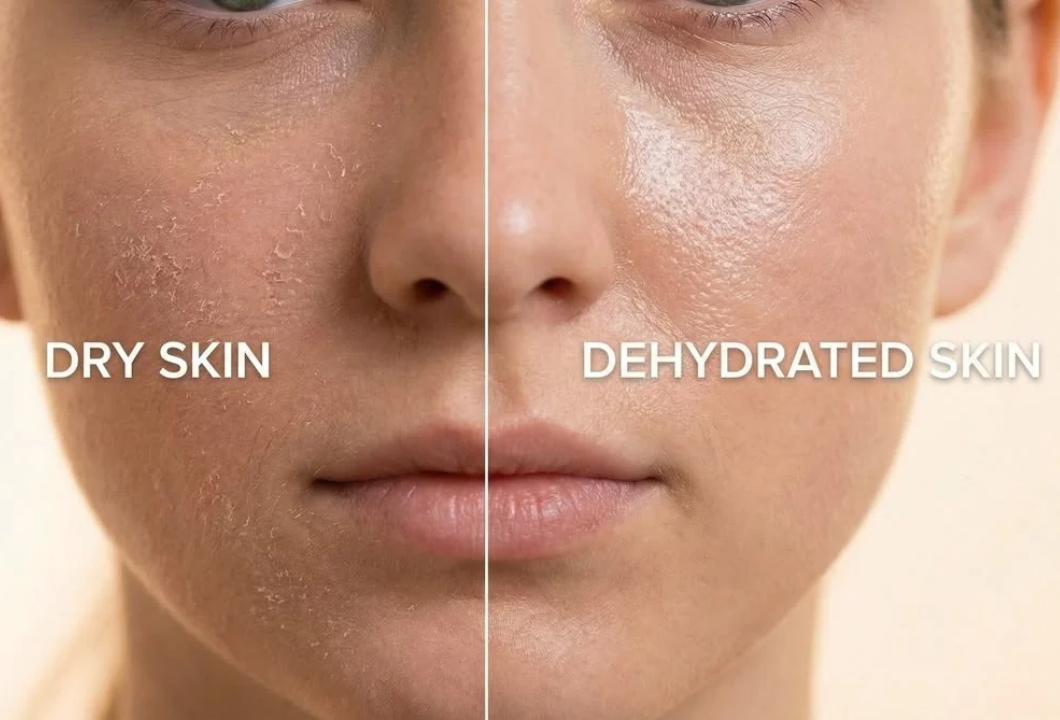
The main characteristic of the difference between dehydrated skin and dry skin is the element that the skin lacks. In the first case, it is the moisture, while in the second – the lack of oil on the skin. Once you know the difference, it will be much easier for you to choose skincare products.
The dehydration of the skin is the condition of the skin that is possible in all skin types – oily, combination and normal one. The symptoms of dehydration are dullness and tired look of the skin, appearance of fine lines. Moreover, the skin can feel tight and uncomfortable especially after the face wash.
Whereas dry skin is another skin type with reduced oil secretion. It usually feels rough, tight, flaky or itchy because of insufficient amounts of oil that protect it. The ageing process, winter season, dry climate, aggressive soaps, and certain skin diseases may be the causes of such a problem. To treat it, one needs to use more moisturizers for lipids’ replenishment.
Is it possible to have both of these problems simultaneously? Yes. Dehydrated skin is also possible, where dry skin gets deprived of water due to various environmental factors or due to aggressive care products. In such a case, a proper skin care regimen should take into account both of these aspects.
What Causes Dehydrated Skin?
A number of common elements cause the problem of dehydrated skin. This is what makes it easier to implement changes to one’s skincare routine.
1. Aggressive Products and Excessive Scrubbing
Products that dry out the skin and excessive scrubbing using exfoliating acids or retinoids damage the skin barrier. Once this barrier is broken, the skin begins to lose its water supply.
2. Environment
Use of the air conditioner, low humidity, winds, and sun can all cause dehydrated skin. Being in Dubai, being inside air-conditioned spaces and going outside can lead to feeling of tightness or discomfort for the skin.
3. Wrong Skincare
Applying a moisturizer which does not fit the skin type, not applying a moisturizer after cleansing and too much application of active products can cause dehydration.
4. Other Causes
Insufficient hydration causes dehydration; smoking and bad sleep affect skin condition. However, drinking more water cannot help with all cases of dehydrated skin.
How to Treat Dehydrated Skin
The aim here is to hydrate and keep the skin hydrated. A regular regime is a great starting point.
Select Hydrating Skincare Ingredients
- Products that have ingredients that help hydrate the skin by attracting or retaining water include:
- Hyaluronic acid – attracts water into the skin.
- Glycerin – humectant which draws water into the skin.
- Ceramides – maintain the integrity of the skin barrier and prevent water loss.
- Panthenol – hydrates and conditions the skin.
Build a Simple Hydration Routine
- Cleanser: It is necessary to make sure that the cleanser used is mild because it should not deprive the skin of anything.
- Serum/Moisturizer: Use of serum/moisturizer when the skin is wet.
- Sunscreen: You should use a sunblock lotion SPF 30 daily.
- No Exfoliation: In case of skin tightness and irritation, there should be no exfoliation at all.
- In case the dehydrated skin does not go away, it is advisable to see a dermatologist.
How to Treat Dry Skin
In case of dry skin, it will be useful to use such products that restore lipids and minimize moisture loss. In addition, it should be noted that a nourishing cream is more effective than a light cream.
Creams and Ointments
Make sure that you apply only those moisturizing agents which have added ceramide, glycerine, petrolatum, or any other emollient that is appropriate for your skin type. It must be noted that creams and ointments are more effective in holding moisture than lotions.
For additional guidance, the American Academy of Dermatology recommends using gentle cleansers, applying moisturiser regularly, and avoiding habits that worsen dry skin. Read these dermatologist-recommended tips for relieving dry skin.
Do Not Take Shower with Hot Water
Take shower with warm water, and it will be preferable to use fragrance free cleansers in case you have sensitive skin.
Protect Your Skin Barrier
It is important to apply moisturizer regularly especially after taking a shower. In case of persistent itching, redness, peeling or cracking of your dry skin, you should see a dermatologist.
Can Professional Skin Treatments Help With Dehydration?
Facials that are professionally administered may help to hydrate and improve the appearance of skin that is either dry or rough. Nonetheless, what works best for you will depend on your skin’s condition.
HydraFacial for Dull and Dehydrated Skin
The HydraFacial includes steps of cleansing, exfoliation, removal of impurities from the pores, and hydrating serums. The HydraFacial may enhance the appearance of dullness, dryness, and dehydration.
In Trusta Medical Center, our dermatologists analyze your skin problems to give you the best advice on how to address them. We can provide you with additional information about the HydraFacial treatment in Dubai and its benefits for dehydration of the skin.
The HydraFacial is not a definitive way to get rid of your dry skin or other skin conditions.
When Are Other Treatments Appropriate?
Dull skin and uneven skin are due to dry skin also.In case of any pigmentation or skin problem or acne scars, it will be advisable to see a dermatologist after skin analysis.
For example, a chemical peel is effective in treating conditions like uneven skin, congestion, and texture. However, peeling cannot be considered as a solution of dehydration as it aggravates irritations in case of skin barrier damage.
When Should You Visit a Dermatologist?
There are cases when you can handle the symptoms of dehydration and dry skin on your own. It is required to visit a doctor in case of chronic, worsening or disturbing issue.
- You should visit a dermatologist if you have:
- Redness, irritation, or burning.
- Cracks, bleeding or sore skin.
- Flaking that doesn’t respond to moisturizers.
- Irritation from multiple cosmetics products.
- Changes in skin texture.
You will receive professional consultation of a dermatologist at Trusta Medical Center who will identify the cause of your problem – dehydration, dry skin, irritations or some skin condition.
Frequently Asked Questions
Can You Have Dehydrated Skin and Dry Skin at the Same Time?
In fact, it might cause dehydration as there is no moisture supplied by the dry skin. In such cases, one has to use some products which would help to address both problems.
How Do I Know If My Skin Is Dry or Dehydrated?
In case the skin is dehydrated, there is a lack of water, making the skin look dull and dry; if the skin is dry, then there is a lack of oil or sebum. To identify one’s problem, it is necessary to consult a dermatologist.
Is Dehydrated Skin the Same as Dry Skin?
No, since in dehydrated skin there is no water inside the skin, whereas in dry skin there is no oil inside the skin. Furthermore, dehydrated skin is not the skin type but only skin condition.
Does Drinking More Water Fix Dehydrated Skin?
Consumption of sufficient water helps in maintaining good health, but the consumption of more water does not help in solving the problem of dehydrated skin. Proper moisturizer along with care of skin and protection of skin barrier is also needed.
Which Moisturiser Is Best for Dehydrated Skin?
The most suitable moisturizer will contain ingredients like glycerin or hyaluronic acid and some other components that will protect the skin barrier such as ceramide, and it will depend upon your skin type.
Can HydraFacial Help Dehydrated Skin?
HydraFacial process includes cleansing, exfoliating, and hydrating serums, which will help in improving the look of dull and dehydrated skin. The suitability of the process depends upon your skin condition.
Conclusion
After realizing the difference between dehydrated skin vs dry skin, then you will be able to decide on the best remedy in case you have such skin condition. In this regard, you should be aware that whereas your skin will need moisture in case of dehydration, in the other scenario where you have dry skin, your skin will be provided with oil by the skin care products.
Start by maintaining yourself clean, moisturized, and safe from the sun. However, even if this doesn’t stop the skin from irritating you, it would be wise for you to consult a dermatologist.. You can also think of going for some professional skin procedures like HydraFacial.