
October 16, 2026
Aesthetic medicine uses exosomes and PRP therapies to promote skin regeneration. Both these therapies help in cellular repair and restoration. However, there are differences when it comes to composition, process, scientific proof and safety.
In the comparison of exosomes vs PRP for face, the best option for you will depend on your current skin condition, expected outcomes from the procedure and medical advice.
What Is PRP Treatment for the Face?
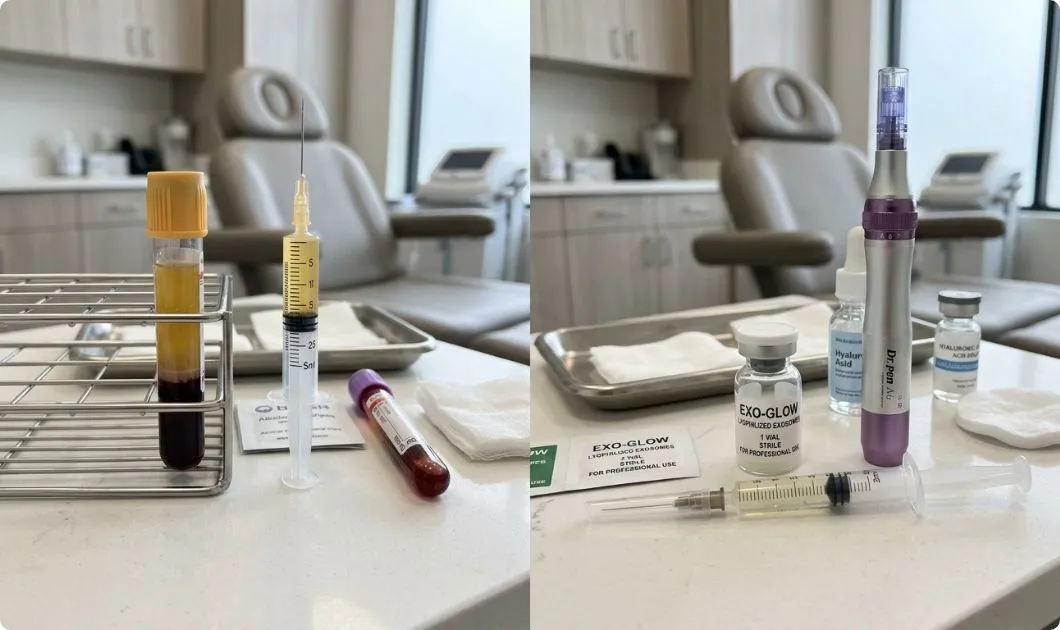
A medical professional draws a small amount of your blood to prepare platelet-rich plasma (PRP). They then centrifuge the sample to separate the platelets from the other blood components.Platelets, along with some of the blood-clotting factors, release growth factors that help in the body’s natural healing process.
PRP face has recently been used in aesthetic medicine to improve the appearance of the skin and improve texture as well as to reduce signs of aging and address some types of acne scarring.
How Does PRP Work?
Platelets release biologic signals that take part in tissue repair. Upon injection, these signals are thought to influence the process of collagen production, and may facilitate healing of the skin.
Collagen provides firmness and elasticity to the skin. Several studies have evaluated the effects of PRP treatment on the skin. Most studies have noted an improvement of skin quality, particularly with the use of good practice and individualized techniques. However, there is great variability in results.
Benefits of PRP for Facial Skin
There are several skin goals PRP may help with:
- Skin texture: PRP may help with the appearance of uneven skin.
- Fine lines: PRP may improve signs of early aging.
- Acne scars: PRP is sometimes used with microneedling to help with acne scarring and may be used with other procedures to help address scarring.
- Skin quality: Improvements in skin quality may be seen with the use of PRP.
- Use of your own blood: PRP is made from your own blood; however, there are still risks with the procedure.
PRP does not guarantee specific results and is not suitable for every skin concern.
What Is Exosome Therapy for the Face?
Exosomes are extracellular vesicles, and like other vesicles, they are released by almost all cells. However, their main importance lies in the cargo they deliver, which contains cell signaling molecules.
Exosomes are currently being studied for their possible use in skin repair and inflammatory skin conditions, as well as for their possible positive impact on skin aging processes. Products of this type are not necessarily produced from the patient’s own blood, as is the case with PRP. However, the source and composition of exosome products vary by manufacturer.
How Does Exosome Therapy Work?
Experts study the effects of exosomes on cell signaling and tissue repair and collagen pathways. Some aesthetic providers integrate exosome-based products in procedures such as microneedling and offer them for sale.
That said, the effects of these products largely depend on the source, the composition, the quality and process of the manufacturer, and the mode of application. The available data from research studies do not prove that all the exosome products on the market are safe and effective for facial rejuvenation.
Potential Benefits of Exosome Therapy
Researchers are investigating exosome-containing products for potential use in the following areas:
- Improving the appearance and texture of the skin
- Lessening visible signs of skin aging
- Accelerating the body’s natural processes to repair tissues
- Enhancing the skin’s recovery from certain treatments and procedures
There are no proven clinical outcomes at this time. More and better human studies will be needed to establish the long-term safety of aesthetic applications.

Exosomes vs PRP for Face: Key Differences
Although both treat the skin by promoting repair and rejuvenation, the sources, compositions, methods of preparation and evidence supporting them are different.
Factor | PRP | Exosome Therapy |
Source | Patient’s own blood | Varies with product |
Composition | Platelets and plasma | Extracellular vesicles carrying biological signals |
Method of preparation | Blood collection and centrifugation | Varies with method of manufacturing |
Focus | Skin rejuvenation and signaling tissue repair | Regenerative signaling and cellular communication |
Evidence | Variable outcomes with human studies | Aesthetic uses supported with limited evidence |
Safety | Bruising, swelling, discomfort and infection | Variable product quality and sterility, long-term adverse effects, and safety |
Standardization | Inconsistent preparation methods | Inconsistent product and composition |
Marketing claims should not be the sole determinant for treatment selection for either therapy. The evidence supporting the product or procedure is also important.
Exosomes vs PRP for Collagen Production
Collagen is a major structural protein in skin that provides firmness and elasticity. Levels and organization of collagen change with age and due to other biological, and environmental factors.
PRP and Collagen
PRP has a variety of growth factors and other proteins. Several studies are assessing if these factors can influence collagen-related activities, leading to positive impacts on skin texture. However, outcomes from these studies vary and it is difficult to predict because of differences in the methods and the design of the studies.
Exosomes and Collagen
Researchers are studying how certain exosomes may support cellular pathways involved in collagen synthesis, tissue repair, and regeneration. Although the initial studies are positive, they lack clinical data, therefore it is not valid to state they would improve collagen-related outcomes compared to PRP treatments.
Which Is Better for Collagen Support?
Not enough research has been conducted to show which treatment is better for collagen support. More studies need to show the effectiveness of these treatments for various skin concerns.
Which Is Better for Acne Scars?
Acne scars differ in depth, shape, and severity. Rolling scars, boxcar scars, and ice-pick scars may require different Acne scars treatment approaches.
PRP for Acne Scars
PRP may be used in conjunction with other procedures such as microneedling to treat certain acne scars. While some studies support its use, PRP reliably removes only superficial acne scars.
Exosomes for Acne Scars
Exosome products are clinically being assessed for use in facilitating skin healing and repair. The evidence for the use of exosome products in the repair of acne scars is very scanty.
Which Treatment Should You Choose?
Prior to suggesting a treatment, a dermatologist must evaluate the type of scar, the individual’s skin condition and the history of treatments. Based on the assessment, options could include microneedling, chemical peels, and scar-specific procedures and/or laser treatments.
Which Is Better for Fine Lines and Skin Ageing?
Changes in collagen lead to the development of fine lines and other signs of aging due to the natural process of aging as well as sun exposure. Skin laxity, skin volume loss, and wrinkles can all affect skin texture. Different treatments are available to help improve skin texture, and the right treatment option needs to be individualized based on the patient’s concern.
PRP for Fine Lines
PRP helps improve skin texture and address early signs of aging, and medical professionals often combine it with other skin-tightening treatments. Not all patients may see improvement with PRP.
Exosomes for Fine Lines
Exosomes are helpful in improving skin texture through promotion of cellular communication and have the potential to alter processes associated with skin aging. PRP is a better treatment option based on current evidence.
Which Treatment Is More Effective?
There is not enough sufficient comparative evidence to state that either treatment is superior universally. A health professional should consider your skin condition, what is expected from treatment, risks, and available choices..
Safety and Side Effects of PRP and Exosome Treatments
Both of these treatments require a medical assessment, and the appropriate clinical procedures. Risks depend on the treatment, mode of action, and the individual’s health.
Side Effects of PRP Treatment
- The following side effects are possible:
- Temporary redness and swelling
- Bruising or tenderness
- Discomfort during injection
- Infection (if sterile technique is not employed)
Because PRP uses the patient’s own blood, it reduces some of the risks of donor-derived products. However, certain medical conditions and medications can make the patient ineligible to receive the treatment.
Exosome Treatment Safety
The raw materials, processing methods, and intended uses of exosome-based products determine their safety.
Additional considerations are the evidence for the intended use, the quality of the product, and regulatory status.
In the U.S. the FDA has indicated it is not aware of any approved exosome products. Patients should check the status of the product in their country.
Can Exosomes and PRP Be Used Together?
Some providers market PRP or exosome-based products when sold with microneedling procedures.Combining different procedures does not necessarily produce better results.
A medical professional should be able to explain the rationale for the recommendation, the available evidence, the potential side effects, and the alternatives to a patient before recommending the combination.
How to Choose Between Exosomes and PRP for Your Face
- You should see a specialist. They can take into account your personal medical history and skin type.
- Define your skin problem: Wrinkles can’t be treated the same way acne scars can, and so on.
- Find evidence: What scientific evidence is there to support the solution offered?
- Check the details: If this is related to exosome products, what is their source? Who manufactured them?
- Air your concerns: What are the potential risks? How long are the restrictions in place?
- Look into others: Other treatment options may exist and be more thoroughly researched.
- See an expert: Take your medical history into account.
Frequently Asked Questions
Are exosomes better than PRP for the face?
Available studies show that PRP can support facial rejuvenation, while researchers still need more evidence to establish the effectiveness of exosome-based treatments for facial rejuvenation.
How long do PRP facial results last?
PRP facial results vary in duration depending on the skin concern, treatment plan, and individual factors.
Are exosome facial treatments safe?
Long term data to support the safety and efficacy of many of the exosome-based products for various cosmetic indications is limited.
Can PRP or exosomes treat deep acne scars?
Neither PRP nor exosome treatments can guarantee the removal of deep acne scars.
Can PRP or exosomes be used with microneedling?
Some providers use PRP or exosome products in combination with microneedling. Depending on the product and the process, it may be safe and effective.
Conclusion: Exosomes vs PRP for Face Which Is Better?
When comparing exosomes to no treatment at all, exosome therapy has quickly become the gold standard for facial rejuvenation. PRP treatments have been used in the medical field for longer, but due to the inconsistent outcomes, it’s hard to recommend it for most cases. Exosome-based treatments are more recent, and there’s currently not enough data to determine their safety and effectiveness for a variety of aesthetic use cases.
The best treatment option for an individual is dependent on their needs, medical history, and desired outcomes. It’s also dependent on the level of scientific data available to prove the efficacy of each option.
An experienced medical professional reviews the evidence available, evaluates the individual’s needs and determines the most appropriate treatment option for that person.
You can find more information about these services at Trusta Medical Center.