
August 21, 2026
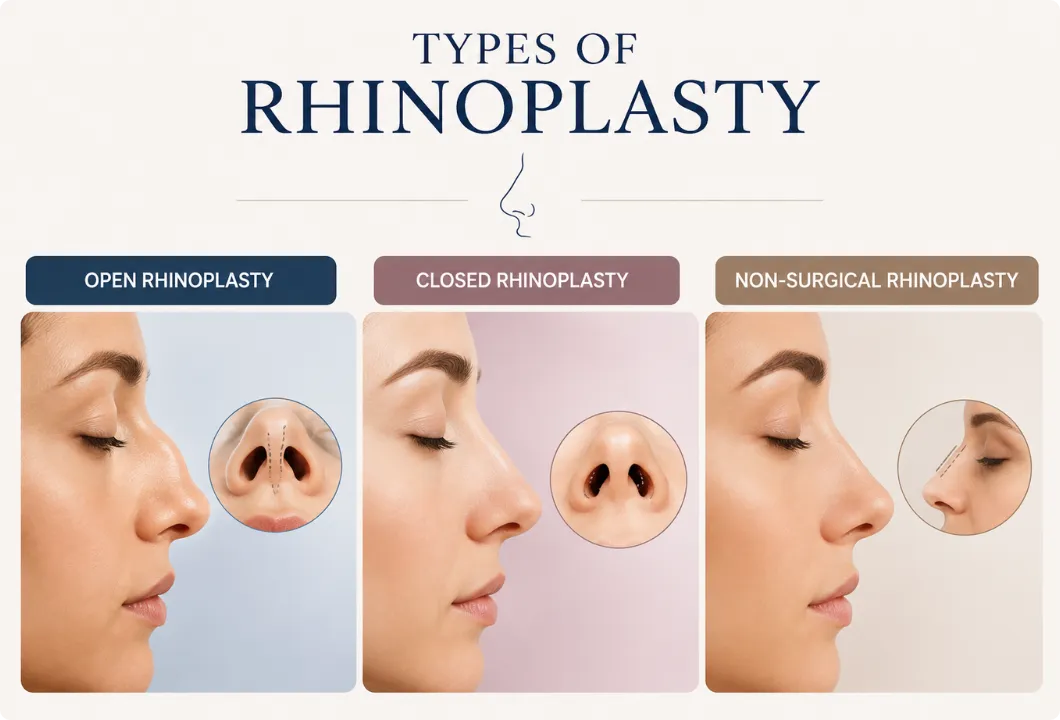
Rhinoplasty comes in different forms. The technique our surgeon recommends depends on your nasal structure, breathing concerns, and desired outcome. Open and closed rhinoplasty are the two main surgical approaches. Both can reshape the nose, but they use different incision methods and give the surgeon different levels of access.
Patients researching rhinoplasty in Dubai often wonder which technique offers better results. Neither approach is automatically better for everyone. Our surgeon considers your anatomy and treatment goals before recommending the most suitable option.
What Is Closed Rhinoplasty?
Closed rhinoplasty uses incisions inside the nostrils. This means the procedure leaves no external incision on the nose.
Our surgeon works through these internal openings to reshape the bone and cartilage. This approach can suit patients who need less extensive changes.
Closed Rhinoplasty May Be Suitable For
- Minor changes to the nasal bridge
- Small dorsal hump correction
- Limited tip refinement
- Subtle changes to nasal shape
- Patients who do not need extensive structural work
Recovery can involve swelling and bruising. However, some patients may experience less external swelling compared with more extensive surgical approaches.
What Is Open Rhinoplasty?
Open rhinoplasty uses internal incisions along with a small incision on the columella, the skin between the nostrils. Our surgeon can lift the nasal skin through this opening and directly assess the underlying cartilage and bone.
This additional access can help when the nose needs more detailed structural correction.
Open Rhinoplasty May Be Suitable For
- Significant nasal reshaping
- Complex tip refinement
- Structural nasal correction
- Revision rhinoplasty
- More complex nasal deformities
- Cases requiring greater surgical visibility
The small external incision usually heals over time. Our surgeon will explain the expected scar and recovery process during your consultation.
Open vs Closed Rhinoplasty: Key Differences
| Feature | Closed Rhinoplasty | Open Rhinoplasty |
|---|---|---|
| Incisions | Inside the nostrils | Inside the nostrils plus columella |
| External scar | No visible external incision | Small columellar scar |
| Surgical access | More limited | Greater visibility |
| Best suited for | Less complex changes | Complex or detailed reshaping |
| Tip access | More limited | Direct access |
| Recovery | Depends on the procedure | Depends on the extent of surgery |

What Does Research Say About Open vs Closed Rhinoplasty?
Research does not show one rhinoplasty technique as the clear winner. A systematic review published in Archives of Plastic Surgery found no consistent difference in patient satisfaction or complication rates between open and closed approaches. The evidence suggests that surgeon experience, patient selection, and careful surgical planning play a major role in the final outcome.
Our surgeon follows the same principle during consultation. Our surgeon assesses your nasal structure, breathing needs, medical history, and desired changes before recommending a technique. The goal is to choose an approach that supports both your appearance and nasal function.
Which Rhinoplasty Technique May Suit You?
The right approach depends on the changes you want and the structure of your nose. Our surgeon performs a detailed assessment before recommending open or closed rhinoplasty.
Closed Rhinoplasty May Suit You If
Closed rhinoplasty may work well when you need less extensive changes, such as:
- Reducing a small nasal hump
- Refining the nasal bridge
- Making subtle changes to the nose
- Making limited structural adjustments
- Avoiding an external incision
Our surgeon will explain whether this technique can achieve the results you want.
Open Rhinoplasty May Suit You If
Open rhinoplasty gives our surgeon greater access to the nasal framework. This approach may be suitable for:
- Complex nasal reshaping
- Detailed tip refinement
- Significant structural correction
- Revision rhinoplasty
- Certain breathing-related concerns
- Cases that require greater surgical visibility
The procedure involves a small incision on the columella. Our surgeon will explain the expected scar and healing process before surgery.
Open vs Closed Rhinoplasty Recovery
Both techniques can cause swelling and bruising after surgery. These effects usually improve gradually during the first few weeks.
Closed rhinoplasty may result in less initial swelling in some patients because it involves less external tissue disruption. Open rhinoplasty can cause more swelling around the nasal tip during the early healing period.
Recovery still varies from one patient to another. The extent of surgery, your healing response, and the changes made to your nose can all affect the timeline.
What Can You Expect During Recovery?
Recovery may include:
- Nasal swelling
- Temporary bruising
- Nasal congestion
- Mild discomfort
- Temporary activity restrictions
- Gradual improvement in nasal shape
Your nose continues to heal after the early recovery period. Final results can take several months to become fully visible.
How Does Our Surgeon Choose the Right Technique?
Our surgeon starts with a detailed consultation and physical examination. The assessment covers your nasal structure, skin thickness, cartilage, breathing, previous surgery, and aesthetic goals.
Your medical history also helps guide the treatment plan. Previous rhinoplasty can change the available cartilage and affect the surgical approach.
After the assessment, our surgeon recommends open or closed rhinoplasty based on your individual needs. You can also discuss the expected results, recovery, risks, and possible limitations before making your decision.
Why Choose Trusta Medical Center for Rhinoplasty in Dubai?
Our surgeon assesses each rhinoplasty case individually rather than using the same technique for every patient. A detailed examination helps identify which areas need correction and which features should remain unchanged.
During your consultation, our surgeon explains the recommended approach and why it suits your nasal anatomy and goals. You can also discuss your expectations and understand the treatment plan before surgery. Learn more about Rhinoplasty in Dubai, including the procedure, consultation process, and treatment options.
Frequently Asked Questions
Is open rhinoplasty more painful than closed rhinoplasty?
Both procedures take place under anesthesia, so you should not feel pain during surgery. Mild to moderate discomfort can occur during recovery and our surgeon can recommend suitable pain management.
Does open rhinoplasty leave a visible scar?
Open rhinoplasty creates a small incision on the columella. Our surgeon places this incision carefully, and the scar usually becomes less noticeable as it heals.
Can closed rhinoplasty correct a deviated septum?
Closed rhinoplasty can address some septal concerns. More complex structural problems may require greater surgical access, and our surgeon can determine the appropriate approach during your examination.
Which rhinoplasty technique has a shorter recovery?
Closed rhinoplasty may cause less initial swelling in some cases. However, recovery depends on the extent of surgery and your individual healing response.
Does revision rhinoplasty require open surgery?
Not always. Complex revision cases may benefit from the greater visibility provided by open rhinoplasty. Our surgeon chooses the technique based on the correction required.
Can rhinoplasty improve breathing?
Rhinoplasty can address certain structural problems that affect nasal breathing. Our surgeon will assess your nasal function and determine whether rhinoplasty can address your concerns.
Book Your Rhinoplasty Consultation in Dubai
Choosing between open and closed rhinoplasty starts with understanding your nasal structure and treatment goals. No single technique suits every patient.
During a consultation, our surgeon can assess your nose, explain your options, and recommend the most suitable approach. Book your rhinoplasty consultation with Trusta Medical Center to discuss your concerns and expected results.