
July 22, 2026
If you’re considering breast augmentation, you’ve probably typed one question into Google more than once: what does breast augmentation feel like? It’s a fair question. You’re about to go through surgery, and you deserve honest answers.
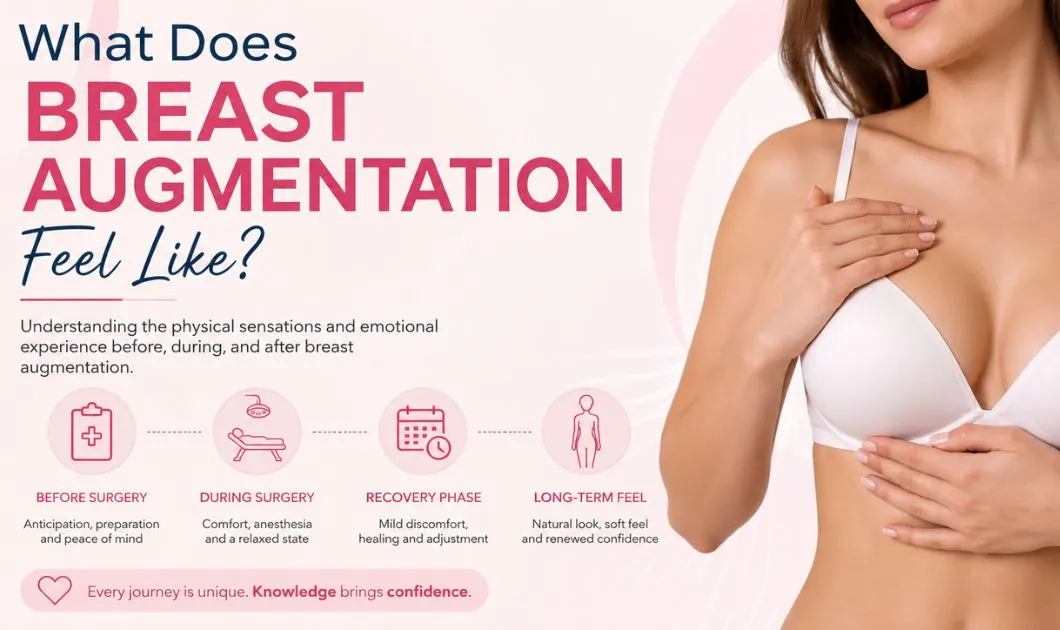
This guide walks you through the physical sensations and emotional experiences that come with breast augmentation. We’ll cover what happens before, during, and after surgery, plus how implants feel over time.
Before Surgery: What You Might Feel Emotionally
Before a breast enhancement surgery, most patients will feel a combination of excitement and nervousness. That’s completely normal.
It’s possible you are afraid of the unknown. Will it hurt? Will you like the results? These are normal questions and it is good to ask questions when preparing.
Talking Through Your Fears Beforehand
Discussing your fears with your surgeon can help alleviate this fear. You should leave a conversation much better informed than when you started.
There will be nothing unusual about you physically prior to the day of surgery. Your body is just waiting for the procedure.
During Surgery: What Actually Happens
Breast enhancement is done using general anesthesia. This means that during the procedure you will not feel any pain since you will be completely asleep.
Why You Won’t Feel Anything During the Procedure
When the surgeon puts the implants in place, there is no sensation at all since you are unconscious. Many patients report falling asleep and waking up with a procedure completed.
The surgery usually lasts one to two hours. You will not have a recollection of anything.
Right After Surgery: The First Few Hours
Once you wake up in recovery, you may feel groggy from the anesthesia. This fades within a few hours.
Tightness and Physical Discomfort
You’ll likely notice tightness across your chest. Many patients compare it to a strong muscle soreness, similar to an intense chest workout.
Some swelling and mild discomfort are expected. Your care team will manage this with pain medication and clear aftercare instructions.
Emotional Ups and Downs Right After Waking Up
It’s common to feel a bit emotional at this stage too. Anesthesia and hormones can amplify feelings, so don’t be surprised if you tear up or feel unusually sensitive.
The First Week: Pain Levels and Sensations
So, what does breast augmentation feel like during the first week? Most patients describe it as pressure and tightness rather than sharp pain.
A Day-by-Day Breakdown of the First Week
Here’s a general breakdown of what to expect:
- Days 1-3: The most uncomfortable period. Expect tightness, soreness, and limited arm mobility.
- Days 4-7: Discomfort steadily decreases. Many patients switch from prescription pain medication to over-the-counter options.
- End of week one: Most people feel noticeably better and can manage daily tasks with some caution.
Pain levels vary from person to person. However, most patients rate the discomfort as moderate, not severe.
Sleeping can feel strange during this time. You’ll need to sleep on your back for a few weeks, which takes some adjustment.
Weeks Two to Six: Settling in
As the weeks pass, the tightness continues to ease. Your body is adjusting to the implants, and this process takes time.
You might notice occasional twinges or itching. This is a normal part of healing, since nerves and tissue are still settling.

How Do Implants Feel Over Time?
This is one of the most common questions patients ask after their initial recovery. So, what does breast augmentation Dubai feel like once you’re fully healed?
Most patients say their implants feel soft and natural once healing is complete. The exact feel depends on a few factors:
- Implant type: Silicone implants tend to feel softer than saline.
- Placement: Implants placed under the muscle often feel more natural than those placed above it.
- Body type: Patients with more natural tissue coverage usually notice a softer feel.
Temperature sensitivity to the breast area can also change slightly. Some patients notice less sensation in the nipple area, while others notice little difference.
Over several months, the implants settle into position. This process, sometimes called “drop and fluff,” allows the breasts to take on a more natural shape and feel.
Emotional Experiences After Surgery
Physical healing gets most of the attention, but emotional healing matters too. Many patients feel a wave of relief once the procedure is behind them.
At the same time, it’s normal to feel a temporary sense of doubt during early recovery. Swelling and bruising can make results look different from the final outcome, and this can be unsettling.
Confidence usually grows as swelling fades and the new shape becomes clearer. Most patients report high satisfaction once they reach full recovery.
If you experience ongoing anxiety or sadness that doesn’t improve, it’s worth mentioning to your surgical team. They can offer reassurance and guidance during this adjustment period.
Common Questions About the Sensations of Breast Augmentation
Does breast augmentation hurt more than expected?
Most patients say the discomfort is manageable and less intense than they feared, especially with proper pain management.
When do implants stop feeling firm?
Firmness typically decreases over the first few weeks as swelling goes down. Full softness can take a few months.
Will I lose sensation permanently?
Temporary changes in sensitivity are common, but most patients regain normal or near-normal sensation within several months.
Can I feel the implants moving?
Implants shift slightly during the “drop and fluff” phase. This is normal and not something to worry about.
Final Thoughts
So, what does breast augmentation feel like overall? In short: manageable discomfort at first, followed by steady improvement and a natural feel over time.
Every patient’s experience is a little different. However, most people find that the initial tightness and soreness fade faster than expected.
If you’re considering this procedure, the team at Trusta Medical Center can walk you through what to expect based on your body and goals. A personalized consultation is the best way to understand your own experience before moving forward.