
July 14, 2026
If you’re considering rhinoplasty, it’s natural for anesthesia to be one of your biggest questions and one of your biggest worries. Will you be awake? Will it hurt? Is general anesthesia actually safe? These concerns are completely valid, and you deserve clear, honest answers before you commit to surgery.
In Trusta Medical Center, every rhinoplasty procedure is performed under the strict clinical protocols of the Dubai Health Authority (DHA), by board-certified plastic surgeons working alongside qualified anesthesiologists. Anesthesia decisions are never one-size-fits-all they’re based on your anatomy, the complexity of your procedure, and a thorough pre-operative health assessment. This guide walks you through exactly what to expect, so you can approach your surgery with confidence rather than anxiety.
What Type of Anesthesia Is Used in Rhinoplasty?
Rhinoplasty anesthesia generally falls into three categories:
1. Local anesthesia
Numbs only the nasal area while you remain fully conscious. It’s occasionally combined with sedation for very minor, limited procedures, but it is rarely used on its own for structural rhinoplasty.
2. IV (intravenous) sedation
Often paired with local anesthesia, keeps you in a deeply relaxed, sleep-like state. You’re not fully unconscious, but you’re unlikely to remember the procedure, and discomfort is minimized.
3. General anesthesia
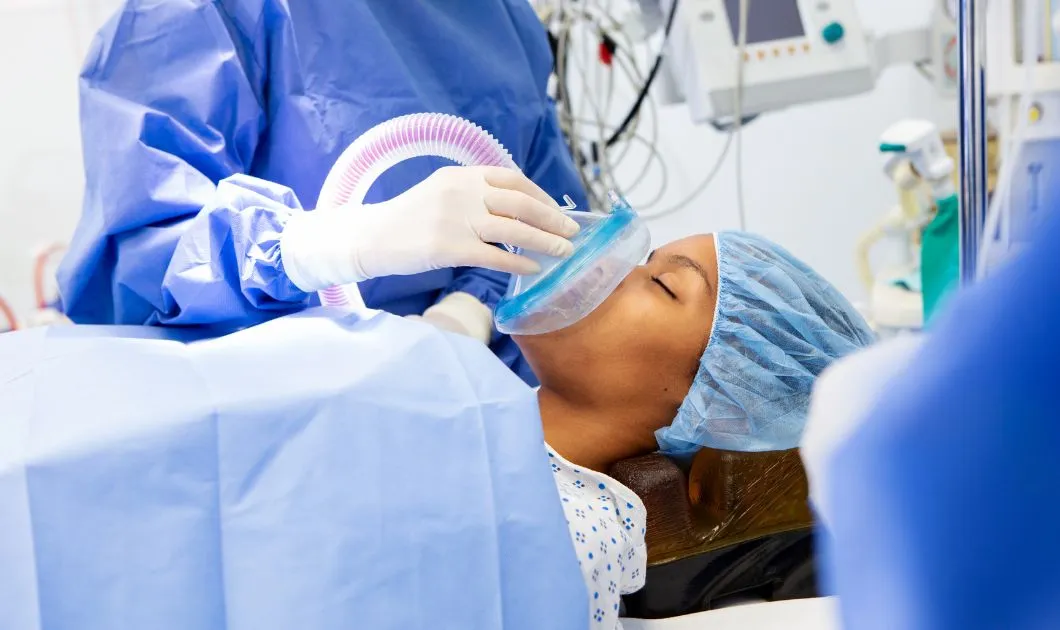
Renders you completely unconscious for the duration of surgery. This is the most common approach for full surgical rhinoplasty, particularly when reshaping the nasal bone, cartilage, or septum is involved.
The right choice depends on the scope of your surgery whether it’s a minor cosmetic refinement or a more involved structural correction along with your medical history and personal comfort level. Your surgeon and anesthesiologist will discuss this with you in detail during your consultation at Trusta Clinic.
General Anesthesia vs. IV Sedation: Which Is Right for You?
Both options aim to keep you safe and comfortable, but they suit different scenarios.
General anesthesia is typically recommended when:
- The procedure involves reshaping bone or cartilage
- Surgery is expected to take longer than an hour
- The surgical plan includes both functional (breathing-related) and cosmetic correction
IV sedation may be considered when:
- The procedure is limited in scope, such as minor tip refinement
- You have specific medical reasons to avoid general anesthesia
- Your surgeon determines the surgical plan doesn’t require full muscle relaxation
Ultimately, this decision is made jointly by your plastic surgeon and anesthesiologist after reviewing your case not selected based on preference alone. In Trusta Medical Center, this assessment happens during your personalized pre-operative consultation, in line with DHA clinical standards.
Why Local Anesthesia Alone Is Rarely Used for Full Rhinoplasty
It’s a common question: why not just numb the area and stay awake for the whole thing? The honest answer is that rhinoplasty is more complex than it may appear from the outside.
Reshaping the nose often involves working with bone, cartilage, and deep tissue structures that require complete stillness and muscle relaxation for precision and safety. Local anesthesia alone doesn’t provide this level of control, and remaining conscious during bone or cartilage manipulation can cause significant discomfort, anxiety, and involuntary movement all of which increase surgical risk and can compromise results.
For these reasons, local anesthesia alone is generally reserved for very minor touch-ups, not full structural rhinoplasty. Your surgical team’s priority is always your safety and the precision of your outcome, which is why general anesthesia or IV sedation is the standard recommendation for most rhinoplasty cases.
Is General Anesthesia Safe?
This is, understandably, one of the most common fears patients bring to their consultation. The good news: when administered by qualified professionals in an accredited facility, general anesthesia carries a well-established safety profile.
In Trusta Medical Center, several layers of protection are built into every procedure:
- DHA-licensed facility meeting strict UAE healthcare safety standards
- Qualified anesthesiologists dedicated solely to monitoring you throughout surgery
- Comprehensive pre-operative screening, including medical history review and any necessary lab or cardiac clearance
- Continuous monitoring of heart rate, oxygen levels, blood pressure, and breathing throughout the procedure
- Board-certified plastic surgeons who work in coordination with the anesthesia team at every stage
Any medical procedure carries some level of risk, and your surgeon will discuss this honestly during your consultation. But with proper screening, an experienced team, and an accredited facility, general anesthesia for rhinoplasty is considered a routine, well-managed part of modern surgical care.

What to Expect on the Day of Surgery
Knowing the process in advance can ease a lot of pre-surgery anxiety. Here’s a general overview of what happens:
- Arrival and final check-in – You’ll confirm fasting compliance and go through a final review of your medical history.
- Meeting your anesthesiologist – They’ll explain the plan, answer any last questions, and place an IV line.
- Monitoring setup – Devices to track your heart rate, oxygen saturation, and blood pressure are attached before anesthesia begins.
- Anesthesia administration – You’ll be guided into a comfortable, sleep-like state (for general anesthesia) or relaxed sedation.
- Surgery – Your plastic surgeon performs the procedure while the anesthesiologist continuously monitors your vitals.
- Recovery room – You’re moved to a monitored recovery area as the anesthesia wears off, with staff checking on you regularly.
Throughout this process, you’re never left unattended a dedicated team is focused entirely on your safety and comfort.
How Long Does Rhinoplasty Surgery Take?
Most rhinoplasty procedures take between 1.5 and 3 hours, though this varies depending on the complexity of your case. A straightforward cosmetic refinement may be on the shorter end, while a procedure combining functional correction (such as fixing a deviated septum) with cosmetic reshaping can take longer.
Your surgeon will give you a personalized estimate during your consultation, factoring in your specific anatomy and surgical goals. This also helps determine whether general anesthesia or sedation is the more appropriate choice.
Recovery After Anesthesia – What’s Normal
After your procedure, it’s normal to experience:
- Grogginess or drowsiness for a few hours as anesthesia wears off
- Mild nausea, which the recovery team can manage with medication if needed
- A dry throat if a breathing tube was used during general anesthesia
- Gradual return to alertness, typically within a few hours
Most patients are ready to be discharged the same day, once vital signs are stable and the medical team confirms it’s safe to do so. You’ll need someone to drive you home, as reaction times and coordination remain impaired for the rest of the day. Your Trusta care team will provide detailed post-operative instructions, including when normal activity, medication, and follow-up visits should resume.
If you’re exploring options that don’t involve surgery or anesthesia at all, you may also want to read our related guide on Non-Surgical Rhinoplasty in Dubai: What to Expect, which uses injectable techniques instead.
FAQs
What type of anesthesia is used in rhinoplasty?
Most rhinoplasty procedures use general anesthesia or IV sedation combined with local anesthetic, depending on the complexity of the surgery and your individual health profile.
Why is it dangerous to use local anesthesia alone in rhinoplasty?
Full structural rhinoplasty involves working with bone and cartilage, which requires complete stillness and muscle relaxation. Being conscious during this level of manipulation can cause significant pain, involuntary movement, and increased surgical risk which is why local anesthesia alone is reserved for only very minor procedures.
Is general anesthesia safe for rhinoplasty?
Yes, when performed in an accredited, DHA-licensed facility by a qualified anesthesiologist and board-certified surgeon, general anesthesia is considered safe and is a routine part of surgical rhinoplasty.
IV sedation vs. general anesthesia which is better?
Neither is universally “better” — the right choice depends on the scope of your procedure and your medical history. Your surgical team will recommend the safest, most appropriate option for your specific case.
How long does rhinoplasty surgery take?
Typically 1.5 to 3 hours, depending on whether the procedure is purely cosmetic or also addresses functional issues like a deviated septum.
Will I feel pain during rhinoplasty?
No. Whether you’re under general anesthesia or IV sedation with local anesthetic, you won’t feel pain during the procedure itself. Some discomfort during recovery is normal and manageable with guidance from your care team.
Ready to Take the Next Step?
Choosing the right anesthesia approach starts with a thorough, personalized consultation not guesswork. In Trusta Medical Center, our DHA-licensed, board-certified plastic surgeons work closely with qualified anesthesiologists to create a surgical plan specific to your anatomy, health history, and goals.
Learn more about our approach on our Rhinoplasty Dubai service page, or take the first step toward a safe, well-planned procedure.
Book your personalized pre-op assessment today: 📞 Call or WhatsApp: +971 54 333 9090 📧 Email: info@trustaclinic.ae 📍 Visit us in Downtown Dubai, UAE