
Water Birth Delivery for Natural Childbirth
Expecting a baby and looking for a gentler way to welcome your little one into the world? Water Birth Delivery in Dubai is becoming an increasingly popular choice for mothers seeking a calmer, more comfortable, and natural labour experience. Trusta Clinic provides expert maternity care and personalised guidance throughout every stage of pregnancy, helping parents make informed decisions with confidence. From understanding how a birthing pool supports labour and delivery to the role of experienced obstetricians and midwives, the benefits of hydrotherapy for pain management, and the eligibility criteria based on pregnancy history, every aspect of Water Birth Delivery is carefully explained. Whether you’re 37 weeks pregnant, preparing your birth plan, or exploring childbirth options, you’ll receive professional care focused on the safety, comfort, and well-being of both mother and baby. With modern facilities and a patient-centred approach, Trusta Clinic is committed to delivering a supportive and positive Water Birth Delivery experience specific to your individual needs.

What Is Water Birth?
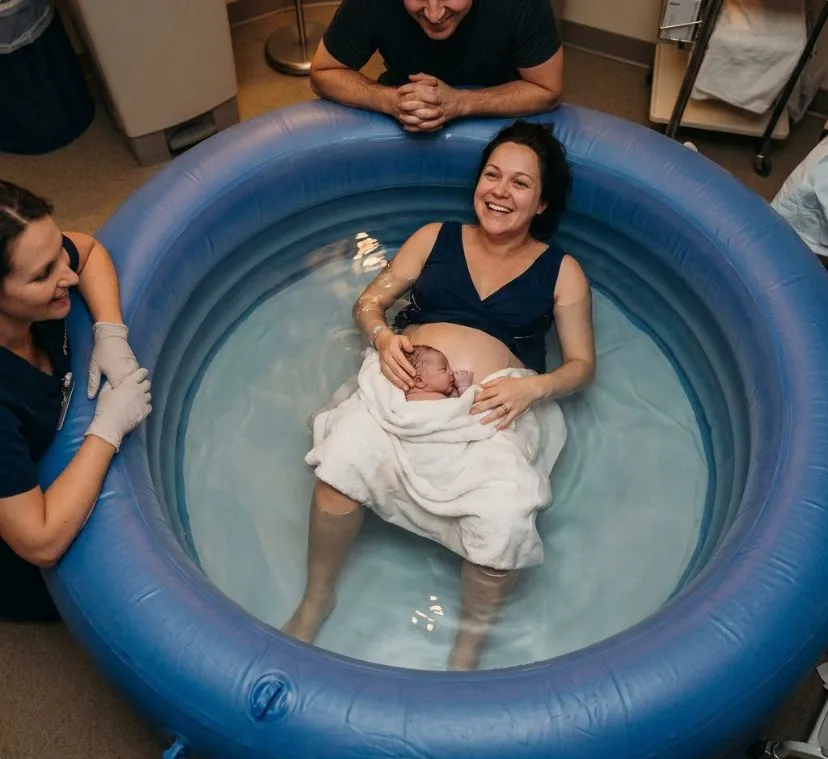
Water birth is a method of giving birth where part or all of the labour and delivery takes place in a warm birthing pool. Instead of lying in a hospital bed, the mother relaxes in body-temperature water, which can ease tension in the body during contractions. Many hospitals and birthing centres in Dubai now offer this option for mothers with a low-risk pregnancy who want a softer, more natural approach to childbirth.
The idea isn’t new hydrotherapy has been used for decades to help manage pain and stress during labour. What’s changed is how widely available and well-supported it has become, with trained midwives and obstetricians now closely monitoring water births to keep both mother and baby safe throughout the process.
How Does Water Birth Work?
During a water birth, the mother enters the birthing pool once active labour begins, usually when contractions are frequent and intense. She can choose to labour in the water and deliver on land, or stay in the pool for the actual delivery too the choice often depends on hospital policy and how the labour progresses.
Benefits of Water Birth
Many mothers choose water birth because of how warm water interacts with the body during labour. Key benefits include:
- Natural pain relief – warm water immersion boosts the body’s natural production of endorphins. These hormones ease pain and make contractions feel more manageable
- Reduced pressure on joints and muscles – buoyancy takes weight off the body, so the mother can move into comfortable positions more easily
- A calmer, more relaxed labour experience – warm water, buoyancy, and endorphins work together to help mothers feel more in control
- Greater freedom of movement – the water makes it easier to shift positions often, which can help labour progress more smoothly
- A softer environment for baby’s transition – warm water mimics the amniotic environment, easing the baby’s passage into the world
The Role of Your Midwife and Obstetrician
The Role of Your Midwife and Obstetrician
A midwife stays close by throughout labour. She monitors the mother’s vitals, the baby’s heartbeat, and how labour is progressing. An obstetrician or OB-GYN typically stays on standby too, in case the birth plan needs to change quickly. This team-based approach means the mother can leave the pool without delay if anything unexpected happens.
Water Birth Labour Pool Temperature
Staff keep the birthing pool at a carefully controlled temperature, generally close to normal body temperature. This keeps the mother comfortable without overheating. Hospital staff check the water temperature regularly to make sure it stays safe for both mother and baby.
Risks of Water Birth
Water birth is generally safe for low-risk or uncomplicated pregnancies. Still, it isn’t completely without risk. Possible concerns include infection, difficulty monitoring the baby closely, or issues with the umbilical cord during delivery. This is why continuous supervision from a trained midwife and obstetrician matters. It helps the team catch warning signs early and act quickly.
Water Birth Eligibility Criteria
Not every pregnancy suits a water birth. This is why hospitals set clear eligibility guidelines before approving the option. A mother generally qualifies as a good candidate if:
- She has a low-risk or uncomplicated pregnancy, with no underlying health conditions
- She is around 37 weeks pregnant or further along
- She is carrying a single baby in a head-down position
- She has no history of complications in this pregnancy or previous labours
- The baby shows no signs of distress
- Her obstetrician has reviewed her full medical history and confirmed eligibility
If any of these factors change during labour, the care team may recommend switching to a normal delivery. This keeps both mother and baby safe.
Water Birth vs Normal Delivery
The biggest difference between water birth and normal delivery is the environment. Normal delivery typically happens in a hospital bed. Water birth uses a birthing pool to help manage pain and support movement instead. Both options involve the same close monitoring from a midwife and obstetrician. Mothers can usually switch from water birth to normal delivery if medically necessary.
Can I Have an Epidural During Water Birth?
An epidural generally doesn’t work with water birth. It limits mobility and sensation, which can make the pool unsafe. Mothers planning a water birth typically rely on warm water, movement, and breathing techniques for pain relief instead. If a mother needs an epidural during labour, she can leave the pool to receive it.
Can My Partner Be in the Pool During Water Birth?
Yes, in most cases. Many hospitals in Dubai welcome a husband or birth partner into the pool for support, depending on hospital policy. The main request is that the partner showers first, to help maintain hygiene standards. It’s best to check directly with the chosen hospital or birthing centre in advance.
What Happens During Labour in the Water?
Once the mother settles into the birthing pool, staff manage a few key things to keep her and the baby safe:
- Staff keep the water temperature between 35–37°C during the first stage of labour
- The team checks the baby’s heartbeat roughly every 15 minutes
- Entonox (gas and air) is typically the only pain relief mothers can use in the pool
- Staff keep the water level above the level of the uterus to support buoyancy and comfort
- Mothers should drink plenty of water throughout labour to avoid dehydration
Keeping the pool within this 35–37°C range helps the mother stay comfortable without overheating. Hospital staff monitor it regularly to keep it in a safe zone.
What Happens at the Birth of the Baby?
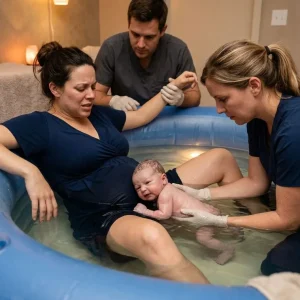
As labour reaches its final stage, staff usually raise the water temperature slightly to 37°C. This helps the baby transition comfortably. The baby is born fully underwater, with no contact with air. Staff then gently bring the baby head-first up to the surface right after birth.
What Happens at the Delivery of the Placenta (Afterbirth)?
In the third and final stage of labour, the placenta usually delivers on its own. No evidence suggests that delivering the placenta in water harms the mother.
Sometimes the team needs to actively manage this stage for example, if the mother has agreed to medication that helps deliver the placenta. In that case, she’ll leave the pool for this part. Once she’s out, the midwife checks whether she needs any stitches.
Reasons You Might Be Asked to Leave the Pool During Labour
Most water births go smoothly, but a few situations may call for the mother to step out of the pool for safety, including:
- Abnormal changes in the baby’s heart rate
- Meconium staining in the waters (a sign the baby has passed a bowel movement)
- Bleeding from the vagina during labour, or other complications
If labour slows down, staff may also advise the mother to leave the pool for a while. In many cases, she can get back in once things pick up again.
What to Wear for Water Birth
Mothers can choose what feels comfortable: a loose-fitting top, a maternity swimsuit, or nothing at all. Hospitals typically offer guidance on suitable options beforehand, so there’s no need to prepare anything unusual.
Water Birth Safety and Hygiene
Hospitals maintain strict hygiene standards for water birth. Staff regularly clean and disinfect the birthing pool and use clean water sources. They also closely monitor mothers for any signs of infection. Combined with continuous supervision, these standards help make water birth a safe option for eligible mothers.
Best Hospital for Water Birth in Dubai
Dubai has several hospitals and maternity centres experienced in supporting water birth. Each offers trained midwives, on-call obstetricians, and dedicated birthing pools. Trusta Clinic is one such option. The clinic offers water birth support with an experienced maternity team, dedicated birthing pools, and close monitoring throughout labour.
When choosing the best hospital for water birth in Dubai, mothers should look at the facility’s experience with water births. Safety protocols matter too, along with the flexibility to switch to a normal delivery if needed.
Book a Consultation
Thinking about water birth delivery in Dubai? The team at Trusta Clinic is happy to walk through eligibility and answer any questions. Book a consultation with an obstetrician today to find out if water birth suits the pregnancy.
our expert answers
Frequently Asked Questions
Who is eligible for a water birth?
Mothers with a low-risk or uncomplicated pregnancy, typically around 37 weeks pregnant with no history of complications, are usually eligible after review by an obstetrician.
What are the benefits of water birth?
Benefits include natural pain relief through endorphins, reduced pressure on joints thanks to buoyancy, and a calmer overall labour experience.
Is water birth safe?
Yes, for eligible mothers, water birth is considered safe when supervised by a trained midwife and obstetrician, with proper hygiene and monitoring in place.
What happens if there's a complication during water birth?
If any complication arises, the mother is moved out of the birthing pool immediately so the medical team can manage the situation, including switching to a normal delivery if required.
How do I book a water birth in Dubai?
Booking usually starts with a consultation with an obstetrician, who reviews the pregnancy and confirms eligibility before the hospital schedules the water birth plan.
 Posted on Google
 amitisful
Trustindex verifies that the original source of the review is Google.
Amazing experience! The staff were wonderful and I’m very happy with the results. I’ll definitely come backThis is truly a state-of-the-art beauty clinic. The facilities, technology, and range of services available here are exceptional, and you won’t easily find the same level of comprehensive care in other clinics. As a physician, I highly recommend visiting this clinic. It is truly in a class of its own when it comes to aesthetic medicine, offering a complete range of beauty and aesthetic services, from surgical to non-surgical treatments, all under one roof..❤️❤️❤️Posted on Google Helmi Emadما شاء الله موقع ممتاز عيادة نظيفة تحسهم من المستقبل أما الاستقبال مررررة أدب تستأنث وياهم الصراحة ما تحس نفسك في عيادة من شدة إهتمام الدكاترة وباقي التيم كله متوفر عندهم مواقف سيارات مجانية ومصعد لذوي الاحتياجات الخاصة أشكر أصدقائي على التوصية بي عيادة ترستا واتمنى لكم التوفيق والنجاحPosted on Google
 Sahar GeramiPosted on Google
 Donna AskariAmazing clinicPosted on Google
 Farnaz Saeedi⭐⭐⭐⭐⭐ I had a great experience at Trusta Clinic. The staff were very professional, friendly, and welcoming. The clinic is clean, modern, and well-organized, and I really appreciated the attention to detail and the quality of service. Highly recommended! I’ll definitely be coming back. ❤️Posted on Google
 Layth SalhabAbsolutely amazing experience at Trusta Medical Center! ⭐️⭐️⭐️⭐️⭐️ The clinic is beautiful, modern, and very clean. The team is professional, welcoming, and genuinely attentive from the moment you arrive. You can really feel the high standard of care and attention to detail. Highly recommended for anyone looking for quality medical and aesthetic services in Dubai. 👌🏻✨Posted on Google
 sahra rezvanpanah⭐⭐⭐⭐⭐ I had a wonderful experience at Trusta Clinic, from the initial consultation all the way through my cosmetic procedure. Everyone, from the staff to the doctors, was incredibly supportive, caring, and attentive throughout the entire process. I truly felt that I was surrounded by people who genuinely cared about me, almost as if I were among friends. I’m very happy with my experience and would definitely recommend Trusta Clinic to anyone considering a cosmetic procedure.Posted on Google
 Mohammed AbdalraheemA lovely experience at Trusta Medical Center. The staff are kind, welcoming, and very professional, and the clinic has a clean and comfortable atmosphere. I truly appreciated the attention to detail, the respectful way everything was explained, and the high standard of care. The doctors are carefully selected and clearly experienced in their fields. A very pleasant and trustworthy medical center that I would happily recommend to others.Posted on Google
 Isis Aamn💖💖🌹 I had a very pleasant experience at Trusta Medical Center. The clinic is clean, elegant, and well organized, and the staff were welcoming and professional from the moment I arrived. I was especially impressed with the aesthetic medicine services. The doctors are highly professional, attentive, and take time to explain everything clearly. The prices are also reasonable and transparent. A very comfortable and trustworthy medical center. Highly recommended!🌹💖Posted on Google
 Ayden⭐⭐⭐⭐⭐ I had a wonderful experience at Trusta Medical Center. From the moment I arrived, the reception team was welcoming, professional, and very well organized. The entire clinic has a clean, elegant, and comfortable atmosphere, which immediately gives you a sense of confidence and trust. I was particularly impressed by their Aesthetic Medicine Department. The team takes the time to understand each patient’s concerns and expectations, and everything is explained clearly before making any decision. Their approach feels professional and patient-centered rather than commercial. The clinic also seems very selective in choosing its doctors. The medical team is experienced, knowledgeable, and genuinely focused on achieving natural and appropriate results while maintaining high standards of safety. Another positive point was the transparency regarding prices and treatment options. Everything was explained clearly, with no unnecessary pressure to undergo additional procedures. Overall, Trusta Medical Center is an excellent polyclinic that combines professional medical care, hospitality, cleanliness, fair pricing, and highly qualified doctors under one roof. I would confidently recommend it to anyone looking for a reliable medical center in Dubai, especially for aesthetic medicine. A truly five-star experience. Highly recommended. ❤️Verified by TrustindexTrustindex verified badge is the Universal Symbol of Trust. Only the greatest companies can get the verified badge who has a review score above 4.5, based on customer reviews over the past 12 months. Read more