
July 3, 2026
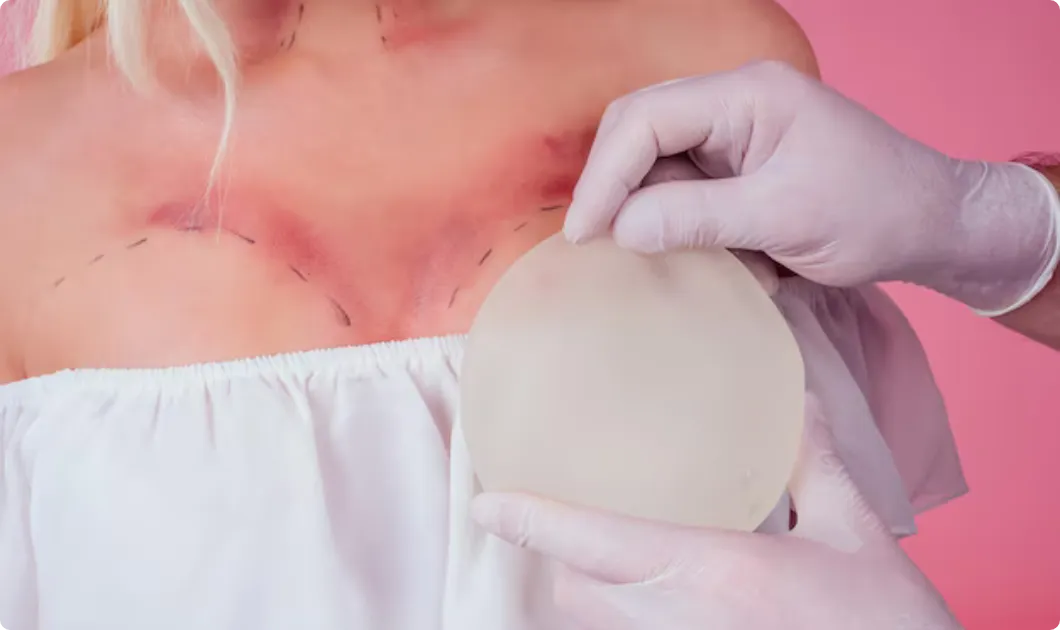
A scar is a normal and expected part of any surgical procedure, and breast augmentation scars are no exception. For many patients, one of the first questions after deciding on surgery is not about implant size but about where the scars will be, how noticeable they will look, and how long they will take to fade.
Trusta Medical Center provides breast augmentation procedures performed by our experienced surgeons, who carefully plan every incision to keep scarring as discreet as possible while achieving natural-looking results. Although scars cannot be completely avoided, they typically become much less noticeable as they mature with proper healing and aftercare.
This guide explains why breast augmentation scars form, where they are typically located, how they change throughout the healing process month by month, and the scar care practices that can help achieve the best possible long-term appearance.
Why Breast Augmentation Leaves a Scar
Breast augmentation scars are a natural part of the healing process after surgery. Whenever an incision is made, the body produces collagen to close the wound, creating a scar as the skin repairs itself. While every patient will have some degree of scarring, the appearance of the scar usually improves significantly over time.
Trusta Medical Center performs breast augmentation with our experienced surgeons, who carefully plan each incision to keep breast augmentation scars as discreet as possible while achieving beautiful, natural-looking results.
Factors that influence how a scar heals include:
Genetics: Some people naturally heal with finer, less noticeable scars.
Skin type and tone: Different skin types may heal differently and can affect scar visibility.
Incision placement: The location of the incision plays an important role in how well the scar is concealed.
Aftercare: Following your surgeon’s scar care instructions can help support smoother, better-looking healing.
Lifestyle factors: Smoking, nutrition, and overall health can all influence the healing process and the final appearance of the scar.
Types of Incisions and Where Scars Form
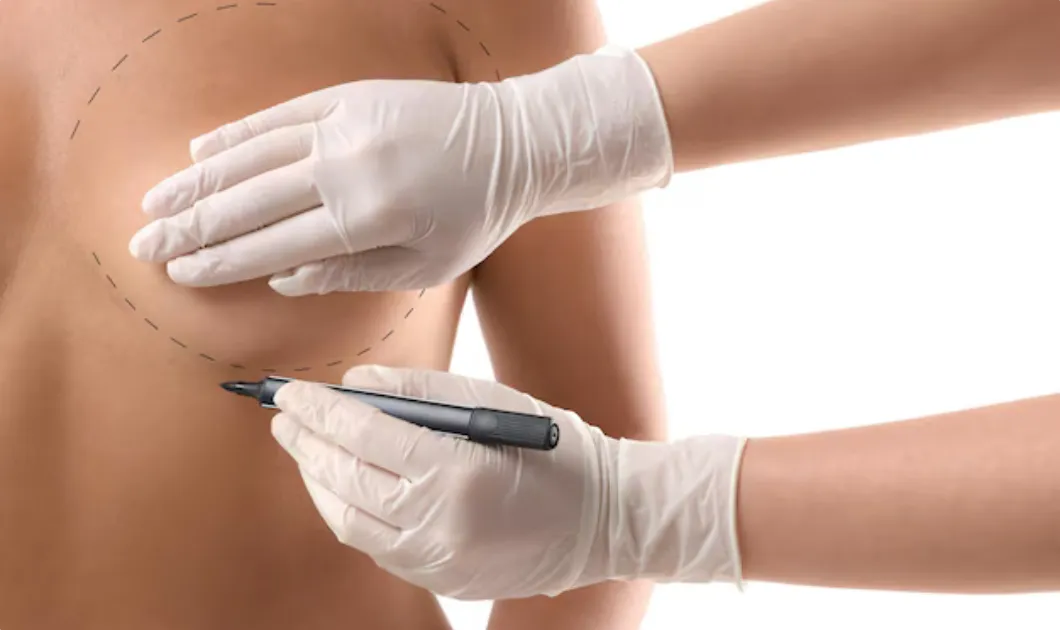
The location of the scar depends on the incision technique used. Our surgeons select the approach based on implant type, breast anatomy, and the patient’s aesthetic goals.
- Inframammary incision: placed in the natural crease under the breast. This is the most common approach and tends to heal into one of the least visible scars, since it sits within an existing skin fold.
- Periareolar incision: placed along the lower edge of the areola, where the change in skin pigmentation naturally camouflages the line.
- Transaxillary incision: placed in the underarm crease, keeping any scarring off the breast itself entirely.
Each technique produces a scar of roughly 3 to 5 centimetres. The final width and texture depend far more on healing and aftercare than on the incision type alone.
The same healing principles apply across breast procedures. Patients considering breast reduction or gynecomastia surgery go through a comparable scar maturation process, since both involve incisions through breast tissue and skin.
Breast Augmentation Scar Healing Timeline
Scar maturation is gradual and follows a fairly predictable pattern. Here is what to expect at each stage.
Week 1 to 2: Initial Healing
The incision closes and the skin edges knit together. The scar looks pink or red, feels slightly raised, and may be tender to the touch. Steri-strips or surgical tape typically stay in place during this stage to support the wound.
Week 3 to 6: Early Remodeling
Swelling around the incision reduces and the scar begins to flatten. Some itching is common as new tissue forms; this is a normal sign of healing rather than a complication. This is usually when our surgeons introduce scar massage and topical treatment, once the wound is fully closed.
Month 2 to 6: Scar Maturation
Collagen remodeling continues, and the scar gradually shifts from red or pink to a lighter, pinkish-brown tone. Texture softens and the raised edge continues to settle. This is the stage where consistent scar care has the most visible impact.
Month 6 to 12 and Beyond
By around the one-year mark, most breast augmentation scars have faded to a thin, pale line close to the natural skin tone. Full maturation for some patients can take up to 18 months, particularly for those with darker skin tones or a genetic tendency toward more visible scarring.
How to Reduce Breast Augmentation Scars
While no technique erases a scar completely, several steps measurably improve how it fades:
- Silicone sheets or gel: applied daily once the incision is closed, silicone is one of the most well-supported methods for softening and flattening surgical scars.
- Scar massage: gentle circular massage, once cleared by our surgeons, helps break down excess collagen and improves circulation to the area.
- Sun protection: UV exposure darkens healing scars permanently if left unprotected. SPF 30+ or full coverage over the incision is recommended for at least a year.
- Avoiding tension on the incision: supportive garments and limiting strenuous upper-body movement in the early weeks reduce the risk of a widened scar.
- Not smoking: smoking restricts blood flow to healing tissue and is one of the most consistent risk factors for poor scarring.
For scars that remain stubborn well past the maturation window, Trusta Medical Center’s dermatology team also offers laser and scar treatments, including fractional laser resurfacing and microneedling, which can further soften texture and blend tone once a surgical scar has fully healed.
Scar Care After Breast Surgery: Daily Do’s and Don’ts
Do
- Keep the incision clean and dry as directed during the first two weeks.
- Follow the specific garment and activity guidance given after surgery.
- Start silicone treatment and massage only once the incision has fully closed.
- Attend follow-up appointments so healing can be monitored and adjusted if needed.
Don’t
- Pick at scabs or peeling skin around the incision.
- Expose the healing scar to direct sun or tanning beds.
- Resume high-intensity exercise before clearance is given.
- Apply scar creams or start massage before the wound is fully closed.

When Scarring Needs Extra Attention
Most scars fade well with time and basic care. Occasionally, a scar becomes raised, thickened, or itchy well beyond the normal healing window, which can indicate a hypertrophic scar or keloid formation. According to published surgical literature, incision technique and post-operative care both influence the likelihood of this kind of scarring, which is one reason a structured aftercare plan matters.
A short consultation with our surgeons is worthwhile if a scar feels increasingly firm, painful, or noticeably different from the rest of the incision as the months go on.
Breast Augmentation Scars: Myths vs. Facts
Myth: Vitamin E oil speeds up scar fading.
Fact: Clinical research has not shown vitamin E to outperform plain moisturizer, and it can irritate the skin around a fresh incision in some patients. Silicone-based products have the stronger evidence base.
Myth: A more expensive implant means a smaller scar.
Fact: Implant brand and price have no bearing on scar size. Scar outcome is driven by incision technique, skin type, genetics, and aftercare, not the implant itself.
Myth: If the scar is still visible at 3 months, it will always look that way.
Fact: Scar tissue keeps remodeling for up to a year or longer. A scar that looks pink and raised at three months can still flatten and fade significantly by month nine or twelve.
Myth: Tanning helps a scar blend in with surrounding skin.
Fact: The opposite is true. Healing scar tissue lacks the same melanin protection as surrounding skin, so sun or tanning-bed exposure usually makes a scar darker and more visible, sometimes permanently.
Myth: Once the stitches are out, scar care is done.
Fact: Suture removal marks the start of the most important phase of scar care, not the end. Silicone treatment, massage, and sun protection over the following months are what most influence the final appearance.
FAQs
Do breast augmentation scars go away completely?
They don’t disappear entirely, but with proper care most fade to a thin, pale line that’s difficult to notice within 12 to 18 months.
How long does it take for breast augmentation scars to fade?
Most visible fading happens in the first six months, with continued improvement up to a year or more depending on skin type and aftercare.
When can I start massaging my scar?
Typically once the incision has fully closed, usually around the three to four week mark, and only after clearance from the surgical team.
Does implant type or incision location affect scarring?
Incision location affects where the scar sits and how easily it’s concealed by natural skin folds or pigmentation, but healing quality depends more on skin type, genetics, and aftercare than on implant type itself.
Book a Consultation
Trusta Medical Center provides personalised guidance on incision placement and scar care as part of every breast augmentation in Dubai consultation. Our FDA-approved surgeons walk each patient through what to realistically expect, from the first week of healing to the final result.