
July 20, 2026
If you’re considering breast augmentation Dubai, or you already have implants, you’ve probably asked yourself: how long do breast implants last? It’s one of the most common questions patients bring to their consultations. And it deserves a clear, honest answer.
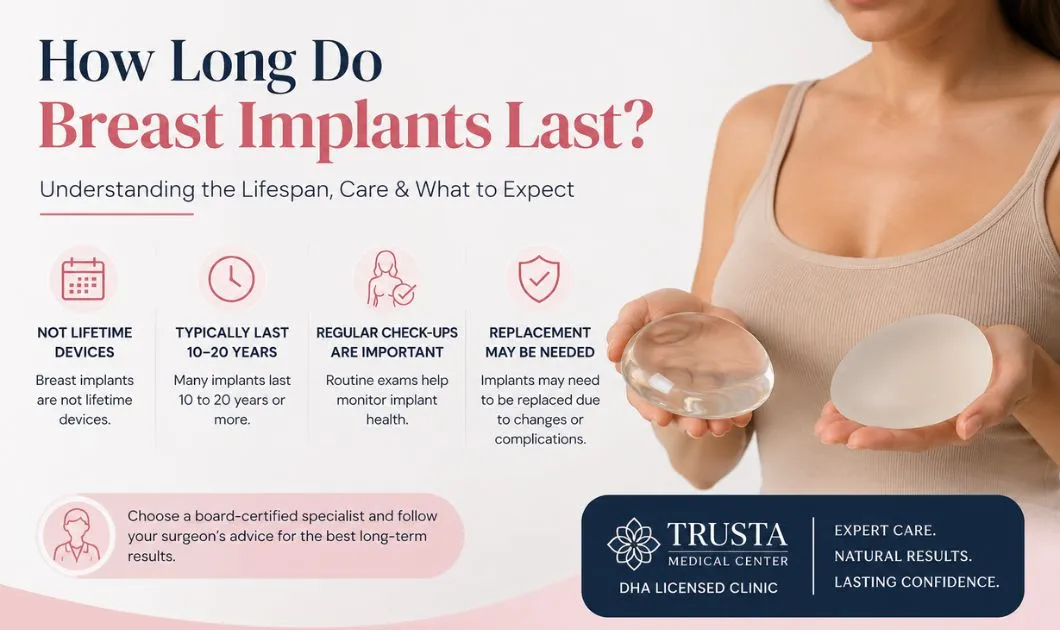
The truth is, breast implants aren’t designed to last forever. Most patients can expect their implants to last 10 to 20 years before replacement becomes necessary. However, several factors influence this timeline. In this guide, we’ll break down everything you need to know about breast implant lifespan, silicone implant durability, and when implant replacement might be right for you.
Average Breast Implant Lifespan: What to Expect
Breast implants are built to be durable. Still, they’re not permanent medical devices. On average, most implants last between 10 and 20 years.
That said, some patients keep their implants for 20 years or more without complications. Others may need replacement sooner due to changes in the body or implant wear. Because every patient is different, implant longevity varies from person to person.
Here’s a quick breakdown of typical implant lifespan factors:
- Implant type: Silicone and saline implants age differently.
- Age at surgery: Younger patients may need more than one replacement over a lifetime.
- Body changes: Pregnancy, weight fluctuations, and aging affect implant positioning.
- Implant quality: Modern, FDA-approved implants tend to be more durable than older models.
Consequently, there’s no single answer that fits everyone. Instead, your surgeon will monitor your implants over time and recommend replacement when needed.
Silicone Implant Durability vs Saline Implants
Silicone and saline implants behave differently as they age. Understanding these differences can help you set realistic expectations.
Silicone implants
Are filled with a cohesive gel that closely mimics natural breast tissue. They’re known for their durability. However, if a silicone implant ruptures, it may not always be immediately noticeable. This is often called a “silent rupture.” For this reason, doctors recommend regular MRI or ultrasound screenings for silicone implant patients, typically starting a few years after surgery.
Saline implants
On the other hand, are filled with sterile saltwater. If they rupture, the change is usually obvious. The implant deflates quickly, and the body naturally absorbs the saline. As a result, saline implant issues tend to be easier to detect without imaging.
Both implant types are considered safe and long-lasting. Nevertheless, silicone implant durability requires a bit more proactive monitoring to catch problems early.
Factors That Affect Implant Longevity
Several factors can shorten or extend how long your implants last. Being aware of them helps you plan for the future.
- Capsular contracture: Scar tissue can tighten around the implant, sometimes requiring revision.
- Implant rupture or leakage: Wear and tear over time can weaken the implant shell.
- Significant weight changes: Fluctuations can alter breast shape and implant positioning.
- Pregnancy and breastfeeding: These can change breast tissue, sometimes affecting implant appearance.
- Trauma or injury: A direct impact to the chest can damage an implant.
- Surgical technique and implant placement: Proper placement during your original surgery plays a big role in long-term results.
Ultimately, choosing an experienced surgeon and following aftercare instructions closely can help extend implant longevity.
Signs You May Need Breast Implant Revision
Knowing the warning signs of implant complications is essential. Contact your surgeon if you notice any of the following:
- Changes in breast shape, size, or symmetry
- Firmness, hardness, or unusual pain
- Visible rippling or wrinkling under the skin
- Swelling that doesn’t go away
- A noticeable change in how the implant feels
These symptoms don’t always mean something is seriously wrong. Still, prompt evaluation is the safest approach. Early detection makes breast implant revision simpler and less stressful.

Breast Implant Maintenance: Simple Steps for Longevity
Good implant maintenance isn’t complicated. In fact, most of it comes down to consistent, common-sense care.
- Attend regular check-ups. Routine visits allow your doctor to monitor implant condition.
- Schedule imaging as recommended. MRI or ultrasound scans help detect silent ruptures early, especially with silicone implants.
- Maintain a stable weight. This helps preserve your results over time.
- Protect your chest during exercise. Wear proper support, especially during high-impact activities.
- Watch for changes. Report anything unusual to your surgeon right away.
Following these steps won’t make implants last forever. However, they can help you catch problems early and enjoy your results for as long as possible.
What Happens During Breast Implant Replacement
Eventually, most patients will consider implant replacement, whether due to age, rupture, or simply wanting a different size or style. The good news? Replacement surgery is a well-established procedure.
During a breast implant revision, your surgeon will:
- Remove the existing implants
- Address any scar tissue or capsular contracture, if present
- Insert new implants, often with updated technology
- Adjust implant positioning or breast shape as needed
Many patients choose this opportunity to update their implant size, switch from saline to silicone, or refresh their overall look. Recovery time is generally similar to your original augmentation, though your surgeon will give you a personalized timeline.
Trust Your Breast Implant Journey to Trusta Medical Center
So, how long do breast implants last? While 10 to 20 years is a reasonable expectation, your personal timeline depends on your implant type, lifestyle, and body. Regular monitoring is the best way to protect your health and your results.
If you’re due for a check-up, noticing changes, or simply curious about your options, the specialists at Trusta Medical Center are here to help. Our experienced team offers personalized consultations covering implant health, breast implant revision, and replacement options specific to your goals.
Book a consultation with Trusta Medical Center today and take the next step toward confident, informed care for your breast implants.
Here’s an FAQ section to slot in right before “Final Thoughts”:
Frequently Asked Questions
How do I verify a surgeon’s board certification in Dubai?
Ask the surgeon directly which body issued their certification and confirm it through the Dubai Health Authority. A reputable surgeon will share this information without hesitation.
How many consultations should I book before deciding?
Most patients benefit from meeting two or three surgeons. Comparing consultations helps you judge communication style, technique recommendations, and how honestly each surgeon discusses risk.
Does a higher price always mean a better surgeon?
Not necessarily. Price reflects experience, facility standards, and implant quality, but the best indicator remains verified credentials, a strong portfolio, and a transparent consultation, not cost alone.
What happens if I’m not satisfied with my results?
A trustworthy clinic will discuss revision policies during your consultation, before surgery. Ask upfront whether limited revisions are included in your original quote or billed separately.
How soon after the consultation can I schedule surgery?
Timelines vary by clinic and surgeon availability, but a good surgeon will never rush you into booking. Take the time you need to feel confident in your decision.