
April 27, 2026
If you already understand the basics of a stem cell facial treatment in Dubai, you are ready to go deeper. Most clinics stop at “growth factors stimulate collagen.” However, the real science and the real results live in the details: the type of stem cells used, the role of exosomes, how you prepare your skin, and what you do after your session.
In Trusta Clinic, we believe informed patients achieve better outcomes. Therefore, this article covers the questions we answer most during consultations the ones that separate a treatment plan built for your skin from a generic protocol applied to everyone.
The Difference Between Stem Cells, Growth Factors, and Exosomes
Before you book a stem cell facial, you need to understand three terms that clinics often use interchangeably even though they describe very different things.
Stem cells
are the master cells of the body. They carry the unique ability to divide, self-renew, and differentiate into specialised cell types including the fibroblasts your skin needs to stimulate collagen and elastin production.
Growth factors
are signalling proteins secreted by stem cells. When growth factors reach your skin’s dermal layer, they activate fibroblast cells, accelerate skin cell turnover, and drive the skin regeneration process your body slows down after your mid-twenties.
Exosomes
are even smaller: they are nano-sized extracellular vesicles essentially tiny biological packages that stem cells release to communicate between cells. Think of them as highly targeted delivery vehicles. They carry proteins, lipids, and genetic signals directly to recipient cells, instructing them to repair, regenerate, and produce the structural proteins that maintain skin tone, firmness, and integrity. Consequently, a treatment that uses exosomes alongside growth factors works at two levels simultaneously: it sends direct repair instructions and delivers the biochemical tools to act on them. This is why leading aesthetic clinics now combine both in a single treatment protocol.
Types of Stem Cells Used in Facial Treatments – What Matters for Your Skin
Not all stem cell facials use the same source material. Furthermore, the origin of the stem cells significantly affects how a treatment works. Here are the main types:
1. Bone Marrow-Derived Stem Cells
These are among the most clinically researched mesenchymal stem cells (MSCs). Bone marrow MSCs produce powerful cytokines, chemical messengers that regulate inflammation, promote skin regeneration, and signal fibroblast activity to stimulate collagen. At Trusta Clinic, we use medical-grade serums derived from bone marrow stem cell culture, which deliver a concentrated cytokine extract directly to the skin.
2. Adipose (Fat)-Derived Stem Cells (ADSCs)
Researchers have shown that ADSCs exhibit strong anti-ageing properties. These cells actively secrete growth factors that reduce oxidative stress in skin tissue, making them particularly useful for treating sun-damaged skin in the UAE’s high-UV environment.
3. Plant-Derived Stem Cells
Swiss apple, edelweiss, and gardenia stem cell extracts appear in many cosmeceutical serums. Although they do not function like human stem cells, these extracts contain epigenetic factors that protect existing skin cells from degradation, helping to maintain the skin tone improvements your treatment produces.
4. Umbilical Cord-Derived Stem Cells (Wharton’s Jelly MSCs)
These cells offer superior regenerative potential because they are younger and more biologically active than adult stem cells. They release a high volume of exosomes and growth factors, making them an effective option for more advanced skin regeneration goals including significant volume loss or deep acne scarring.
In Trusta Clinic, your treatment plan specifies the serum concentration and source used for your session, based on your clinical assessment. We do not apply a single formula to every patient.
Who Benefits Most? Stem Cell Facials Across Different Skin Types
A common misconception is that stem cell facials suit only ageing skin. In reality, the treatment adapts effectively across all skin types and concerns.
Oily and acne-prone skin
Growth factors regulate sebum-producing cells and actively promote scar remodelling. As a result, patients with post-acne marks see measurable texture improvement across a course of 4–6 sessions. We also recommend pairing this with our dermatology consultations for active acne management.
Dry and dehydrated skin
Stem cell serums typically include a hyaluronic acid base, which immediately improves surface hydration. Beyond that, the cellular repair process restores the skin’s natural moisture barrier addressing the underlying cause, not just the symptom.
Sensitive skin
Because the treatment uses biological signals the body already recognises, the inflammatory response is significantly lower than with chemical or laser treatments. Most sensitive-skin patients experience only 24 hours of mild redness.
Mature skin
This is where stem cell therapy delivers the most dramatic results. The collagen production and skin regeneration it activates directly counteract the structural loss that causes deep lines, skin laxity, and the hollowing of the mid-face.
Injectable Delivery vs. Microneedling – Understanding the Difference
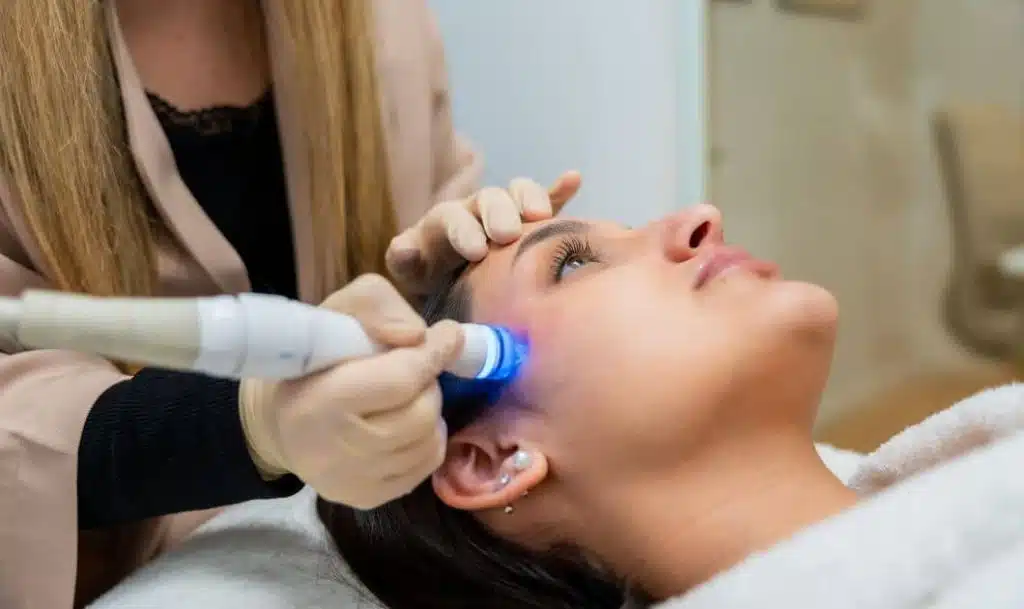
You may have come across the term Stem Cell Facial Treatment during your research. It is worth clarifying what this means because the delivery method changes the treatment significantly.
Microneedling delivery
(the method used at Trusta Clinic) creates thousands of precise micro-channels through the skin’s outer barrier. Serums penetrate into the mid-dermis uniformly across the entire treatment zone. This approach is safe, DHA-compliant, and produces consistent, measurable results in skin tone and texture.
Mesotherapy / microinjection delivery
uses ultra-fine needles to deposit small amounts of serum into the upper dermis at multiple injection points. It is particularly effective for targeted areas such as under-eye hollows and deep nasolabial folds, where precise depth placement matters.
Deep-tissue live cell injection
the injection of living, proliferating stem cells directly into deeper tissue is a different category of treatment entirely. This falls under regenerative medicine rather than aesthetic therapy and requires medical assessment under separate regulatory standards.
During your consultation at Trusta Clinic, our clinical team determines the most appropriate delivery method for your skin concern. In many cases, moreover, we recommend a combination protocol: microneedling for broad rejuvenation and targeted mesotherapy for specific problem zones. PubMed (indexed). Directly validates growth factor serums + microneedling efficacy for skin ageing.
How to Prepare Your Skin Before a Stem Cell Facial
The way you prepare your skin in the days before your session directly affects how well the growth factors penetrate and how effectively your skin’s collagen production responds. Here is what to follow:
5–7 days before your session:
- Stop using retinol, retinoids, and vitamin A derivatives. These thin the skin barrier and increase sensitivity during microneedling.
- Discontinue AHA and BHA exfoliants (glycolic acid, salicylic acid). Your skin needs its protective layer intact on the day of treatment.
- Avoid waxing, threading, or any hair removal from the face.
48 hours before:
- Do not use self-tanning products or spray tans.
- Avoid excessive sun exposure and come to your session with unburned skin.
On the day:
- Arrive with a clean face, free of makeup and sunscreen.
- Stay well hydrated water intake directly supports skin cell turnover and post-treatment recovery.
- Avoid alcohol for 24 hours before your appointment, as it impairs the body’s regenerative response.
Aftercare: What to Do After Your Stem Cell Facial
Post-treatment care is not optional; it is where a significant portion of your results are made or lost. Because microneedling creates temporary micro-channels in the skin, everything that touches your skin in the following 48–72 hours either supports or impedes the skin regeneration process.
First 24 hours:
- Apply only the clinician-recommended recovery serum and gentle, fragrance-free moisturiser.
- Avoid makeup entirely, even mineral makeup.
- Do not touch, rub, or pick at your skin.
- Stay out of direct sunlight. If you must go outside, wear a physical sunscreen (SPF 50+) and a hat.
24–72 hours:
- Introduce a gentle, hydrating cleanser. Nothing foaming or with active ingredients.
- Continue SPF application every morning without exception.
- Avoid swimming pools, saunas, and steam rooms. Chlorine and heat both compromise barrier repair and interfere with collagen production.
- Hold off on exercise that causes heavy sweating for 48 hours.
Days 3–7:
- Your skin may feel dry or slightly flaky as it sheds. Do not exfoliate let the skin regenerate at its own pace.
- Gradually reintroduce your regular skincare routine from day 5 onward, starting with gentler formulations.
- Avoid retinol and active acids for a full 7 days post-treatment.
Ongoing maintenance: After completing your initial course, quarterly maintenance sessions maintain the collagen production gains your skin has made. We pair maintenance facials with personalised home-care guidance at Trusta Clinic, because the results of regenerative skin therapy compound when you support them consistently.
Stem Cell Facial + Complementary Treatments at Trusta Clinic
Stem cell facials produce outstanding results independently. However, for patients managing multiple concerns simultaneously or those pursuing more significant skin regeneration combination protocols accelerate and extend outcomes.
Common treatment combinations we recommend include:
- Stem cell facial + IV Therapy: Systemic antioxidant and nutrient support enhances the cellular environment your skin regenerates within.
- Stem cell facial + microneedling RF: Radiofrequency energy adds a skin-tightening dimension by heating the deep dermis, while growth factors drive the collagen production response.
- Stem cell facial as post-laser recovery: Following laser resurfacing or intense chemical peels, stem cell serums dramatically shorten recovery time and reduce visible redness.
Your treatment plan at Trusta Clinic reflects your goals, your timeline, and your budget not a fixed menu.
Frequently Asked Questions
Can I have a stem cell facial if I have sensitive skin or rosacea?
Yes, in most cases. Because the treatment uses biologically compatible growth factors rather than chemical actives, the inflammatory response is lower than with many alternatives. Nevertheless, your clinical assessment at Trusta Clinic will confirm suitability based on the current state of your skin barrier.
What is the difference between a stem cell facial and a regular HydraFacial?
A HydraFacial cleanses, exfoliates, and hydrates the skin surface. A stem cell facial drives biological repair at the dermal level stimulating collagen, supporting skin regeneration, and producing structural changes that a surface treatment cannot reach. Both have value; they serve different purposes. Read our full comparison in the main stem cell facial article.
How long should I wait between sessions?
Sessions are spaced four weeks apart. This interval allows your skin to complete one full cycle of cellular repair and collagen remodelling before the next round of growth factor signalling begins. Spacing sessions too closely does not improve results it limits them.
Do stem cell facials work for men?
Absolutely. Male skin tends to be thicker and oilier, with a higher rate of collagen production meaning it often responds strongly to regenerative treatments. Common concerns we address in male patients include post-shaving skin damage, acne scarring, and sun-related skin tone unevenness.
Take the Next Step
If you are ready to begin a personalised stem cell facial treatment plan at Trusta Clinic or if you want to discuss which stem cell type, delivery method, and combination protocol suits your skin contact our Downtown Dubai clinic directly.