

CONTACT US
- +971 54 333 9090
- Downtown Dubai, UAE.
- info@trustaclinic.ae
Stem Cell Treatment for Knees in Dubai — Restore Your Mobility Without Surgery
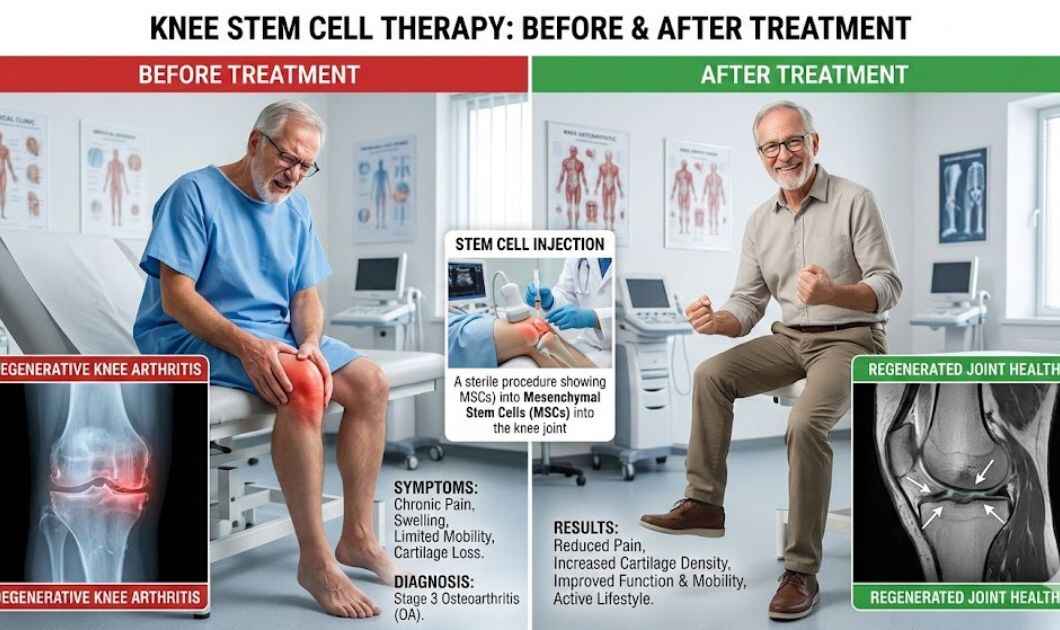
Are you searching for effective stem cell treatment for knees that actually works? In Trusta Clinic Dubai, we deliver clinically guided stem cell therapy for knees using Mesenchymal Stem Cells (MSCs) to repair cartilage, reduce chronic joint inflammation, and restore pain-free movement. If you are looking for stem cells for knees near me or the most advanced stem cell therapy for knees in Dubai, our specialist team at Downtown Dubai, UAE. has the expertise, the technology, and the proven protocols to help you move better without the risks, recovery time, or cost of surgery.
📞 CTA BUTTON: Book Your Free Knee Assessment Call +971 55 266 5321 🌐
What Is Stem Cell Treatment for Knees?
Stem cell treatment for knees is a regenerative medicine procedure that uses your body’s own biological repair mechanisms to heal damaged joint tissue. At Trusta Clinic, our specialists inject Mesenchymal Stem Cells (MSCs) directly into the affected knee joint. These cells then trigger natural cartilage regeneration, reduce inflammation, improve synovial fluid production, and stimulate growth factors that rebuild the supporting structures around your knee.
Unlike painkillers or cortisone injections that only mask symptoms, stem cell therapy for knees addresses the root biological cause of knee pain damaged or depleted cartilage and chronic joint inflammation.
All stem cell procedures at Trusta Clinic are performed by licensed medical doctors with specialist training in regenerative joint medicine under full DHA (Dubai Health Authority) oversight. Every treatment is delivered with a strong focus on patient safety, clinical precision, and advanced regenerative care standards.
Knee Conditions We Treat with Stem Cell Therapy
Our specialist team regularly assesses and treats patients with a wide range of knee conditions. The table below shows the conditions that respond best to stem cells for knees and the expected patient outcomes:
TABLE 1 — Knee Conditions Treated with Stem Cell Therapy
| Knee Condition | How Stem Cell Therapy Helps | Expected Benefit |
|---|---|---|
| Knee Osteoarthritis | MSCs reduce inflammation and rebuild cartilage lining | Less pain, better mobility in 4–12 weeks |
| Chondral Defects | Stem cells differentiate into chondrocytes to fill cartilage gaps | Improved joint surface integrity over 3–6 months |
| Meniscus Damage | Growth factor stimulation repairs partial meniscal tears | Reduced swelling, restored shock absorption |
| Ligament & Tendon Injuries | Connective tissue repair through MSC activity | Improved joint stability and strength |
| Post-Surgical Recovery | Accelerates healing, reduces post-op inflammation | Faster return to normal activity |
| Early Joint Degeneration | Slows cartilage thinning and joint space narrowing | Delays or prevents need for surgery |
| Sports-Related Cartilage Damage | Regenerates damaged tissue in active patients | Return to sport with reduced pain |
If you have been diagnosed with any of these conditions and want to explore your options, our regenerative medicine specialists at Trusta Clinic will conduct a full assessment before recommending any treatment.
How Stem Cell Therapy for Knees Works – The Science
When MSCs enter the knee joint, they activate four simultaneous biological repair processes that address both pain and tissue damage at the cellular level:
1. Cartilage Repair and Regeneration
MSCs differentiate into chondrocytes the cells that produce cartilage. This process directly rebuilds worn or damaged cartilage surfaces inside the knee, slowing further degeneration and improving joint mechanics over time.
2. Anti-Inflammatory Response
Chronic knee pain in conditions like osteoarthritis is closely linked to persistent joint inflammation. MSCs release powerful anti-inflammatory proteins that reduce inflammatory activity within the joint, delivering measurable pain relief as the inflammatory cycle breaks down.
3. Growth Factor Stimulation
Stem cells stimulate production of growth factors including VEGF and TGF-β that accelerate tissue repair, improve blood supply to joint structures, and strengthen the tendons and ligaments that support the knee.
4. Synovial Fluid Improvement
MSC activity within the knee supports improved synovial fluid production. This fluid lubricates joint surfaces, reduces bone-on-bone friction, and directly improves ease and range of movement.
How to Prepare for Your Stem Cell Knee Treatment at Trusta Clinic
Proper preparation significantly improves how well your body responds to stem cell therapy. Fortunately, the steps are straightforward. Following them carefully helps ensure the smoothest possible procedure and the best environment for MSC activity after injection.
Stop anti-inflammatory medications in advance
If you regularly take NSAIDs such as ibuprofen, naproxen, or diclofenac you will need to pause them at least five to seven days before your procedure. Anti-inflammatory drugs suppress the biological signalling that stem cells rely on to begin their repair process. Your specialist will confirm the exact timeline based on your current medication.
Stay well hydrated
Good cellular hydration in the days leading up to your injection supports tissue health and makes the procedure more comfortable. Aim for at least two litres of water daily in the three days before your appointment.
Avoid alcohol
Alcohol has a mild immunosuppressive effect and can increase systemic inflammation. As a result, it is advisable to avoid alcohol for at least 48 hours before treatment.
Arrange comfortable transport
Although most patients walk out of the clinic without difficulty, it is a good idea to arrange a driver for your treatment day. Having someone else drive means you can keep the knee relaxed and elevated on the journey home.
Wear loose, comfortable clothing
Specifically, wear clothing that gives easy access to the knee loose shorts or tracksuit bottoms are ideal. This ensures there is no unnecessary pressure on the joint before or after the injection.
Bring your imaging results
If you have recent MRI scans or X-rays of the knee, bring them to your appointment. These give your specialist critical information about the current state of your cartilage, joint space, and surrounding tissue before treatment begins.

Before

After
Recovery After Stem Cell Knee Injection – What Happens Week by Week
One of the most common questions patients ask is: what actually happens after the injection? Understanding the recovery timeline helps set realistic expectations and ensures you follow the right care steps at each stage.
Days 1–3 – Initial Response
Immediately after the procedure, most patients can walk out of the clinic without assistance. However, some mild swelling, warmth, or a dull ache around the injection site is completely normal during this phase. This is simply your body responding to the treatment. Therefore, avoid strenuous activity and give the knee full rest during these first few days.
Week 1–2 – Settling Phase
The injected MSCs begin anchoring into the joint environment. During this period, discomfort usually peaks slightly before it starts to ease. Importantly, patients should avoid anti-inflammatory medications such as ibuprofen during this window, as they can interfere with the regenerative process. Instead, apply ice packs gently and keep the knee elevated when resting.
Weeks 3–6 – Early Regeneration
By the third week, many patients begin to notice a gradual reduction in baseline pain. Movement tends to feel slightly easier, and morning stiffness often starts to decrease. Nevertheless, it is important not to rush back into high-impact exercise at this stage, even when you feel better.
Months 2–3 – Tissue Repair Accelerates
This is typically the period when more meaningful improvement becomes apparent. MSC activity is in full effect – cartilage regeneration, anti-inflammatory signalling, and synovial fluid improvement are all progressing simultaneously. Many patients report significantly better mobility and a notable reduction in daily pain by week eight to twelve.
Months 4–6 – Functional Recovery
Most patients reach a stable, improved functional baseline by this stage. Athletes and active patients often return to exercise with modified intensity. Furthermore, patients who combine stem cell therapy with physiotherapy during this phase tend to achieve better long-term outcomes than those who rest completely.
Beyond 6 Months – Long-Term Results
Results continue to consolidate over the following months. For many patients, the improvement in pain and mobility is sustained for two to five years or more, depending on the condition severity and lifestyle factors. Follow-up assessments at Trusta Clinic help monitor your progress and determine whether a second session would further enhance your outcome.
Why Trusta Clinic Uses Mesenchymal Stem Cells (MSCs)
Trusta Clinic uses MSCs as the primary cell type in our knee regeneration protocol. MSCs are the most researched and clinically validated stem cell type in musculoskeletal medicine, with hundreds of peer-reviewed studies supporting their safety and effectiveness in joint repair.
Key properties that make MSCs the best choice for stem cell therapy for knees:
- High proliferation capacity — MSCs multiply rapidly within the target tissue, increasing the volume of regenerative activity in the knee over the treatment period
- Immunomodulatory properties — MSCs regulate immune responses within the joint environment, interrupting the overactive inflammatory pathways driving chronic knee pain
- Multi-lineage differentiation — MSCs can become bone, cartilage, or connective tissue cells, making them uniquely suited to complex joint environments requiring multiple tissue repairs simultaneously
- Low rejection risk — MSCs carry a low immunogenic profile, meaning the body does not mount a rejection response against introduced cells
- Anti-fibrotic activity — MSCs reduce formation of scar tissue within the joint, supporting cleaner tissue regeneration and better functional outcomes
Exosome Therapy — The Next Generation of Knee Regeneration
In Trusta Clinic, we also offer exosome therapy as a powerful complement or alternative to traditional stem cell injections for knee conditions. Exosomes are nano-sized extracellular vesicles secreted by stem cells that carry the biological signals growth factors, proteins, and RNA molecules that drive tissue repair.
How Exosomes Differ from Stem Cells
While stem cells physically enter the joint and replicate, exosomes act as biological messengers that instruct your existing cells to begin repairing damaged tissue. Exosome therapy delivers a high concentration of these repair signals directly into the knee joint, triggering regeneration without requiring live cell transplantation.
Benefits of Exosome Therapy for Knees
- Highly concentrated repair signals — exosome preparations contain 10x–100x more growth factors than standard PRP injections
- Faster onset of anti-inflammatory effect many patients notice reduced knee swelling within days
- Ideal for patients who want a non-cellular regenerative option
- Can be combined with MSC injections for an enhanced regenerative response
- Minimal downtime patients typically resume normal activity within 24–48 hours
To find out whether exosome therapy is right for your knee condition, explore our dedicated Exosome IV Treatment service or speak with our specialists during your consultation.
Your Stem Cell Knee Treatment Journey at Trusta Clinic
Step 1 — Initial Consultation and Knee Assessment
Every patient begins with a thorough clinical consultation. Our specialists review your medical history, current symptoms, and imaging results including MRI and X-ray findings. We assess the severity of your knee condition, confirm stem cell therapy suitability, and explain the full treatment plan before scheduling any procedure.
Step 2 — Pre-Treatment Preparation
Once we confirm your candidacy, our team guides you through specific pre-procedure steps including medication adjustments, activity modifications, and any pre-treatment assessments needed to ensure the best possible outcome.
Step 3 — Stem Cell Injection Procedure
Our clinicians administer MSCs directly into the knee joint using an image-guided injection technique that ensures precise cell placement within the target tissue. We perform the procedure under full clinical supervision with complete patient comfort management throughout. The session typically takes 30–60 minutes.
Step 4 — Post-Treatment Monitoring and Follow-Up
Following your injection, our team monitors your recovery and provides detailed post-treatment care guidance. We schedule follow-up consultations to track improvement in pain levels and joint mobility, and to determine whether additional sessions would benefit your ongoing recovery.
Stem Cell Therapy vs Knee Replacement Surgery
| Factor | Stem Cell Therapy for Knees | Knee Replacement Surgery |
|---|---|---|
| Procedure Type | Non-surgical injection | Major surgery |
| Recovery Time | Days to 2 weeks | 3–6 months |
| Hospital Stay | Outpatient (same day) | 3–5 days inpatient |
| General Anaesthesia | Not required | Required |
| Natural Joint Preserved | Yes — tissue repair | No — joint removed and replaced |
| Suitable for Young Patients | Yes — no implant age limits | Limited by implant lifespan |
| Repeatability | Can be repeated as needed | Revision surgery is highly complex |
| Risk of Infection | Very low | Higher surgical site risk |
| Cost in Dubai (Estimate) | From AED 8,000–20,000+ | AED 40,000–80,000+ |
| Duration of Effect | 2–5+ years (varies by patient) | 15–20 years (implant lifespan) |
Our specialists present both options transparently during consultation. For patients with early-to-moderate knee degeneration, stem cell therapy for knees in Dubai frequently offers a superior risk-to-benefit profile. To understand your full options, also read about our stem cell therapy in joints for osteoarthritis.
Why Choose Trusta Clinic for Stem Cell Therapy for Knees in Dubai?
Trusta Clinic has built a strong reputation in Dubai’s regenerative medicine landscape through consistent clinical outcomes and genuine patient focus. Patients across the UAE and from international locations choose our stem cell knee therapy for these reasons:
- Experienced regenerative medicine specialists with focused expertise in joint treatment using MSC-based protocols
- Thorough pre-treatment assessment confirming suitability before any procedure begins — we never recommend treatment that does not suit your specific condition
- Image-guided MSC injection protocols performed under full clinical supervision for precise cell placement
- Full transparency about expected outcomes, treatment timelines, realistic results, and procedural risks — every time
- Structured post-treatment monitoring and follow-up throughout your entire recovery journey
- Clinic environment operating under Dubai’s strict DHA medical governance and international patient safety standards
- Multilingual patient support team guiding international patients through every step of their treatment journey
Start Your Stem Cell Knee Treatment Journey with Trusta Clinic Dubai
Knee pain, cartilage damage, and joint degeneration do not have to limit your life. Trusta Clinic delivers expert stem cell treatment for knees in Dubai a clinically supported, non-surgical path toward lasting pain relief and restored joint function. Our regenerative medicine specialists are ready to assess your knee condition, answer every question, and guide you through a complete treatment journey backed by genuine clinical expertise and real patient results.
Visit us at: Downtown Dubai, UAE
Call us: +971 55 266 5321 Email: info@trustaclinic.ae

Frequently Asked Questions — Stem Cell Treatment for Knees
Q: How much does stem cell therapy cost for knees in Dubai?
Stem cell therapy for knees at Trusta Clinic typically starts from AED 8,000–12,000 per session, while advanced multi-session regenerative treatment plans may range from AED 15,000–25,000+. The final cost depends on your knee condition, treatment complexity, and whether additional therapies such as PRP or exosomes are included.
Q: How successful is stem cell treatment for knees?
Clinical outcomes show that many patients experience significant improvement in pain, mobility, and joint function following stem cell therapy for knees. Results are generally best for patients with early-to-moderate osteoarthritis, cartilage damage, sports injuries, or inflammation-related knee conditions.
Q: Can you walk after knee stem cell injections?
Yes, most patients can walk immediately after the procedure. Light daily activities are usually allowed on the same day, although strenuous exercise and heavy knee loading should be avoided for several days while the regenerative process begins.
Q: What are the side effects of stem cell therapy for knees?
Common side effects include temporary swelling, mild soreness, and injection site discomfort that typically resolve within a few days. Serious complications are rare when the procedure is performed by qualified medical professionals using regulated treatment protocols.
Q: Who is the best candidate for stem cells for knees?
Ideal candidates include patients with knee osteoarthritis, cartilage wear, meniscus injuries, ligament damage, or chronic knee pain who want to avoid or delay surgery. A detailed medical assessment and imaging review help determine whether stem cell therapy is the right option.